Rajnath Singh hails Vikram-1 flight test, backs private space push

Synopsis
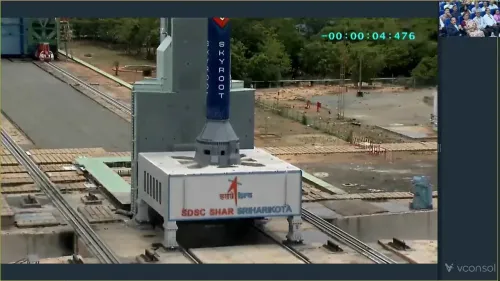
Union Defence Minister Rajnath Singh praised Skyroot Aerospace's successful Vikram-1 flight test on 18 July 2026, calling it a landmark for India's private space ecosystem and a product of post-2020 sector-opening reforms under the Atmanirbhar Bharat drive.
Key Takeaways
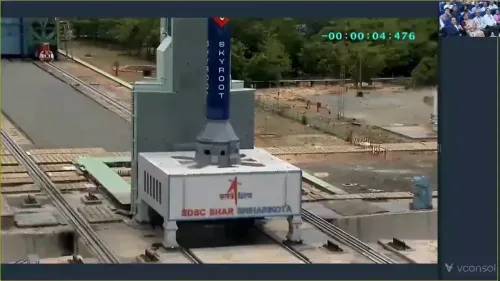
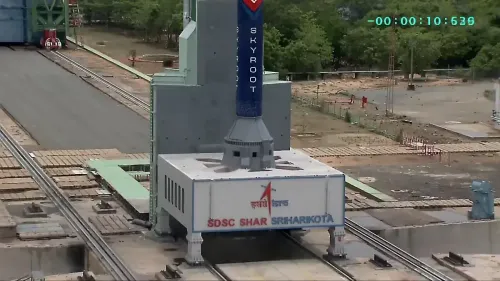
Rajnath Singh congratulated Skyroot Aerospace on the successful flight test of the Vikram-1 launch vehicle on 18 July 2026 .
The minister linked the achievement to government reforms that opened India's space sector to private participation from 2020 onwards.
Skyroot Aerospace , based in Hyderabad , is a leading private Indian firm developing small satellite launch vehicles under the Vikram series.
IN-SPACe , established in June 2020 , serves as the nodal agency enabling private companies to participate in space activities through single-window clearances.
The milestone carries both civilian and strategic significance, given the convergence of civil and military space programmes under India's Atmanirbhar Bharat initiative.
Subsequent orbital qualification flights and potential launch contracts from NSIL or the armed forces are the next milestones to watch.
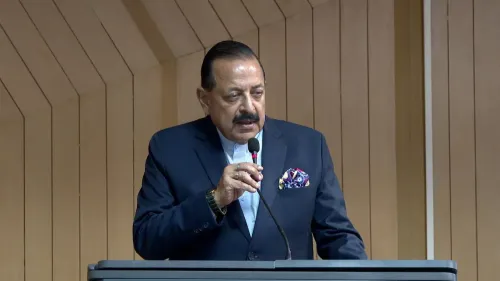
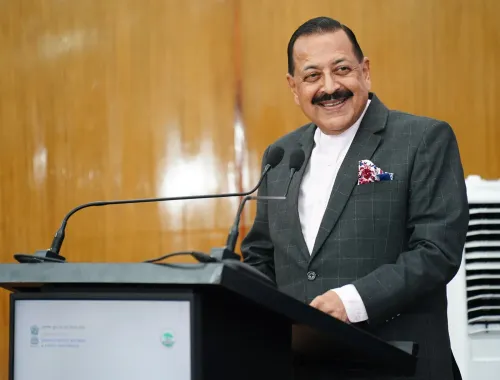
Union Defence Minister Rajnath Singh on Saturday, 18 July 2026, congratulated Skyroot Aerospace on the successful flight test of its Vikram-1 launch vehicle, calling it a significant step forward for India's private space ecosystem. The minister credited the milestone to young innovators, growing enterprise capabilities, and the sector-opening reforms pursued by the government in recent years.
Context
In his post, Rajnath Singh described the Vikram-1 test as reflective of 'the talent of our young innovators' and 'the growing capabilities of Indian enterprises.' He expressed hope that the achievement would 'inspire more innovators and contribute to India's continued progress in space technology.' The congratulatory message was directed to the 'entire Skyroot Aerospace team.'
Skyroot Aerospace, headquartered in Hyderabad, is among the pioneering private Indian firms developing small satellite launch vehicles under the Vikram series — named after pioneering Indian space scientist Vikram Sarabhai. The company has been a flagship example of the new generation of space start-ups that emerged after the government liberalised the sector.
Policy Backdrop
The flight test comes against the backdrop of landmark reforms announced in 2020, when the Government of India opened the space sector to private participation — permitting non-governmental entities to undertake satellite launches, component manufacturing, and data services. The Indian National Space Promotion and Authorisation Centre (IN-SPACe) was formally established in June 2020 as the nodal single-window agency to regulate and hand-hold private space firms through authorisation processes.
These reforms form a critical pillar of the broader Atmanirbhar Bharat initiative, which seeks to indigenise high-technology sectors including both civilian space and defence. The parallel creation of the Defence Space Agency and increasing private-sector involvement in dual-use satellites illustrates the convergence of civil and military space ambitions under a unified strategic vision.
ISRO, India's primary government space agency, continues to anchor national launch and human spaceflight programmes, while private players like Skyroot Aerospace are expected to supplement capacity and drive down costs through commercial competition.
Stakeholders and Impact
The Vikram-1 milestone is significant for the wider ecosystem of private space start-ups, investors, and component manufacturers that have scaled up since the 2020 reforms. A successful flight test by a private Indian firm validates the end-to-end indigenous launch-vehicle development pipeline — from design and fabrication to testing — without dependence on foreign launch providers.
For India's defence and strategic establishment, the growth of a credible private launch sector carries dual-use implications. Reliable, cost-effective domestic launch capability reduces strategic dependence and opens pathways for dedicated satellite deployment in surveillance, communications, and reconnaissance roles. Rajnath Singh's endorsement, coming from the defence portfolio, underscores that significance beyond civilian applications.
What's Next
Industry observers will watch for subsequent orbital qualification flights by Skyroot Aerospace and other start-ups, as well as potential award of dedicated launch contracts by the New Space India Limited (NSIL) or the armed forces. A successful orbital mission following the flight test would mark the next critical threshold for commercial viability.
The trajectory of India's private space sector — with government backing, regulatory facilitation through IN-SPACe, and growing investor confidence — positions the country to emerge as a competitive player in the global small-satellite launch market in the coming years.
Point of View
It signals that the government views private launch capability as strategically significant, not merely commercially interesting. The framing around 'self-reliance' and 'entrepreneurship' deliberately ties the Vikram-1 test to the Atmanirbhar Bharat narrative, reinforcing the BJP government's positioning of space as a domain where economic and security interests converge. His intervention also lends political weight to the IN-SPACe framework, which has faced questions about the pace of clearances and contract awards for private players. The broader arc points toward a deliberate policy of building a dual-use private launch ecosystem that supplements ISRO while reducing India's dependence on foreign launch services for strategic payloads.
NationPress
17 Oct 2026
Frequently Asked Questions
What is the Vikram-1 rocket and who built it?
Vikram-1 is a small satellite launch vehicle developed by Skyroot Aerospace , a private aerospace start-up headquartered in Hyderabad . It is part of the company's Vikram series of rockets designed to place small payloads into orbit commercially.
Why did Rajnath Singh comment on a space launch?
As Union Defence Minister , Rajnath Singh oversees India's strategic and dual-use technology domains. Private launch capability has direct implications for defence satellite deployment, making the Vikram-1 milestone relevant to his portfolio beyond its civilian significance.
What are India's 2020 space sector reforms?
In 2020 , the Government of India opened the space sector to private companies, allowing them to build and launch rockets, manufacture satellites, and offer data services. The IN-SPACe agency was set up to provide regulatory clearances and support to these firms.
What is IN-SPACe and what does it do?
IN-SPACe (Indian National Space Promotion and Authorisation Centre) was established in June 2020 as the nodal agency to regulate, promote, and hand-hold private entities seeking to participate in India's space activities through a single-window clearance mechanism.
What comes after the Vikram-1 flight test?
The next major milestone for Skyroot Aerospace is an orbital qualification flight that places a payload into orbit. Beyond that, the company and other private start-ups may seek dedicated launch contracts from New Space India Limited (NSIL) or defence agencies.