Bhupender Yadav hails Vikram-1 flight test, backs private space push
Synopsis
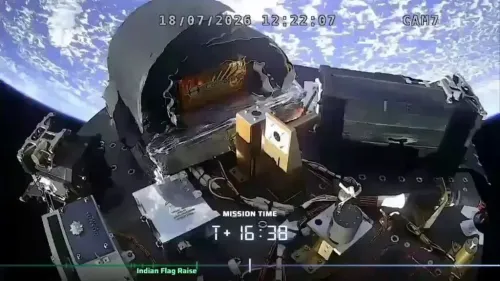
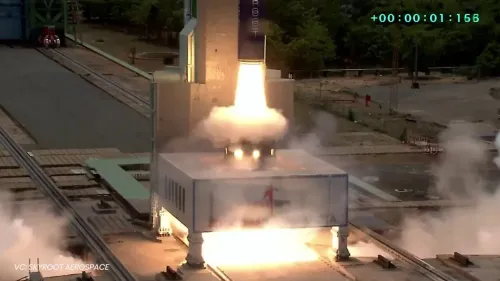
Union Environment Minister Bhupender Yadav hailed the successful flight test of Skyroot Aerospace's Vikram-1 on 18 July 2026, calling it a significant step for India's private space ecosystem — underscoring broad political support for the country's post-2020 space liberalisation drive.
Key Takeaways
Bhupender Yadav congratulated Skyroot Aerospace on the successful flight test of Vikram-1 on 18 July 2026 .
Vikram-1 is part of Skyroot's series of privately built Indian launch vehicles targeting low-Earth orbit .
India's space sector was opened to private players through reforms in 2020 , with IN-SPACe established as the regulatory body.
Skyroot had earlier conducted India's first private rocket launch with the Vikram-S suborbital test in 2022 .
The next milestones for Skyroot include orbital attempts with Vikram-II and Vikram-III .
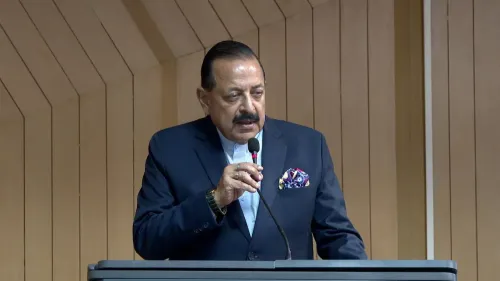
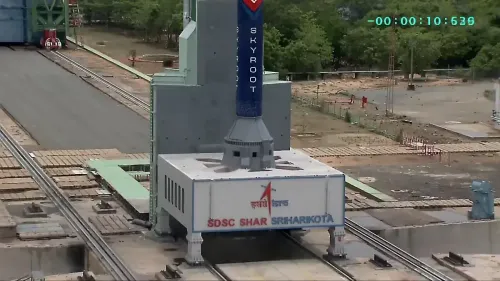
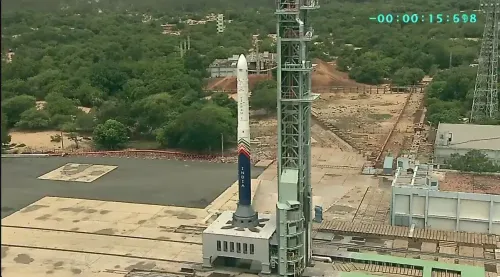
Union Environment Minister Bhupender Yadav on Saturday, 18 July 2026, congratulated Hyderabad-based Skyroot Aerospace on the successful flight test of its Vikram-1 launch vehicle, calling it 'a significant step in the journey towards strengthening India's private space ecosystem.'
Context
Yadav's post on X praised the Skyroot Aerospace team, saying the Vikram-1 flight test 'marks a significant step' for India's private space sector. Although Yadav holds the environment portfolio, his congratulatory message reflects the broader political consensus across the government in support of India's emerging commercial launch industry.
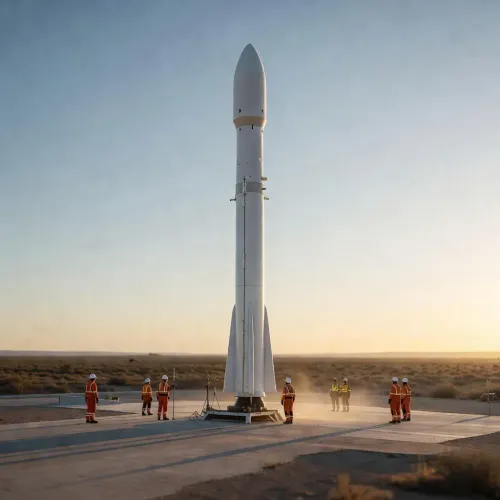
Skyroot Aerospace is among the first cohort of private Indian startups to develop an indigenously built orbital-class launch vehicle. The Vikram series — named after pioneering space scientist Vikram Sarabhai — is designed to carry small satellites to low-Earth orbit, targeting a fast-growing global market for dedicated small-sat launches.
Policy Backdrop
The milestone comes on the back of landmark structural reforms the Government of India announced in 2020, which opened the space sector to private participation and established IN-SPACe (Indian National Space Promotion and Authorisation Centre) as the nodal body to regulate and promote non-government players alongside ISRO.
Since those reforms, India has progressively allowed private firms to design, build, and launch rockets and satellites — a shift intended to increase launch cadence, attract venture investment, and complement ISRO's government-led programmes. The approach mirrors liberalisation seen in the United States and Europe, where commercial launch companies have grown into significant contributors to national space capability.
Skyroot had earlier made history by becoming the first private Indian company to launch a rocket when it conducted the Vikram-S suborbital test in 2022 under IN-SPACe authorisation — a precursor to the more capable Vikram-1 now under development and testing.
Stakeholders and Impact
The successful test is significant for the wider ecosystem of private space startups in India, many of which are watching Skyroot's progress as a bellwether for regulatory clarity, investor confidence, and infrastructure readiness. A proven private launch vehicle reduces India's dependence on foreign launch providers for small-satellite customers.
For ISRO, a thriving private launch sector is complementary rather than competitive — freeing the agency to focus on deep-space exploration and strategic missions while commercial operators serve the commercial small-satellite market. Investors and satellite operators looking for affordable, responsive launch options stand to benefit directly from Skyroot's growing track record.
What's Next
Skyroot is expected to progress toward more capable vehicles in its pipeline — including Vikram-II and Vikram-III — designed to carry heavier payloads to orbit. Follow-on funding rounds and additional regulatory clearances from IN-SPACe will be closely watched as indicators of the sector's maturation.
As India positions itself as a competitive launch destination, the Vikram-1 test adds another data point to a growing argument that the country's private space industry is moving from promise to operational reality.
Point of View
Cutting across portfolio boundaries to reinforce the political narrative around 'New Space India.' The congratulatory message, coming from the environment ministry rather than the space or science establishment, illustrates how private space success has become a prestige marker for the broader BJP-led government. Against the backdrop of the 2020 reforms and the creation of IN-SPACe, each Skyroot milestone is as much a policy vindication as a technical one. If Vikram-1 advances toward operational launches, it could accelerate investor confidence and legislative momentum for further deregulation of the sector.
NationPress
17 Oct 2026
Frequently Asked Questions
What is the Vikram-1 rocket and who makes it?
Vikram-1 is a small satellite launch vehicle developed by Skyroot Aerospace , a Hyderabad-based private Indian space startup. It is part of the Vikram series designed to carry payloads to low-Earth orbit and is named after space pioneer Vikram Sarabhai .
What did Bhupender Yadav say about the Vikram-1 test?
Yadav called the successful flight test of Vikram-1 'a significant step in the journey towards strengthening India's private space ecosystem' and extended his 'heartiest congratulations' to the Skyroot Aerospace team.
What is IN-SPACe and what role does it play?
IN-SPACe (Indian National Space Promotion and Authorisation Centre) was established in 2020 as the nodal body to regulate, promote, and authorise private participation in India's space sector alongside ISRO.
Has Skyroot Aerospace launched a rocket before Vikram-1?
Yes. Skyroot conducted the Vikram-S suborbital test in 2022 , making it the first private Indian company to launch a rocket, under authorisation from IN-SPACe.
What are Skyroot Aerospace's next planned rockets after Vikram-1?
Skyroot is developing Vikram-II and Vikram-III , which are designed to carry heavier payloads to orbit and represent the next stages of the company's orbital launch ambitions.