Rahul Gandhi Backs Students, Slams Wangchuk's Removal
Synopsis
Congress leader Rahul Gandhi condemned the removal of activist Sonam Wangchuk from Jantar Mantar during a hunger strike and called paper leaks, rising education costs, and student suicides critical issues, warning that no force can silence India's students.
Key Takeaways
Rahul Gandhi publicly condemned the removal of Sonam Wangchuk from Jantar Mantar while he was on a non-violent hunger strike.
Gandhi described the core tenets of the Modi government as 'Asatya and Hinsa' — untruth and violence.
He identified paper leaks , rising cost of education, and student suicides as critical issues for India's future.
The post was made under the hashtag #ChhatronKiGoonj ('Echo of Students'), signalling a coordinated Opposition campaign on youth issues.
The statement comes against the backdrop of the 2024 NEET-UG paper leak scandal and ongoing student protests across India.
Gandhi pledged that neither he nor India's students would be deterred from raising these issues despite state pressure.
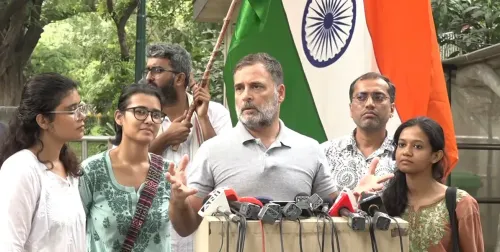
Congress leader and Leader of the Opposition Rahul Gandhi on Saturday, 18 July 2026, sharply criticised the Modi government over the removal of activist Sonam Wangchuk from Jantar Mantar during a non-violent hunger strike, and called paper leaks, rising education costs, and student suicides 'critical issues for India's future.'
Context
Sonam Wangchuk, the Ladakhi engineer and education reformer known for founding SECMOL (Students' Educational and Cultural Movement of Ladakh), was removed from Jantar Mantar — Delhi's designated protest site — while conducting a non-violent hunger strike. Rahul Gandhi described the removal as 'wrong,' framing it as an instance of state force being used against peaceful civic dissent.
In his post under the hashtag #ChhatronKiGoonj (meaning 'Echo of Students'), Gandhi stated: 'The core tenets of the Modi government are Asatya and Hinsa' — invoking the Sanskrit and Hindi words for untruth and violence respectively — positioning the government's response to student concerns as both dishonest and coercive.
Policy Backdrop
Gandhi's statement arrives in the wake of a sustained crisis around India's examination infrastructure. The 2024 NEET-UG paper leak scandal, along with breaches in several other national entrance examinations, triggered mass student protests and drew scrutiny from the Supreme Court of India. The National Education Policy 2020 had promised sweeping reforms in school and higher education, but critics have pointed to persistent implementation gaps, rising institutional fees, and deteriorating exam integrity.
Student suicides linked to academic pressure and examination failures have become a recurring and politically charged issue, particularly in coaching hubs such as Kota, Rajasthan. Opposition leaders, including Gandhi, have consistently raised these concerns in Parliament and on public platforms.
Stakeholders and Impact
Sonam Wangchuk has previously led high-profile hunger strikes on issues ranging from Ladakh's statehood demands to environmental protection, drawing national attention each time. His presence at Jantar Mantar on an education-linked protest signals a broadening coalition of voices — regional activists, students, and Opposition politicians — converging on the same set of demands.
For India's estimated 250 million-plus student population, the issues Gandhi listed — paper leaks, affordability, and mental health — represent immediate, lived concerns rather than abstract policy debates. Youth activists and student unions across states have repeatedly organised at Jantar Mantar and state capitals, often facing administrative restrictions on assembly.
The government has not issued an immediate public response to Gandhi's post. The ruling Bharatiya Janata Party has in the past defended examination-reform steps taken after the 2024 leaks, including amendments to the examination-conduct law.
What's Next
Parliament's Monsoon Session 2026 is expected to see Opposition members, led by Gandhi in his capacity as Leader of the Opposition, press for fresh legislative action on exam-conduct reforms and student-welfare measures. Any escalation of Wangchuk's protest — or further administrative action against it — is likely to intensify political pressure on the government.
Gandhi's closing line — 'No amount of force can deter India's students, and those of us who love and believe in them, from raising these issues' — signals that the Congress intends to keep education and youth welfare at the centre of its Opposition strategy through the current session and beyond.
Point of View
While simultaneously keeping the Congress party's youth-and-education plank alive heading into the Monsoon Session. By invoking 'Asatya and Hinsa' — terms with deep Gandhian resonance — he frames the government's conduct not merely as poor policy but as a moral failure. The hashtag #ChhatronKiGoonj suggests this is part of a coordinated Opposition campaign rather than a one-off reaction. The move places the ruling party in a difficult position: any further administrative action against Wangchuk or student protesters risks reinforcing exactly the narrative Gandhi is constructing.
NationPress
17 Oct 2026
Frequently Asked Questions
Why was Sonam Wangchuk removed from Jantar Mantar?
Sonam Wangchuk was removed from Jantar Mantar in Delhi while conducting a non-violent hunger strike. Rahul Gandhi described the removal as 'wrong,' though the precise official reasons cited by authorities have not been confirmed.
What is #ChhatronKiGoonj?
#ChhatronKiGoonj translates from Hindi as 'Echo of Students.' It is a hashtag used by Rahul Gandhi and the Congress party to campaign on issues affecting Indian students, including paper leaks, rising education costs, and student suicides.
What did Rahul Gandhi say about the Modi government and education?
Rahul Gandhi said the 'core tenets of the Modi government are Asatya and Hinsa' — meaning untruth and violence — and called paper leaks, the rising cost of education, and student suicides 'critical issues for India's future.'
What is the NEET paper leak controversy?
The NEET-UG 2024 paper leak was a major scandal in which question papers for India's national medical entrance examination were found to have been leaked before the exam, triggering widespread student protests and Supreme Court scrutiny of the examination system.
Who is Sonam Wangchuk?
Sonam Wangchuk is a Ladakhi engineer, innovator, and education reformer who founded SECMOL (Students' Educational and Cultural Movement of Ladakh). He has led several high-profile non-violent hunger strikes on issues including Ladakh's statehood, environmental protection, and education reform.