India rises as Southeast Asia's trusted capacity-building partner
Synopsis
India isn't winning influence in Southeast Asia through grand strategy declarations — it's doing it through field hospitals, naval ships, and disaster relief that arrives before anyone else's. Two back-to-back operations in under six months have moved India from ninth to sixth in ASEAN's strategic relevance rankings, and positioned it as the region's preferred hedge against the US–China binary.
Key Takeaways
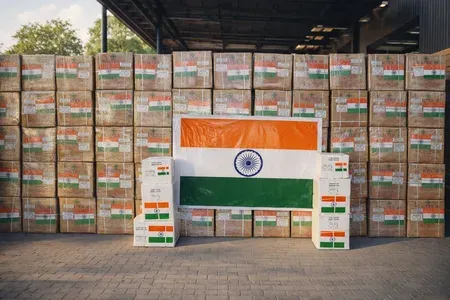
India launched 'Operation Sadbhav' in September 2024 , delivering relief to Vietnam , Laos , and Myanmar after Typhoon Yagi . 'Operation Brahma' followed six months later in response to a 7.7-magnitude earthquake in Myanmar , with a field hospital treating over 2,500 patients .
India's strategic relevance to ASEAN rose from 9th to 6th place in the ISEAS–Yusof Ishak Institute's 2025 State of Southeast Asia survey.
India is identified as a preferred partner for hedging against US–China rivalry in the region.
India holds no territorial or maritime disputes with any Southeast Asian country, distinguishing it from China.
India has emerged as a valued and trusted capacity-building partner for ASEAN, carving a distinct role in Southeast Asia by aligning its cooperation with what the regional bloc actually needs — and without the strategic strings that larger powers attach to their assistance, according to a report published in the Australia-based policy journal The Interpreter.
Responding When It Matters Most
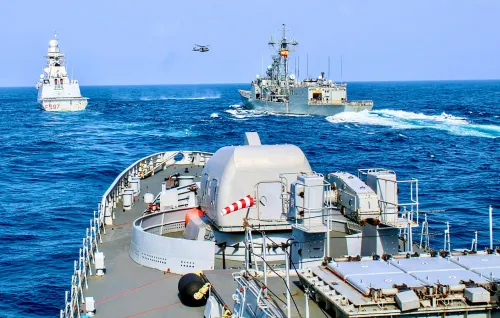
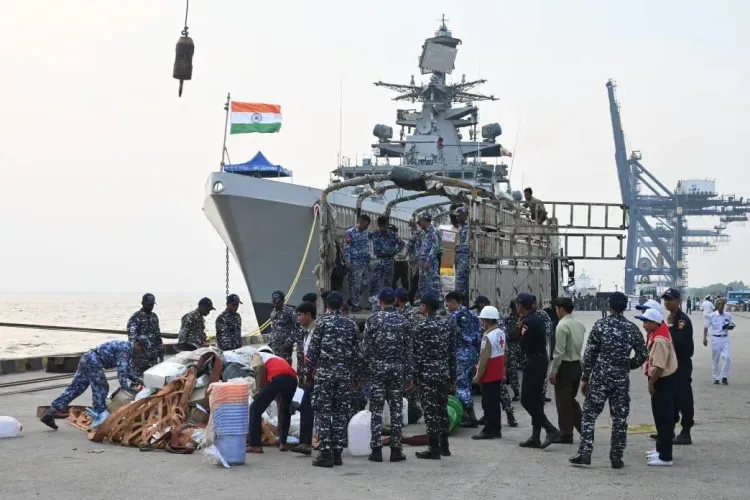
The report highlights that the true measure of a partner in maritime Southeast Asia is not raw power, but speed and reliability when disaster strikes. When Typhoon Yagi tore through mainland Southeast Asia in September 2024, India launched 'Operation Sadbhav', dispatching relief to Vietnam, Laos, and Myanmar within days. Six months later, a 7.7-magnitude earthquake struck Myanmar, and India was again among the first responders — this time through 'Operation Brahma', which deployed naval ships, air force transport, a search-and-rescue team, and a field hospital that treated more than 2,500 patients.
These rapid, on-the-ground responses have fundamentally shifted how the region perceives India's role, the report noted.
What the Surveys Show
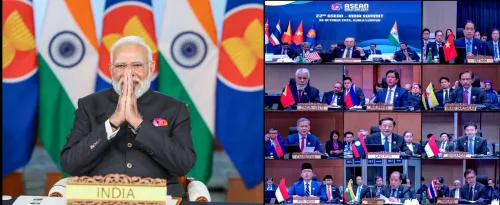
The ISEAS–Yusof Ishak Institute's 2025 State of Southeast Asia survey cited in the report found that India's strategic relevance to ASEAN climbed from ninth to sixth place within a single year. The survey also identified India as one of the region's preferred partners for hedging against US–China rivalry — a significant indicator of growing regional trust.
Separately, the ISEAS–Yusof Ishak Institute survey ranked India as a rising partner, with the country increasingly seen as a provider of practical security rather than a claimant of regional leadership.
India's Strategic Advantage: No Baggage
The report draws a pointed contrast between India and the other major external players competing for influence in Southeast Asia. According to the report, 'The United States brings unmatched capability, and with it the entanglements of alliance politics. China brings proximity and resources, alongside the very coercion in the South China Sea the region needs protecting from. Both, in different ways, ask Southeast Asian states to edge towards one pole of a contest they would rather avoid.'
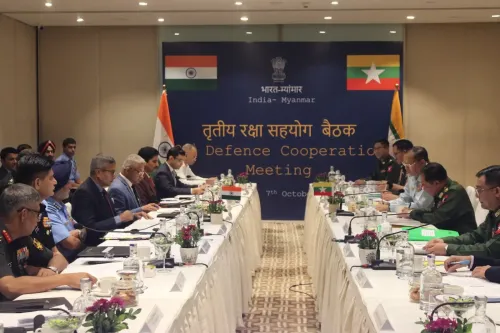
India, the report argues, occupies a different lane entirely. It maintains one of the region's larger navies and has demonstrated the reach to patrol, exercise, and respond across Southeast Asian waters — yet it carries none of the strategic baggage that would force ASEAN states to take sides. Crucially, India has no territorial or maritime dispute with any Southeast Asian country — a quiet but consequential distinction from China that the region has noticed.
Why ASEAN Is Looking to Diversify
As Southeast Asian nations seek to reduce dependence on either Washington or Beijing, India is increasingly falling within the bracket of preferred alternatives. The report notes that India's value 'is easy to overlook, precisely because it is so understated' — capable enough to matter at sea, but without the geopolitical demands that come with US or Chinese engagement.
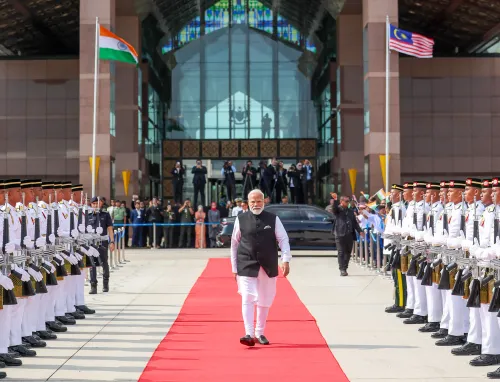
This combination of operational credibility, diplomatic neutrality, and no history of coercion in the region positions India as a natural partner for ASEAN states navigating an era of intensifying great-power competition. How India sustains and scales this presence in the years ahead will determine whether this momentum translates into lasting strategic influence.
Point of View
Functional, and free of political conditions. But the harder question is whether India can institutionalise this credibility beyond crisis response. Disaster relief earns goodwill; sustained naval presence, defence cooperation frameworks, and trade linkages are what convert goodwill into durable influence. The jump from ninth to sixth in the ISEAS survey is notable, but the US and China still dominate the top of that list. India's window is real, but it is not indefinite.
NationPress
17 Oct 2026
Frequently Asked Questions
Why is India considered a trusted partner for Southeast Asia?
India is seen as a trusted partner because it offers practical security assistance — including disaster relief and naval presence — without the political conditions or territorial disputes that complicate engagement with the US or China. Its rapid responses to Typhoon Yagi and the Myanmar earthquake have reinforced this perception.
What were Operations Sadbhav and Brahma?
'Operation Sadbhav' was India's humanitarian relief mission to Vietnam, Laos, and Myanmar following Typhoon Yagi in September 2024. 'Operation Brahma' was launched six months later after a 7.7-magnitude earthquake struck Myanmar, deploying naval ships, air force transport, a search-and-rescue team, and a field hospital that treated more than 2,500 patients.
What does the ISEAS 2025 survey say about India's standing in Southeast Asia?
The ISEAS–Yusof Ishak Institute's 2025 State of Southeast Asia survey found that India's strategic relevance to ASEAN rose from ninth to sixth place within a year. The survey also identified India as one of the region's preferred partners for hedging against US–China rivalry.
How does India differ from the US and China in Southeast Asia?
Unlike the US, India does not come with alliance entanglements, and unlike China, it has no territorial or maritime disputes with any Southeast Asian country. This makes India a lower-risk partner for ASEAN states that prefer to avoid being drawn into great-power competition.
What is ASEAN's broader concern about external powers?
ASEAN states are wary of being forced to choose sides between the US and China. According to the report, both powers — in different ways — ask Southeast Asian nations to align with one pole of a geopolitical contest the region would rather avoid. India's neutrality and lack of coercive behaviour make it an attractive alternative.