India's global reputation built on keeping promises, says Vietnam Times
Synopsis
A Vietnam Times analysis argues that India's most underrated geopolitical asset isn't its GDP or military — it's a decades-long record of showing up: vaccines during Covid, troops after earthquakes, aid without conditionality. In a world hunting for stable partners, that consistency may be India's sharpest strategic edge.
Key Takeaways
Vietnam Times writer Tarah Nguyen argues India's global standing is built on a consistent record of honouring international commitments.
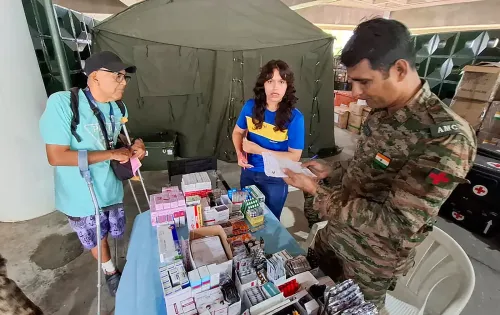
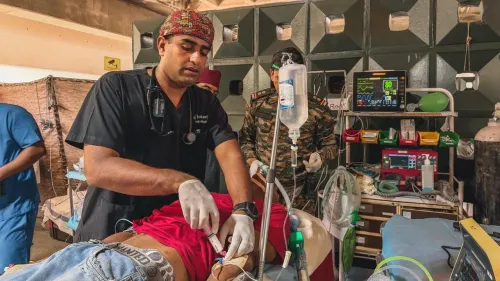
The Indian Army recently deployed a specialised medical contingent to Venezuela following a devastating earthquake in the country's north.
During Covid-19 , India supplied medicines and vaccines to dozens of nations despite severe domestic challenges.
India's South Asia relief record includes Sri Lanka (economic crisis, Cyclone Ditwah), Maldives , and Nepal under 'Operation Maitri' after the April 2015 earthquake.
The report identifies India's cross-administration policy continuity as a 'significant strategic advantage' in an uncertain multipolar world.
Nguyen cautions that credibility must not mean passivity — international obligations must be mutual to remain durable.
India's growing stature on the world stage is increasingly anchored in its track record of honouring international commitments — from disaster relief to pandemic-era vaccine diplomacy — according to an analysis by Tarah Nguyen published in the Vietnam Times. The piece argues that it is this consistency, more than economic size or geopolitical weight, that is cementing India's role as a trusted partner in a fractured global order.
First Responder to Global Crises
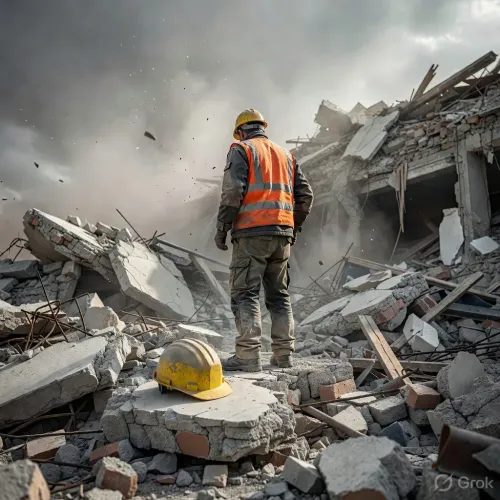
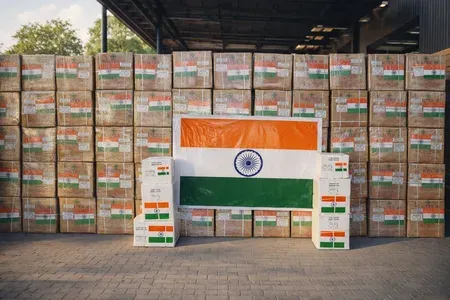
Nguyen's article cites a pattern of swift, tangible action that sets India apart from many international partners. Most recently, the Indian Army dispatched a specialised medical contingent to Venezuela to support humanitarian relief efforts following a devastating earthquake that struck the country's northern region. The deployment is the latest in a long line of rapid-response missions India has undertaken beyond its borders.
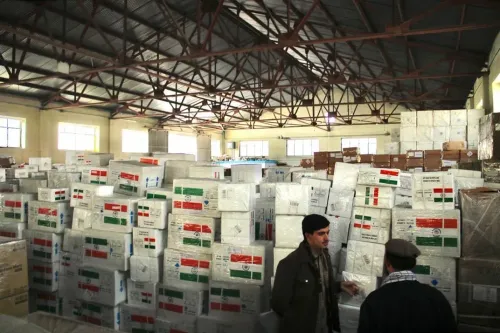
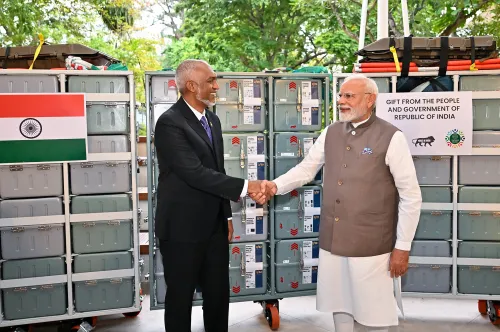
During the Covid-19 pandemic, India supplied medicines and vaccines to dozens of countries even as it managed enormous domestic pressure — an effort that drew widespread recognition across the developing world. Similar solidarity was extended across South Asia: emergency support to Sri Lanka during its economic crisis and in the aftermath of Cyclone Ditwah, humanitarian assistance to the Maldives, and relief operations in Nepal under 'Operation Maitri' following the April 2015 earthquake.
Action Over Declarations
Nguyen underlines that India has repeatedly demonstrated that 'regional leadership requires action rather than declarations.' A key distinction she draws is that unlike many international assistance programmes that become 'trapped in bureaucracy or conditionality', Indian projects are typically guided by 'local priorities' and 'long-term capacity building' — making them more effective and more welcome on the ground.
The Vietnam Times report also identified India's ability to maintain policy continuity across administrations and political cycles as a 'significant strategic advantage' — a quality that is rare and increasingly valued as global alignments shift.
Trust as Strategic Capital
The analysis arrives at a moment of heightened global uncertainty, with the West Asia conflict reshaping alliance calculations and countries actively seeking reliable partners. In this environment, the report argues, trust — earned through decades of consistent action — generates a more durable form of influence than either power or wealth alone.
Notably, Nguyen cautions that credibility must not be conflated with passivity. She writes: 'International agreements are founded upon mutual obligations. Their durability depends not only on one party honouring its commitments but also on the broader environment in which those commitments operate. No responsible state can be expected to indefinitely sustain arrangements that are undermined by persistent hostility, violence, or threats to national security.'
India's Greatest Strategic Advantage
In a multipolar world, the report contends, nations are gravitating toward partners that 'contribute to stability rather than instability' — encompassing infrastructure commitments, trade, and humanitarian aid alike. India, Nguyen concludes, fits that description: 'a nation that honours its commitments, protects its interests, and increasingly serves as a pillar of stability in an uncertain world.'
As more countries recalibrate their foreign partnerships, India's reputation for follow-through may prove to be its most consequential asset in the years ahead.
Point of View
India has quietly built a trust dividend through consistent, low-conditionality action — from Kathmandu to Caracas. What the analysis glosses over, however, is that this reputation is still largely concentrated in the Global South; India's credibility in Western capitals and multilateral institutions remains contested. The harder test is whether this 'promise-keeper' brand can survive the inevitable moments when domestic pressures force New Delhi to prioritise interests over commitments — and whether the institutional architecture exists to manage that tension transparently.
NationPress
27 Sept 2026
Frequently Asked Questions
What did the Vietnam Times article say about India's global reputation?
The Vietnam Times article by Tarah Nguyen argues that India's global standing is driven by its consistent record of honouring international commitments — including disaster relief, vaccine supply, and humanitarian aid — rather than economic size alone. The piece describes this reliability as India's 'greatest strategic advantage' in a multipolar world.
What is India's role in the Venezuela earthquake relief?
The Indian Army dispatched a specialised medical contingent to Venezuela to support humanitarian relief following a devastating earthquake in the country's northern region. The deployment is cited as the latest example of India acting as a 'first responder' in international crises.
How has India demonstrated regional leadership in South Asia?
India has provided emergency support to Sri Lanka during its economic crisis and after Cyclone Ditwah, extended humanitarian assistance to the Maldives, and conducted relief operations in Nepal under 'Operation Maitri' after the April 2015 earthquake. These actions are highlighted as evidence of India prioritising action over declarations.
Why does Tarah Nguyen say India's consistency is a strategic advantage?
Nguyen argues that India's ability to maintain policy continuity across administrations and political cycles is rare and increasingly valued as global alignments shift. In an environment of growing uncertainty — compounded by the West Asia conflict — countries are seeking partners whose commitments are predictable and not trapped in bureaucracy or conditionality.
Does the Vietnam Times article say India should always honour agreements unconditionally?
No. Nguyen explicitly cautions that credibility should not be confused with passivity. She writes that international agreements rest on mutual obligations and that no responsible state can be expected to sustain arrangements 'undermined by persistent hostility, violence, or threats to national security.'