NTA warns students: fake or AI-generated OMR sheets may lead to legal action
Synopsis
The NTA has flagged a troubling new trend: students submitting AI-generated OMR sheets to contest exam results. The agency's legal warning signals that the arms race between exam authorities and digital fabrication tools has moved from theory to active enforcement — a first-of-its-kind challenge for India's national examination system.
Key Takeaways
The National Testing Agency (NTA) issued a formal advisory on 19 July warning against submission of fake or AI-generated OMR sheets .
Several suspicious cases have already been identified during ongoing complaint scrutiny.
Submitting counterfeit or AI-fabricated OMR sheets may invite legal action against the complainant under Indian law.
The NTA has strengthened authenticity verification protocols before processing any rechecking request.
Education experts have welcomed the move as essential to protecting the integrity of national-level examinations.
The National Testing Agency (NTA) has issued a firm advisory warning students and parents that submitting fake or AI-generated OMR sheets for scrutiny could invite serious legal consequences. The caution, posted on 19 July via the agency's official account on X, comes amid a surge in manipulated documents being submitted through the formal re-evaluation mechanism.
What the NTA Found
The agency revealed that a significant number of OMR sheets recently submitted for review were found to be counterfeit or artificially generated using digital tools. Officials indicated that several suspicious cases have already been identified, and the NTA is now subjecting every incoming complaint to heightened authenticity checks before proceeding with any rechecking request.
'Students and parents are advised to submit only original OMRs for scrutiny. Any fake/AI generated OMR may invite legal action against the complainant,' the agency stated in its official post.
The AI Fabrication Challenge
The advisory highlights a growing challenge at the intersection of artificial intelligence and academic administration. With widely accessible AI image-generation tools, some individuals appear to be attempting to fabricate OMR evidence to contest examination results. This is not merely a procedural irregularity — it potentially constitutes fraud under Indian law, and the NTA has made clear it will pursue legal remedies against those found submitting forged documents.
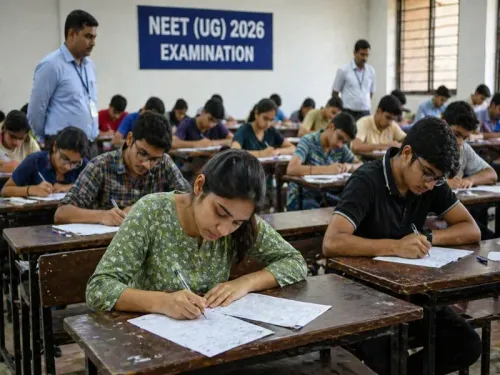
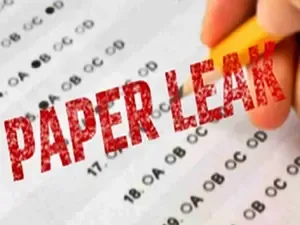
Notably, this development arrives at a moment when the credibility of national-level examinations has been under intense public scrutiny, making the NTA's proactive stance both timely and necessary.
What the NTA Is Doing
The agency stated it is actively scrutinising every complaint received and has put in place stricter verification protocols to distinguish genuine OMR sheets from fabricated ones. Officials have described the monitoring as ongoing and firm, with the agency committed to processing only authenticated documents.
Education experts have broadly welcomed the move, calling it essential to protect the integrity of high-stakes national examinations. The NTA has appealed to all stakeholders — students, parents, and coaching institutions — to cooperate fully and submit only genuine documentation.
What Students Must Do
Students and parents seeking OMR scrutiny are advised to retain and submit only their original, physical OMR sheets as issued at the examination centre. Any digitally created, edited, or AI-generated version of an OMR will not be accepted and may expose the complainant to criminal liability. The agency's communication underscores that attempts to misuse the scrutiny mechanism will be met with strict legal action, not leniency.
As the NTA continues to monitor complaints closely, the warning is expected to deter fraudulent activity and reinforce public confidence in the agency's evaluation processes going forward.
Point of View
Some candidates resort to fabricating evidence rather than accepting outcomes. AI image tools have lowered the barrier to document forgery dramatically, and the NTA is now playing catch-up. The real question is whether the agency's verification infrastructure — built for a pre-AI era — is robust enough to reliably distinguish a sophisticated forgery from a genuine sheet. Legal warnings deter; forensic capability decides. Without transparent disclosure of how authenticity is verified, the advisory risks being seen as a threat rather than a safeguard.
NationPress
17 Oct 2026
Frequently Asked Questions
What has the NTA warned students about regarding OMR sheets?
The NTA has warned that submitting fake or AI-generated OMR sheets for scrutiny may lead to serious legal action against the complainant. The agency found that several OMR sheets recently submitted for review were counterfeit or artificially created using digital tools.
Why are students submitting fake OMR sheets?
Some individuals appear to be using AI image-generation tools to fabricate OMR sheets in an attempt to challenge their examination results through the formal re-evaluation mechanism. The NTA has flagged this as an emerging misuse of the scrutiny process.
What should students do if they want to request OMR scrutiny?
Students must submit only their original, physical OMR sheet as issued at the examination centre. Any digitally edited, created, or AI-generated version will not be accepted and could expose the complainant to criminal liability.
What action will the NTA take against those submitting fake OMR sheets?
The NTA has stated it will pursue strict legal action against anyone found submitting counterfeit or AI-generated OMR documents. The agency has already identified several suspicious cases and is applying heightened verification checks to all incoming complaints.
How does this relate to the broader credibility concerns around NTA examinations?
This development comes at a time when national-level examinations have been under intense public scrutiny over integrity concerns. The NTA's crackdown on fake OMR submissions is part of a broader effort to restore transparency and public confidence in its evaluation processes.