Bihar Legislature uproar over NEET student lathi-charge; Oppn seeks debate
Synopsis
Bihar's Monsoon Session turned volatile on 23 July as the police lathi-charge on NEET protesters split the legislature along sharp political lines. The RJD's invocation of the 1974 students' movement — Bihar's most consequential agitation — signals that the Opposition intends to turn this into more than a procedural dispute. Whether the Chair admits a formal debate could define the session's political temperature.
Key Takeaways
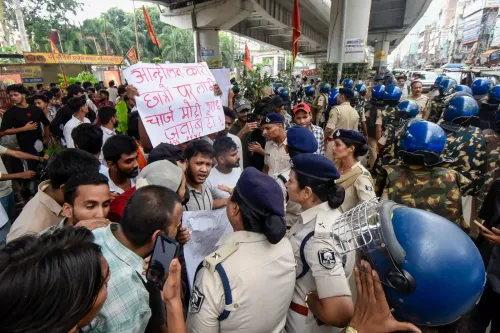
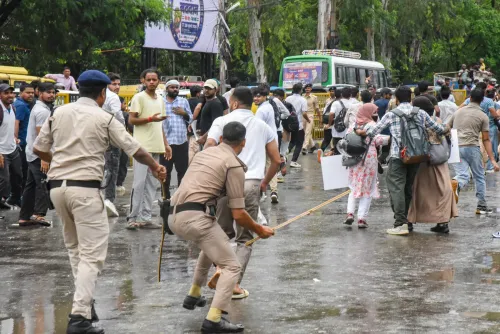
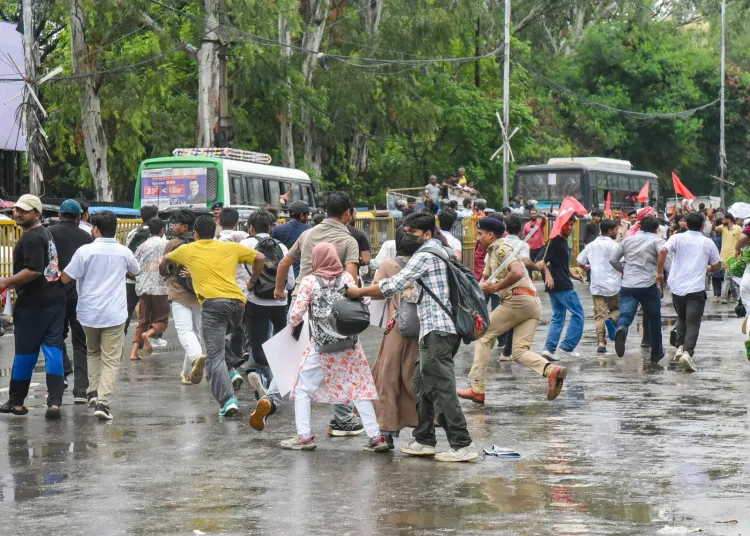
Bihar's Monsoon Session was disrupted on 23 July over the police lathi-charge on students protesting the NEET paper leak .
RJD MLC Abdul Bari Siddiqui moved an adjournment motion in the Legislative Council seeking an immediate discussion on the alleged use of force.
Siddiqui alleged that lathi-charges, tear-gassing, and arrests of students could set a dangerous democratic precedent.
Deputy CM Vijay Kumar Chaudhary stated that admissibility of the adjournment motion rests solely with the Chairman , not the government.
The Opposition drew a parallel with the landmark 1974 students' movement , framing current unrest as a broad public uprising.
Police action against NEET protesters has become one of the principal flashpoints of the ongoing Bihar legislature session.
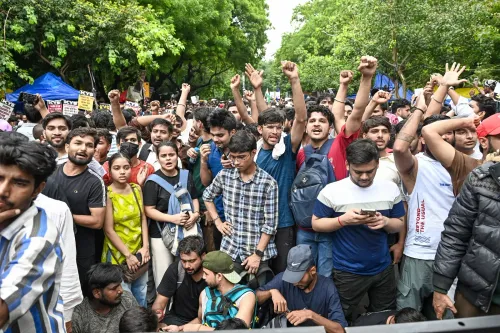
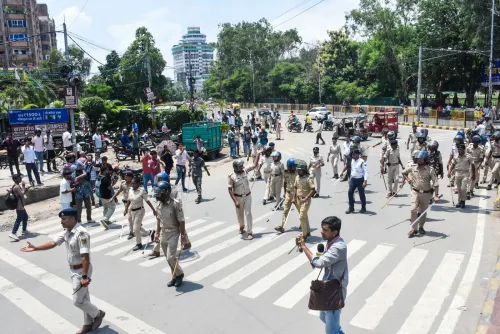
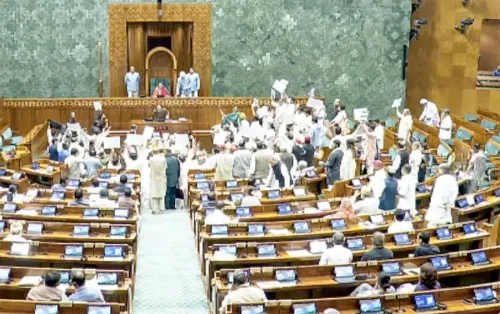
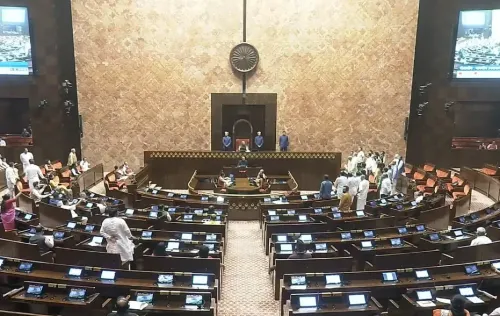
Bihar's Monsoon Session was rocked on Thursday, 23 July as the police lathi-charge on students protesting the NEET paper leak dominated proceedings in both Houses of the state legislature, triggering repeated disruptions and sharp exchanges between the ruling National Democratic Alliance (NDA) and the Opposition. The controversy has emerged as one of the defining flashpoints of the ongoing session.
Adjournment Motion Sparks Uproar
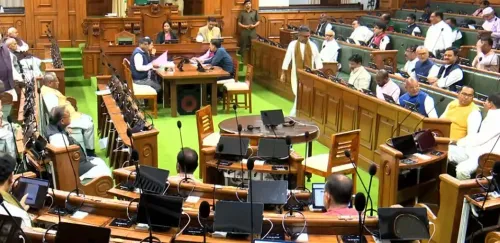
The confrontation escalated after a Rashtriya Janata Dal (RJD) member moved an adjournment motion in the Bihar Legislative Council, demanding an immediate discussion on the alleged use of force against students. The motion triggered a noisy standoff between the Treasury and Opposition Benches, bringing proceedings to a halt.
RJD MLC Abdul Bari Siddiqui drew a pointed historical parallel, arguing that the 1974 students' movement was not driven by any single political party but grew into a broad public uprising — and that a similar wave of student unrest was now building across the country. His remarks drew sharp objections from ruling alliance members. RJD MLC Sunil Singh also intervened, intensifying the verbal confrontations between the two sides.
Opposition's Core Allegations
Siddiqui alleged that attempts to suppress student dissent reflected an authoritarian approach, insisting that democratic institutions must allow differing viewpoints to be freely expressed. He maintained that the Opposition was exercising its legitimate parliamentary right by seeking a structured discussion through the adjournment motion.
He further warned that the reported use of force against students — including lathi-charges, tear-gassing, arrests, and broader police action — could set a dangerous precedent. He urged the government to resolve the standoff through dialogue rather than confrontation.
What the Government Said
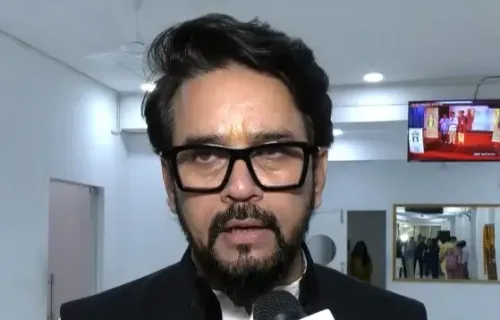
Deputy Chief Minister Vijay Kumar Chaudhary responded by asserting that the House operates strictly according to established parliamentary rules and procedures. He stated that the admissibility of any adjournment motion rests exclusively with the Chairman of the House and is governed by its rules.
Chaudhary clarified that the ruling alliance has no objection to discussions conducted within the proper legislative framework, but emphasised that the decision to accept or reject an adjournment motion is the sole prerogative of the Chair — not the government.
Broader Context: NEET Controversy and Student Unrest
The Bihar legislature uproar is part of a wider national controversy over alleged irregularities in the NEET-UG 2024 examination, which has seen student protests in multiple states. Police action against demonstrators in Bihar drew immediate political attention, with Opposition parties framing it as an attempt to silence legitimate grievance.
Notably, the invocation of the 1974 movement — which gave rise to JP Narayan's landmark agitation — carries significant symbolic weight in Bihar's political memory and signals the Opposition's intent to frame the issue as a broader democratic struggle rather than a routine law-and-order matter.
What Happens Next
The Bihar legislature's Monsoon Session is expected to continue seeing disruptions if the government does not agree to a structured debate on the police action. Opposition leaders have indicated they will persist with procedural motions until the Chair admits a formal discussion. The political fallout from the NEET controversy — and the state's handling of student protests — is likely to remain a pressure point through the remainder of the session.
Point of View
Not mere rhetoric — in Bihar, that movement is foundational mythology, and attaching current student unrest to it is an attempt to reframe a law-and-order incident as a democratic crisis. The government's procedural deflection, while constitutionally defensible, does little to address the optics of police action against students already agitated over a credibility collapse in a high-stakes national exam. The real question the Bihar session must answer is not whether the adjournment motion is admissible, but whether the state has a coherent response to NEET-related grievances that goes beyond crowd control.
NationPress
21 Oct 2026
Frequently Asked Questions
Why did the Bihar Legislature witness uproar on 23 July?
The Bihar Legislature erupted on 23 July over the police lathi-charge on students protesting the NEET paper leak. An RJD member moved an adjournment motion in the Legislative Council demanding an immediate debate, triggering sharp exchanges between the Opposition and the ruling NDA alliance.
What did RJD MLC Abdul Bari Siddiqui allege in the Bihar legislature?
Siddiqui alleged that the use of force against students — including lathi-charges, tear-gassing, and arrests — reflected an authoritarian approach and could set a dangerous precedent. He also drew a parallel with the 1974 students' movement, arguing that a similar wave of public unrest was building across India.
How did the Bihar government respond to the Opposition's demands?
Deputy Chief Minister Vijay Kumar Chaudhary stated that the House functions according to established parliamentary rules and that the admissibility of an adjournment motion rests exclusively with the Chairman of the House. He said the ruling alliance has no objection to discussions held within the proper legislative framework.
What is the connection between the Bihar legislature uproar and the NEET paper leak?
Students across Bihar and other states have been protesting alleged irregularities in the NEET-UG 2024 examination. Police action against these demonstrators in Bihar drew immediate political backlash, making it a central issue of the state's ongoing Monsoon Session.
What is an adjournment motion and why did the RJD use it?
An adjournment motion is a parliamentary device used to suspend the day's scheduled business to debate a matter of urgent public importance. The RJD moved one in the Bihar Legislative Council to force an immediate discussion on the alleged police action against student protesters, though its admission rests with the Chairman.