Raihan Vadra says Bikaner House removed all 70 photos without explanation
Synopsis
Artist Raihan Vadra says Bikaner House ordered all 70 photographs from his solo show removed — with no explanation — and even asked him to take down two images of the Indian flag, a demand he refused outright. The episode has ignited a sharp debate about content policies in government-managed cultural venues and what counts as 'political' art.
Key Takeaways
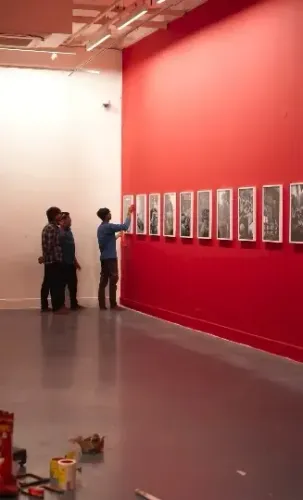
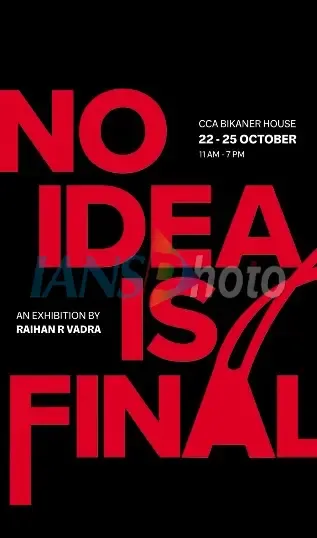
Raihan Vadra , son of Congress MP Priyanka Gandhi Vadra , says Bikaner House in New Delhi ordered all 70 photographs removed from his solo exhibition 'No Idea Is Final' .
The show was previewed on Wednesday, 22 October and was scheduled to run through Sunday.
Raihan says he complied with the venue's stated political-content policy while curating the photographs, which largely depicted youth protest scenes in Delhi .
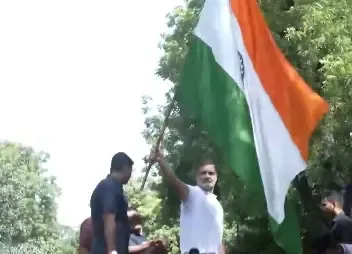
He refused a directive to remove two photographs of the Tiranga (Indian national flag).
He has called on Bikaner House to make its content-review policies transparent and clarify who decides what is 'political'.
Bikaner House had not issued a public statement on the matter as of the time of reporting.
Artist and photographer Raihan Vadra, son of Congress MP Priyanka Gandhi Vadra, has stated that despite his full cooperation with the venue's management, all 70 photographs from his solo exhibition were ordered to be taken down — with no explanation provided. The controversy centres on his show, 'No Idea Is Final', at Bikaner House in New Delhi, which was scheduled to open on Thursday, 23 October 2026, and run through Sunday.
What Happened at Bikaner House
The exhibition was previewed on Wednesday, 22 October, before Raihan alleged that the Bikaner House administration ordered the removal of more than 70 photographs — reportedly ahead of the scheduled public opening. The photographs, he said, primarily documented youth protests in Delhi and featured ordinary people.
According to Raihan, he had reviewed the venue's policy on political content before selecting the images and deliberately avoided political slogans or prominent photographs of political leaders. 'I read its policy on political content and selected my photographs accordingly. We did not put up political slogans, and there were not many photographs of political leaders,' he said.
The Escalating Demands
Raihan said the management's demands escalated rapidly. Initially, he was asked to remove a handful of images. 'I told them we would cooperate. I said they could remove four or five photographs if necessary, provided they gave us a reason,' he said. However, he noted that no specific reason was forthcoming, and the request was soon expanded to cover the entire collection of 70 photographs.
He also disclosed that venue officials directed him to remove two photographs of the Tiranga (the Indian national flag), a demand he publicly refused. 'I will not take down a picture of the Indian flag,' Vadra stated in an Instagram post on Wednesday, in which he first disclosed the removal order publicly.
Raihan's Stand on Freedom of Expression
The photographer argued that public institutions like Bikaner House carry a responsibility to protect the freedom of expression of artists. He also challenged the venue to make its content policies more transparent and unambiguous. 'I also suggested that they should make their policies clearer and clarify who would decide what constitutes political content,' he said.
He further argued that a broad, undefined ban on 'political' content was untenable. 'Most art is political, and if you don't agree then you should not implement such policies. I wasn't given a specific reason,' Raihan added. He confirmed that the photographs remain publicly viewable on his Instagram page, and described the subjects as 'ordinary people' at protests.
When asked whether he personally supported the protestors he had photographed, Raihan did not hedge. 'Yes, I attended the protest as both a participant and an artist. I support it both as an artist and as an individual,' he said.
Background and Wider Context
Bikaner House is a New Delhi heritage venue operated under the Rajasthan government that hosts art exhibitions, cultural events, and diplomatic gatherings. This incident comes amid broader, ongoing debates in India about the limits of artistic expression in publicly funded or government-managed spaces. Critics argue that opaque content-review processes at such venues can create a chilling effect on artists — particularly those documenting protest or dissent.
Notably, the episode has drawn added attention given Raihan Vadra's family background; his mother, Priyanka Gandhi Vadra, is a prominent Congress MP, though Raihan framed his objections entirely in terms of artistic freedom rather than political identity. Bikaner House had not issued a public statement in response to the allegations as of the time of reporting.
Whether the venue will clarify its content policy — or whether the exhibition will proceed in any form — remains to be seen.
Point of View
Applied without written reasoning, in a context where the artist has no formal appeal mechanism. Calling protest photography 'political content' is not a content policy — it is a veto. The demand to remove photographs of the national flag compounds the optics considerably. With Raihan Vadra's family background ensuring national visibility, Bikaner House's silence is a communications failure as much as a governance one. The more important question — whether any artist without a famous surname would have received even this much coverage — deserves equal scrutiny.
NationPress
22 Oct 2026
Frequently Asked Questions
What happened at Raihan Vadra's Bikaner House exhibition?
The Bikaner House administration ordered the removal of all 70 photographs from Raihan Vadra's solo exhibition 'No Idea Is Final' ahead of its scheduled opening on 23 October 2026, reportedly citing 'political content' concerns. Raihan said no specific explanation was provided despite his cooperation.
Who is Raihan Vadra?
Raihan Vadra is a New Delhi-based artist and photographer and the son of Congress MP Priyanka Gandhi Vadra. His exhibition 'No Idea Is Final' documented youth protest scenes in Delhi, among other subjects.
Why did Raihan Vadra refuse to remove two of the photographs?
Bikaner House officials reportedly asked him to remove two photographs of the Tiranga — the Indian national flag. Raihan publicly refused, stating: 'I will not take down a picture of the Indian flag.'
What is Bikaner House and who manages it?
Bikaner House is a heritage cultural venue in New Delhi operated under the Rajasthan government, used for art exhibitions, cultural events, and diplomatic functions. It had not issued a public response to Raihan Vadra's allegations as of the time of reporting.
What broader issue does this controversy raise?
The incident has reignited debate about transparency and accountability in content-review processes at publicly managed cultural spaces. Raihan has called for Bikaner House to clarify its policies and specify who holds the authority to designate content as 'political.'