CM Mohan Yadav: Bina to Anchor MP's Petrochemical Push

Synopsis
MP Chief Minister Dr. Mohan Yadav declares Bina is becoming the state's petrochemical nerve centre, projecting output of over 22 lakh tonnes per year to feed plastics, pharma, textiles, and auto industries — turning refinery proximity into a regional industrial advantage.
Key Takeaways
Bina in Sagar district is being developed as Madhya Pradesh's primary petrochemical production hub.
Projected annual output exceeds 22 lakh tonnes of petrochemical products, as stated by CM Dr.
Target sectors for raw-material supply include plastics, packaging, pharmaceuticals, textiles, and automobiles .
The initiative builds on Bina's existing BPCL Refinery to capture downstream value within the state.
The government has explicitly linked the petrochemical push to employment generation for the local workforce.
Madhya Pradesh is aligning with a national pattern of refinery-linked petrochemical clusters to reduce dependence on coastal supply chains.
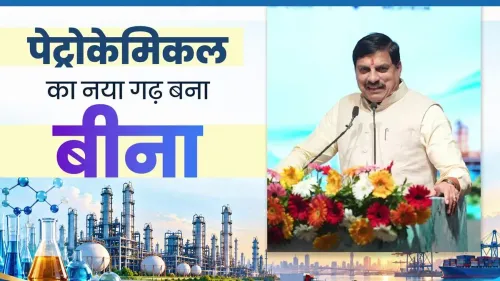
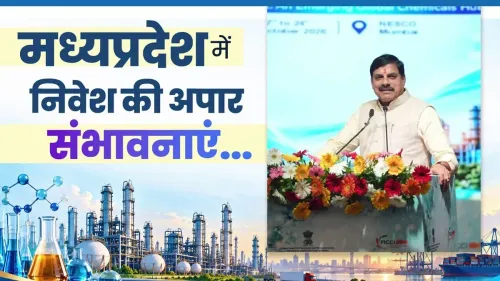
Bina, a town in Madhya Pradesh's Sagar district, is being positioned as the state's next industrial frontier — and Madhya Pradesh Chief Minister Dr. Mohan Yadav wants the country to take notice. On Thursday, October 22, 2026, the Chief Minister announced that Bina is emerging as a major petrochemical hub, with a production capacity of over 22 lakh tonnes of petrochemical products annually.
Posting in Hindi, Dr. Yadav said: 'बीना, मध्यप्रदेश के पेट्रोकेमिकल उद्योग का नया गढ़ बन रहा है' — 'Bina is becoming the new stronghold of Madhya Pradesh's petrochemical industry.' The projected output, he said, would serve as a critical raw-material pipeline for sectors including plastics, packaging, pharmaceuticals, textiles, and automobiles, while also generating fresh employment opportunities in the region.Why Bina — and Why Now
Bina is already home to the BPCL Bina Refinery, one of the key crude-processing facilities in central India. Indian states that host major refineries have increasingly sought to build downstream petrochemical clusters around them — capturing more value from the crude barrel rather than exporting processed fuel and importing plastic feedstock. Madhya Pradesh is following precisely this playbook, with Bina at its centre.
The logic is straightforward: a refinery produces naphtha and other hydrocarbon fractions that serve as raw material for petrochemicals. Instead of those intermediaries travelling to Gujarat or Andhra Pradesh for conversion, a local cluster keeps the value chain — and the jobs — inside the state.
Sectors in Line for a Raw-Material Lifeline
The Chief Minister's framing is deliberately broad. Plastics and packaging are the most immediate beneficiaries of any petrochemical expansion — they are among India's fastest-growing manufacturing segments. Pharmaceuticals rely on specialty chemicals whose base feedstock runs through petrochemical routes. Textiles consume polyester and nylon — both derivatives of the same chain. Automobiles increasingly depend on polymer-based components for weight reduction.
By anchoring all five sectors to a single Bina-based source, the state government is signalling a deliberate import-substitution play at the regional level — reducing dependence on petrochemical supplies from western India's coastal clusters.
Employment and the Downstream Multiplier
Large petrochemical parks generate employment in layered ways: construction, plant operations, logistics, and — most significantly — the downstream small and medium enterprises that set up near feedstock sources. Dr. Yadav's post specifically highlights job creation alongside raw-material availability, suggesting the state is pitching Bina not just to large investors but to the wider MSME ecosystem.
How many jobs and on what timeline are questions that official state releases will need to answer concretely. But the direction is clear: Madhya Pradesh is betting that proximity to petrochemical feedstock can pull manufacturing investment inland, away from India's coastline-dominated chemical belt.
If Bina delivers on the scale being projected, it won't just be a refinery town — it will be the raw-material backbone for central India's industrial corridor.
Point of View
A BPCL refinery — to anchor private downstream investment and reduce outward migration of industrial value. For Madhya Pradesh, long seen as an agrarian state with a thin manufacturing base, a petrochemical cluster would mark a meaningful structural shift. The five-sector framing (plastics, packaging, pharma, textiles, autos) is politically shrewd: it positions one project as a solution to raw-material bottlenecks across multiple voter-relevant industries. The real test will be whether commissioning timelines and employment numbers materialise before the next state election cycle.
NationPress
22 Oct 2026
Frequently Asked Questions
Why is Bina being developed as a petrochemical hub in Madhya Pradesh?
Bina already hosts the BPCL Bina Refinery, which produces hydrocarbon fractions that serve as raw material for petrochemicals. The state is building a downstream cluster around the refinery to capture industrial value locally rather than exporting intermediaries to other states.
What products will the Bina petrochemical hub supply?
According to CM Dr. Mohan Yadav, the hub will supply essential raw materials to plastics, packaging, pharmaceuticals, textiles, and automobile industries.
How much will Bina produce annually as a petrochemical hub?
The Chief Minister stated an annual production target of over 22 lakh tonnes of petrochemical products, though the exact project timeline is subject to official confirmation.
Will the Bina petrochemical project create jobs in Madhya Pradesh?
Yes, CM Dr. Mohan Yadav specifically cited employment generation as a key outcome of the project, alongside raw-material supply for downstream industries.
Which district in MP is the Bina petrochemical hub located in?
Bina is located in Sagar district of Madhya Pradesh and is home to the BPCL Bina Refinery, around which the petrochemical cluster is being developed.