MP CM Mohan Yadav: Bina to anchor ₹50,000 cr petrochemical hub
Synopsis
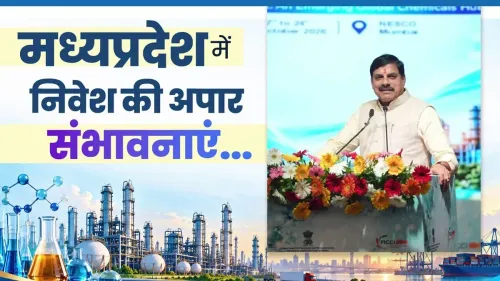
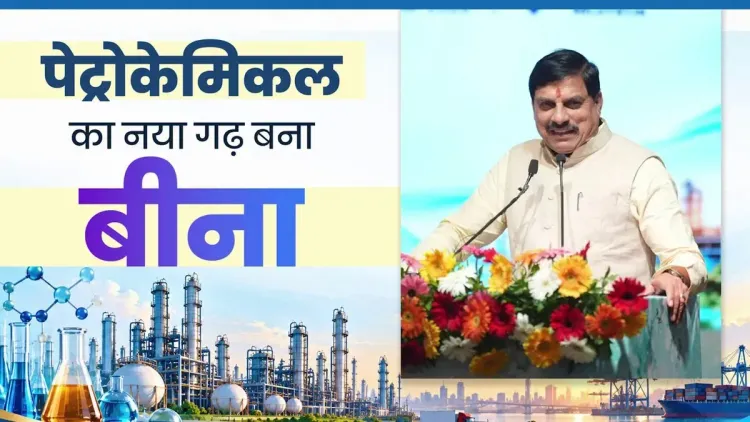
Chief Minister Dr. Mohan Yadav has announced a ₹50,000 crore downstream petrochemical project at Bina, Madhya Pradesh, leveraging the town's existing BPCL refinery to manufacture a wide range of petrochemical products under PM Modi's industrial push.
Key Takeaways
₹50,000 crore downstream petrochemical project announced for Bina, Madhya Pradesh .
Mohan Yadav made the announcement on 22 October 2026 , crediting PM Modi's leadership.
Bina Refinery , commissioned in 2011 by BPCL, provides the feedstock base for the proposed facility.
The project aligns with India's PCPIR (Petroleum, Chemicals and Petrochemicals Investment Regions) policy notified in 2007.
A large number of petrochemical products will be manufactured, targeting domestic import substitution and job creation.
Project approvals, environmental clearances, and capital deployment timelines are key milestones to watch.
A single industrial town in the heart of India is being positioned as the next big name in petrochemicals. Chief Minister Dr. Mohan Yadav of Madhya Pradesh announced on Thursday, 22 October 2026 that Bina — already home to a major refinery — is set to host a downstream petrochemical project worth ₹50,000 crore, manufacturing a wide range of petrochemical products and generating large-scale employment in the state.
Bina's refinery roots and the downstream leap
Bina, a town in Sagar district of Madhya Pradesh, has carried refining infrastructure since 2011, when the BPCL-operated Bina Refinery was commissioned. That refinery created a ready feedstock base — the critical raw-material pipeline that any downstream petrochemical facility needs to be viable. For over a decade, the refinery operated largely in isolation from a value-adding chemical cluster. The ₹50,000 crore project now announced by CM Yadav represents exactly that next step: converting refinery output into finished petrochemical goods rather than exporting crude-stage products.
In his post, CM Yadav stated: 'Bina mein ₹50 hazaar crore ki lagat se viksit hone wali downstream petrochemical pariyojna ke madhyam se badi sankhya mein petrochemical utpadon ka nirman hoga' — ('Through the downstream petrochemical project to be developed at Bina at a cost of ₹50,000 crore, a large number of petrochemical products will be manufactured.')
India's PCPIR framework and why Bina fits the blueprint
This announcement does not emerge in a vacuum. India's Petroleum, Chemicals and Petrochemicals Investment Regions (PCPIR) policy, notified in 2007, was designed precisely to create integrated refining-petrochemical clusters that reduce import dependence and capture more domestic value. States with established refineries were always the natural candidates. Madhya Pradesh — landlocked but refinery-equipped — is now making its bid under that framework.
CM Yadav credited Prime Minister Narendra Modi's leadership for accelerating investment momentum in the chemicals and petrochemicals sector nationally. The framing ties the state-level project explicitly to central government industrial policy — a pattern increasingly common as state governments compete to attract capital within Union-backed investment corridors.
Jobs, products, and what the ₹50,000 crore unlocks
At that investment scale, a project of this nature would rank among the largest single industrial investments Madhya Pradesh has announced. Downstream petrochemical facilities typically produce inputs for plastics, synthetic fibres, agrochemicals, paints, and packaging — sectors with deep backward and forward linkages across the economy. The employment multiplier is significant: construction, operations, ancillary supply chains, and logistics all draw from the regional workforce.
The broader national logic is equally clear. India remains a net importer of several petrochemical intermediates. Adding large-scale domestic capacity at a refinery-linked site like Bina directly addresses that gap — and positions Madhya Pradesh as a manufacturing state rather than merely a raw-material corridor.
Project approvals, environmental clearances, and actual capital deployment will be the milestones to watch as this announcement moves from declaration to ground-breaking.
Point of View
Anchoring a ₹50,000 crore project to PM Modi's name serves both an industrial and a political purpose: it signals Madhya Pradesh's place in India's manufacturing ambitions while tying state growth optics to national leadership. The real test will come in project execution — environmental clearances, land acquisition, and operator commitments are where similar announcements have historically stalled. If Bina clears those hurdles, it could genuinely reposition a landlocked state as a chemicals-manufacturing destination in India's industrial map.
NationPress
22 Oct 2026
Frequently Asked Questions
What is the Bina petrochemical project in Madhya Pradesh?
It is a proposed downstream petrochemical facility at Bina, Sagar district, Madhya Pradesh, with an announced investment of ₹50,000 crore. The project will manufacture a wide range of petrochemical products, leveraging feedstock from the existing BPCL Bina Refinery commissioned in 2011.
Who announced the Bina petrochemical project?
Madhya Pradesh Chief Minister Dr. Mohan Yadav announced the project on 22 October 2026, attributing the investment momentum in the sector to Prime Minister Narendra Modi's leadership.
What is the PCPIR policy and how does it relate to Bina?
India's Petroleum, Chemicals and Petrochemicals Investment Regions (PCPIR) policy, notified in 2007, promotes integrated refining-petrochemical clusters. Bina, with its operational refinery, fits the blueprint for such a cluster under this central government framework.
How many jobs will the Bina petrochemical project create?
The Chief Minister's announcement states that a large number of jobs will be created, but a precise figure has not been officially confirmed. Downstream petrochemical projects of this scale typically generate employment across construction, operations, and ancillary industries.
What is the current status of the Bina petrochemical project?
As of October 2026, the project has been announced at a cost of ₹50,000 crore. Key milestones including project operator confirmation, environmental clearances, and actual capital deployment are yet to be publicly detailed.