Ahmedabad doctor's biopsy saves Bihar girl from wrong TB diagnosis and surgery
Synopsis
A 14-year-old girl from Bihar was days away from spinal surgery for a TB diagnosis that turned out to be wrong. A single biopsy at Ahmedabad's Government Spine Institute revealed a Pseudomonas infection instead — and antibiotics did the rest. On Raksha Bandhan, the girl tied a rakhi to the doctor who changed her fate, in a moment that was equal parts medical lesson and human story.
Key Takeaways
Ikra Sheikh , a 14-year-old from Bihar , was misdiagnosed with tuberculosis and advised spinal surgery at another facility.
A biopsy at Ahmedabad's Government Spine Institute identified the actual cause as a Pseudomonas bacterial infection .
She recovered fully with targeted antibiotic treatment — no surgery, no TB medication required.
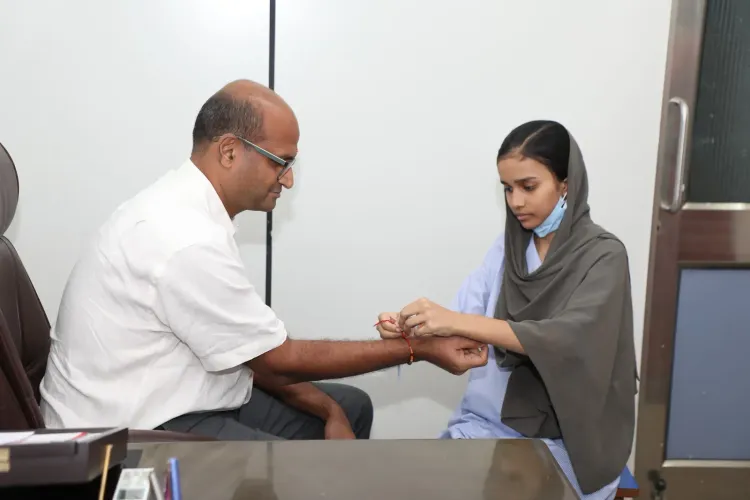
On Raksha Bandhan , Ikra tied a rakhi to her treating doctor, Dr Piyush Mittal , calling him 'a brother and protector.' Dr Mittal highlighted the case as a warning against prescribing antibiotics without laboratory-confirmed diagnosis, citing rising antimicrobial resistance .
A 14-year-old Muslim girl from Bihar, initially misdiagnosed with tuberculosis and advised spinal surgery, made a full recovery through targeted antibiotic treatment after spine specialists at Ahmedabad's Government Spine Institute identified a Pseudomonas bacterial infection through a biopsy. The case, which unfolded at the Ahmedabad Civil Hospital, came to wider attention on Raksha Bandhan when the patient, Ikra Sheikh, tied a rakhi to her treating physician, Dr Piyush Mittal, spine surgeon and institute director.
How the Misdiagnosis Came to Light
Ikra had developed severe back pain that did not respond to routine medication. An MRI-based assessment at another facility led to a diagnosis of tuberculosis, with surgery recommended as the next step. Worried by the prognosis, her family — her maternal uncle and aunt are residents of Ahmedabad — brought her to the Government Spine Institute for a second opinion.
Dr Mittal recommended a biopsy to establish the precise cause of the spinal infection. The family initially resisted, anxious about what the results might reveal, and requested that TB treatment continue in the interim. Dr Mittal patiently explained the clinical necessity of the procedure and persuaded them to proceed.
What the Biopsy Revealed
The biopsy ruled out tuberculosis entirely. Laboratory results identified the infection as being caused by the bacterium Pseudomonas — a finding that fundamentally changed the treatment pathway. Ikra was placed on appropriate antibiotics and began recovering without undergoing surgery or receiving TB medication.
The case underscores a broader clinical concern: administering antibiotics without an accurate diagnosis accelerates antimicrobial resistance, a public health challenge that health authorities have increasingly flagged. Dr Mittal noted that identifying the exact pathogen through laboratory investigation is essential before any treatment decision is finalised.
A Bond Beyond the Clinic
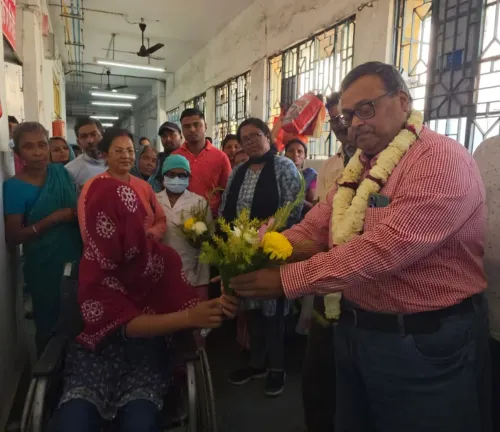
During a Raksha Bandhan programme at the institute, Ikra tied a rakhi to Dr Mittal as a gesture of gratitude. The moment drew attention for its symbolic resonance — a Muslim patient expressing familial affection toward a Hindu doctor on a Hindu festival, on a day that also coincided with Eid-e-Milad.
Ikra said: 'The doctor saved me from going down the wrong path and from a major surgery. I thought I had TB, but Dr Mittal made the correct diagnosis and gave me a new life. On this special day of Raksha Bandhan, tying a rakhi to the doctor to thank him is my greatest joy. Dr Piyushbhai is not just a doctor for me, but like a brother and protector.'
Dr Mittal on Diagnosis, Resistance, and Trust
Dr Mittal reflected on both the medical and human dimensions of the case. 'When a Muslim girl considers a Hindu doctor her brother and ties him a rakhi, it becomes a living example of social harmony,' he said. 'In the medical field, administering antibiotics without an accurate diagnosis carries the risk of superbugs and resistance, an issue that the government has also recently emphasised. Through the biopsy, we were able to identify the exact bacteria.'
He added: 'But when Ikra tied me a rakhi today, I felt proud not as a doctor but as a brother. This incident shows that the relationship between a doctor and a patient is not limited to medicines, but is also about trust and humanity.'
Dr Mittal also urged patients and families to seek proper laboratory investigation before committing to any treatment for bacterial infections, rather than relying on assumptions or imaging alone. The case is likely to be cited in discussions around diagnostic rigour and antibiotic stewardship in public hospitals.
Point of View
A crisis Indian public health officials have repeatedly warned about without sufficient clinical behaviour change. What makes this story worth more than a feel-good Raksha Bandhan feature is the procedural lesson buried inside it: families resisted the biopsy, and it took a doctor's persistence to override that resistance. That dynamic — patients and families pushing back on the very tests that could save them — plays out daily across India's public hospitals. The rakhi moment is warm; the diagnostic rigour behind it is the real headline.
NationPress
10 Oct 2026
Frequently Asked Questions
What was Ikra Sheikh's correct diagnosis?
Ikra Sheikh was found to have a spinal infection caused by the bacterium Pseudomonas, not tuberculosis as initially assessed elsewhere. The correct diagnosis was established through a biopsy conducted at Ahmedabad's Government Spine Institute.
How did doctors at the Government Spine Institute identify the real infection?
Spine surgeon Dr Piyush Mittal recommended a biopsy after reviewing Ikra's case, rather than relying solely on the earlier MRI-based assessment. Laboratory analysis of the biopsy sample identified Pseudomonas as the causative bacterium, enabling targeted antibiotic treatment.
Why did the family initially refuse the biopsy?
Ikra's family was anxious about what the biopsy results might reveal and initially preferred to continue TB treatment. Dr Mittal explained the clinical necessity of the procedure and persuaded them to proceed, which led to the accurate diagnosis.
What is the broader health concern highlighted by this case?
Dr Mittal flagged the risk of prescribing antibiotics without a confirmed diagnosis, noting it contributes to antimicrobial resistance and the emergence of superbugs — a concern Indian health authorities have increasingly raised. Proper laboratory investigation before treatment is essential.
What was the significance of Ikra tying a rakhi to Dr Mittal?
The gesture occurred during a Raksha Bandhan programme at the institute and coincided with Eid-e-Milad. Ikra, a Muslim girl, tied the rakhi to Dr Mittal, a Hindu doctor, as an expression of gratitude and familial trust — a moment Dr Mittal described as a living example of social harmony.