Ayushman Bharat scheme: How 4 surgeries gave Gujarat man Jaykishan his life back
Synopsis
Years on a wheelchair, weight down to 30 kg, no money for treatment — then Ayushman Bharat stepped in. Four surgeries later at Ahmedabad's Government Spine Institute, 32-year-old Jaykishan Kapadia from Gujarat's Mehsana district is walking again and planning his future. His story puts a human face on what India's flagship health insurance scheme can mean for those with nowhere else to turn.
Key Takeaways
Jaykishan Kapadia , 32 , from Mehsana district, Gujarat , regained mobility after years of being wheelchair-bound.
His condition stemmed from steroid-induced joint deterioration following a kidney transplant in 2012 .
A total of four surgeries , including bilateral hip replacements, were performed at the Government Spine Institute, Ahmedabad .
The entire treatment was covered under the Ayushman Bharat scheme at no cost to the family.
At his lowest, Jaykishan weighed just 30–35 kilograms and could not get out of bed unaided.
He now walks independently and hopes to find employment to support his mother.
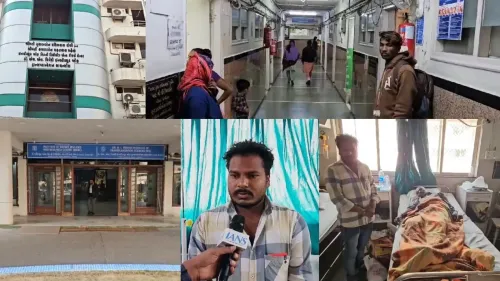
Jaykishan Kapadia, a 32-year-old resident of Mehsana district in Gujarat, spent years confined to a wheelchair, his weight dropping to barely 30–35 kilograms and his hope of walking again nearly extinguished — until the Ayushman Bharat scheme intervened and funded a series of surgeries that have since allowed him to stand and move independently. His recovery, completed at the Government Spine Institute in Ahmedabad, is being cited as a concrete illustration of the Central government's flagship health coverage programme reaching the economically disadvantaged.
A Health Crisis That Began at 17
Jaykishan's ordeal started early. He developed a kidney ailment at the age of 17, and his mother saved his life by donating one of her own kidneys. The transplant was performed in 2012, and his health remained relatively stable for a period. However, prolonged use of steroid medications — a standard post-transplant protocol — gradually took a severe toll on both his hip joints.
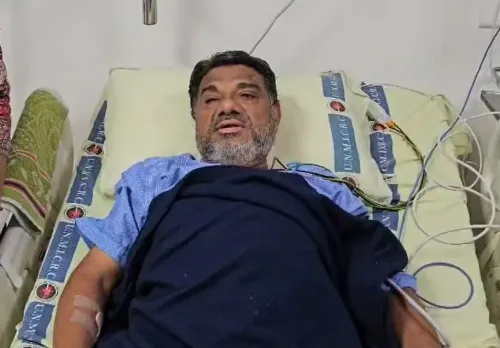
Over time, his limbs stiffened, joint pain became debilitating, and he lost the ability to perform basic daily tasks. He grew entirely dependent on a wheelchair. Financial hardship made continued private treatment impossible, and at his lowest, his weight had fallen to roughly 30–35 kilograms.
Treatment Under Ayushman Bharat
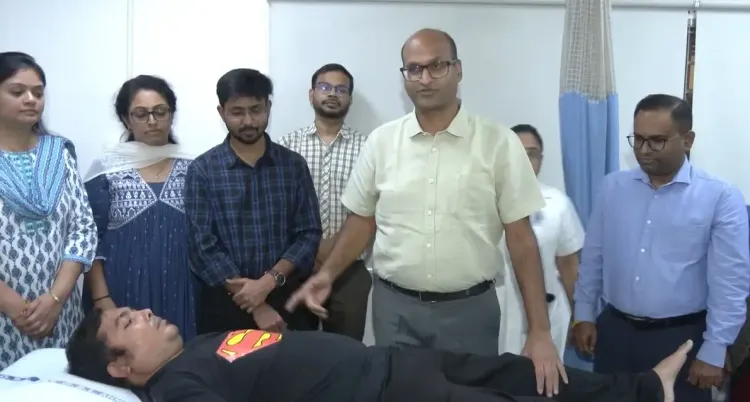
Approximately three years ago, Jaykishan's mother brought him to the Government Spine Institute in Ahmedabad, where he came under the care of Dr. Piyush Mittal, Director of the Institute, and his team of specialists. His treatment was covered entirely under the Ayushman Bharat scheme, which provides cashless healthcare to economically weaker sections across India.
A total of four surgeries were carried out, including bilateral hip replacement procedures performed sequentially — one hip at a time. Alongside surgery, a structured programme of physiotherapy and rehabilitation was initiated to rebuild his strength and mobility.
What the Doctors Said
Dr. Piyush Mittal described Jaykishan's condition at the time of admission as critical. 'We started his treatment involving physiotherapy and necessary medication. Focus was also placed on strengthening his mental well-being. Subsequently, both his hips were operated on, one by one. Our goal was to enable him to stand on his own feet again and lead an independent life,' Dr. Mittal said.
He noted that Jaykishan could not get out of bed unaided when he first arrived, his bones had weakened significantly, and both hip joints were severely compromised.
Jaykishan's Own Words
Reflecting on his transformation, Jaykishan said: 'My mother brought me to the hospital in a wheelchair. At that time, I couldn't even stand up properly. The doctors here performed surgery on me — first on one leg, and then on the other. I feel much better now. There was a time when I never thought I would be able to walk again, but seeing the improvement in my condition now feels wonderful.'
He expressed deep gratitude to the government for making the welfare scheme available to patients like him, and said he now aspires to find employment and become a source of financial support for his mother — who has sacrificed enormously for his survival.
Broader Significance
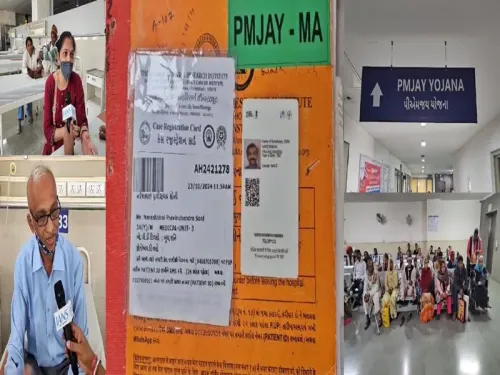
The Ayushman Bharat Pradhan Mantri Jan Arogya Yojana (PM-JAY) was launched by the Centre to provide health coverage of up to ₹5 lakh per family per year for secondary and tertiary hospitalisation, targeting the bottom 40% of India's population by economic status. Cases such as Jaykishan's — involving multiple high-cost surgeries that would be unaffordable out-of-pocket — represent the programme's stated core use case. With complex orthopaedic procedures among the costlier interventions in the public health system, the scheme's role in funding his bilateral hip replacements underscores its reach in Gujarat's district-level population.
Point of View
Multi-stage interventions like bilateral hip replacements that would otherwise bankrupt a low-income household. The scheme passed that test here, but individual recoveries, however compelling, should not substitute for outcome data at scale: how many similarly complex cases are reaching public facilities, and how many are still falling through the gaps? Gujarat's relatively strong public hospital infrastructure made this outcome possible; states with weaker tertiary networks may not replicate it as readily.
NationPress
3 Nov 2026
Frequently Asked Questions
Who is Jaykishan Kapadia and why is his story significant?
Jaykishan Kapadia is a 32-year-old resident of Mehsana district in Gujarat who spent years confined to a wheelchair due to severe hip joint deterioration caused by post-transplant steroid use. His recovery through Ayushman Bharat-funded surgeries at the Government Spine Institute in Ahmedabad highlights the scheme's capacity to cover high-cost orthopaedic interventions for economically disadvantaged patients.
What is the Ayushman Bharat scheme and who does it cover?
Ayushman Bharat Pradhan Mantri Jan Arogya Yojana (PM-JAY) is a Central government health insurance scheme providing cashless coverage of up to ₹5 lakh per family per year for secondary and tertiary hospitalisation. It targets the bottom 40% of India's population by economic status, with a focus on those who cannot afford private medical care.
What surgeries did Jaykishan undergo at the Government Spine Institute?
Jaykishan underwent a total of four surgeries, including bilateral hip replacement procedures performed sequentially — one hip at a time — along with physiotherapy and a rehabilitation programme. All procedures were conducted by a team led by Dr. Piyush Mittal, Director of the Government Spine Institute in Ahmedabad.
What caused Jaykishan's hip joints to deteriorate?
His hip joint deterioration was a consequence of long-term steroid medication prescribed following a kidney transplant in 2012. The steroids, while necessary to prevent organ rejection, gradually weakened his bones and damaged both hip joints, eventually leaving him unable to perform daily tasks or move without a wheelchair.
What is Jaykishan's condition now and what are his plans?
Jaykishan is now able to stand and walk independently following his surgeries and rehabilitation. He has expressed a desire to seek employment so he can financially support his mother, who donated one of her kidneys to save his life when he was 17.