BJD to corner Odisha govt on Ganjam floods, MMDR Act in Winter Session
Synopsis
Naveen Patnaik has mapped out a sweeping attack on Odisha's ruling government ahead of the Winter Session opening Wednesday — from man-made Ganjam floods and a 'black law' MMDR amendment to the unresolved Kotia boundary dispute and reports of senior citizens dying over pension delays. After 24 years in power, the BJD is signalling it intends to be a sharply vocal opposition.
Key Takeaways
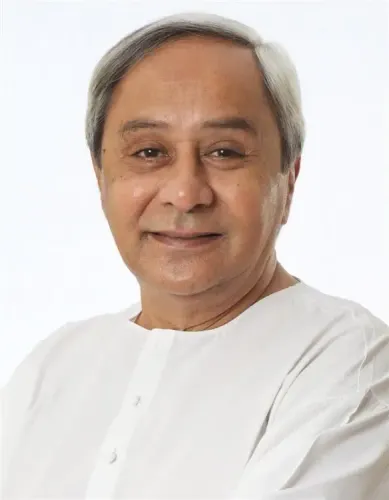
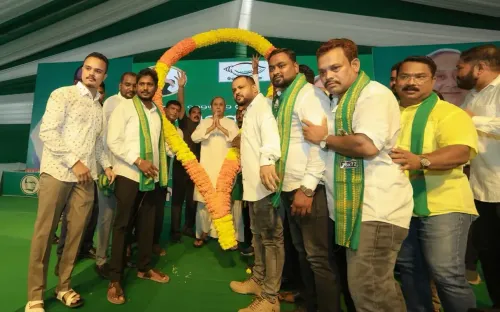
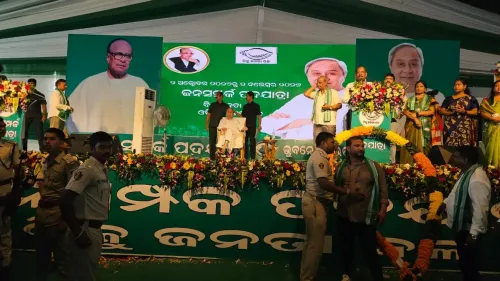
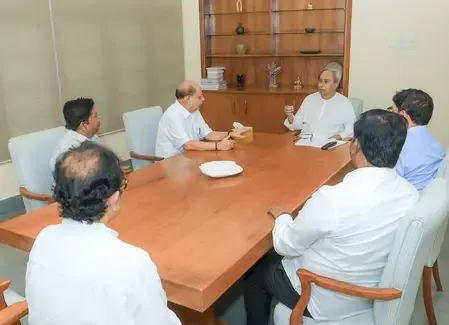
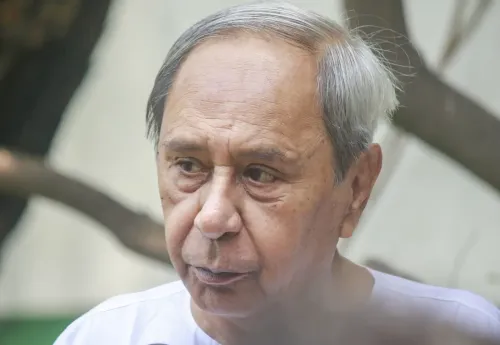
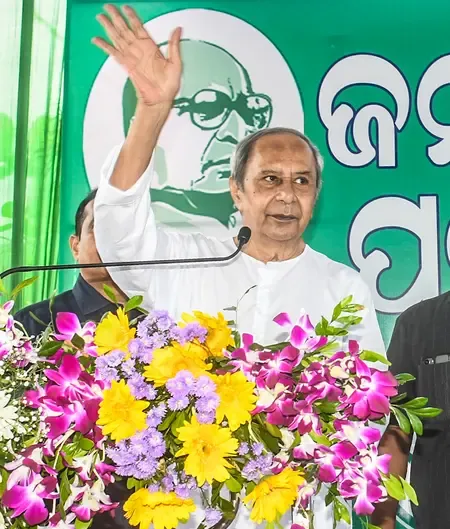
BJD president Naveen Patnaik addressed the party's Legislature Party meeting in Bhubaneswar on 17 November 2026 .
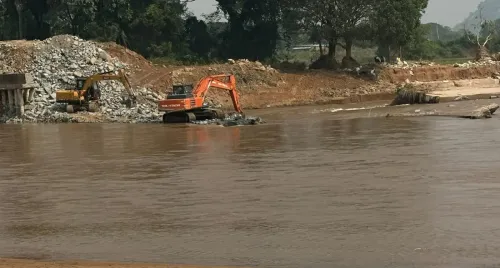
Patnaik called the Ganjam floods a 'man-made disaster' caused by state government 'incompetence' and alleged political bias in relief distribution.
He labelled the MMDR Amendment Act a 'black law', saying it has caused huge losses to Odisha's economy; BJD will continue to oppose it.
On the Kotia dispute , Patnaik said the NDA's shared power in Odisha and Andhra Pradesh has not produced a resolution, citing 'lack of political will'.
The BJD will also raise farmer welfare, social security pension delays, rising commodity prices, and deteriorating law and order in the Winter Session.
The Odisha Assembly Winter Session begins on Wednesday, 18 November 2026 .
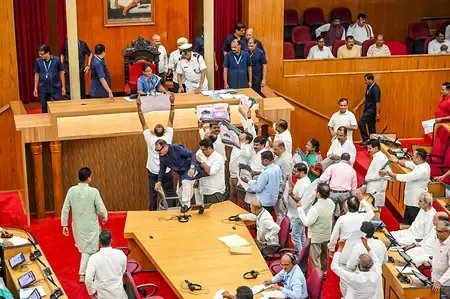
Bhubaneswar — Leader of Opposition and Biju Janata Dal (BJD) president Naveen Patnaik on Tuesday, 17 November 2026, launched a sharp offensive against the ruling state government, outlining a multi-pronged strategy to press it on a range of unresolved issues when the Odisha Assembly Winter Session opens on Wednesday.
Ganjam Floods: 'Man-Made Disaster, National Embarrassment'
Addressing the BJD Legislature Party meeting in Bhubaneswar, Patnaik described the recent flooding in Ganjam district as a man-made calamity that has damaged Odisha's standing both nationally and internationally. 'The recent man-made floods in Ganjam have tarnished Odisha's image nationally and internationally. The disaster that occurred in Ganjam is the finest example of the State government's incompetence,' he said.
Patnaik expressed particular anguish over delayed relief reaching flood-affected residents and alleged that the distribution of aid was being skewed along political lines. He said the suffering of Ganjam's people had caused him 'immense pain' and vowed the BJD would not let the government escape accountability on the floor of the House.
MMDR Amendment: BJD Calls It a 'Black Law'
The former Chief Minister also trained his guns on the amendments to the Mines and Minerals (Development and Regulation) Act (MMDR Act), describing the legislation as a 'black law' that has caused 'huge losses to Odisha' and 'shaken the State's economic backbone.' He confirmed the BJD would continue to oppose the MMDR Amendment Act and use the Winter Session as a fresh platform to register that opposition.
Odisha is among India's largest mineral-producing states, making any revision to the MMDR framework a high-stakes issue for the state exchequer and the communities that depend on mining royalties.
Kotia Dispute, Farmers and Law and Order
On the long-festering Kotia village cluster dispute with Andhra Pradesh, Patnaik argued that the shared National Democratic Alliance (NDA) alignment of both state governments had not translated into any tangible resolution. 'Despite the NDA being in power in both Andhra Pradesh and Odisha, the lack of political will is making the issue more complicated. The BJD will continue its fight to protect the territorial integrity of Odisha,' he said.
Patnaik also accused the government of neglecting farmers since the 'double-engine government' assumed office, pledging that his party was prepared to take 'all necessary steps' for their welfare, particularly on paddy procurement. He flagged the rising prices of essential commodities and vegetables, and expressed alarm at reports of senior citizens allegedly dying by suicide at various locations, which he attributed to the government's slow disbursal of social security pensions.
Student Politics and Gen-Z Support
Referencing recent students' union elections, Patnaik claimed that young voters in Odisha, described as the Gen-Z demographic, had continued to back the BJD even amid what he alleged was the use of 'money and muscle power' and government interference. The claim signals that the BJD, out of power after a 24-year run, intends to position itself as a credible opposition force appealing across generational lines.
What to Expect in the Winter Session
The agenda the BJD has outlined is notably broad — cutting across disaster response, mineral legislation, inter-state boundary disputes, agricultural policy, social welfare, law and order, and civic prices. That range of issues is likely to make the Winter Session, beginning Wednesday, a contentious one, testing the ruling government's floor management and its readiness to defend its record on each front.
Point of View
From flood relief bias to pension-linked suicides, is strategically significant: it frames the ruling NDA government as incompetent on welfare, corrupt on relief, and indifferent to Odisha's territorial and economic interests. What mainstream coverage underplays is the MMDR angle — Odisha's royalty and revenue from minerals is foundational to its fiscal headroom, and any legislation that erodes that is not a niche grievance but a core economic threat. The Winter Session will be a test of whether the BJD can convert its laundry list into focused legislative pressure, or whether the government's floor majority will simply absorb the hits.
NationPress
17 Nov 2026
Frequently Asked Questions
What issues will the BJD raise in the Odisha Assembly Winter Session?
The BJD plans to raise at least six major issues: the Ganjam floods and alleged political bias in relief distribution, the MMDR Amendment Act, the Kotia boundary dispute with Andhra Pradesh, paddy procurement and farmer welfare, social security pension delays, and rising prices of essential commodities. The Winter Session begins on 18 November 2026.
Why is Naveen Patnaik calling the Ganjam floods 'man-made'?
Patnaik attributed the recent flooding in Ganjam district to administrative failures by the state government, calling the disaster the 'finest example of the State government's incompetence.' He also alleged that flood relief was being distributed based on political affiliation rather than need, an accusation the government has not publicly addressed.
What is the BJD's objection to the MMDR Amendment Act?
The BJD has described the Mines and Minerals (Development and Regulation) Amendment Act as a 'black law' that has caused huge losses to Odisha and undermined the state's economic backbone. Odisha is one of India's largest mineral-producing states, making MMDR changes directly consequential to its revenues and local communities.
What is the Kotia dispute?
The Kotia dispute involves a cluster of villages on the Odisha-Andhra Pradesh border, with both states claiming jurisdiction. Patnaik argued on Tuesday that despite the NDA governing both states, there has been no resolution due to a 'lack of political will', and vowed the BJD would continue fighting to protect Odisha's territorial integrity.
Who is Naveen Patnaik and why does his opposition matter?
Naveen Patnaik is the president of the Biju Janata Dal and served as Chief Minister of Odisha for 24 consecutive years before his party lost the 2024 state assembly election. As Leader of Opposition, his targeting of the new government carries significant political weight and shapes public perception of the ruling administration's performance.