BJD's Santrupt Misra on UPI charges: find other ways to fund tech upgrades
Synopsis
BJD's Santrupt Misra has drawn a clear line in the sand: fund UPI's tech upgrades through any means except taxing small traders. With Naveen Patnaik having already raised the alarm and Congress invoking the 'Jizya tax' comparison, a multiparty opposition front is forming against the Centre's 0.4% MDR on UPI transactions above ₹2,000 — and the demand for parliamentary committee transparency adds a new accountability angle.
Key Takeaways
BJD leader Santrupt Misra on 19 September 2026 called on the Centre to explore alternative funding for UPI infrastructure instead of levying charges on small businesses.
The government recently announced a 0.4% Merchant Discount Rate (MDR) on UPI transactions above ₹2,000 .
BJD President Naveen Patnaik had raised similar concerns a day earlier, urging protection for small traders and consumers.
Misra demanded Standing Committee Chairperson Bhartruhari Mahtab clarify whether the Finance Committee discussed the UPI charge proposal.
Odisha Congress compared the MDR to the historic Jizya tax , escalating the political stakes of the debate.
Misra also called for greater transparency in parliamentary committee proceedings on matters of public interest.
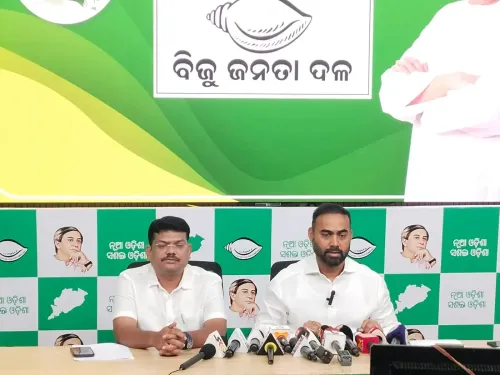
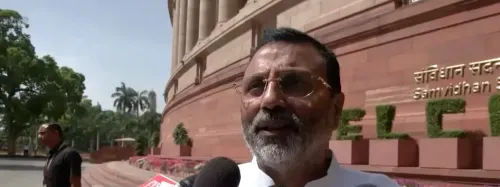
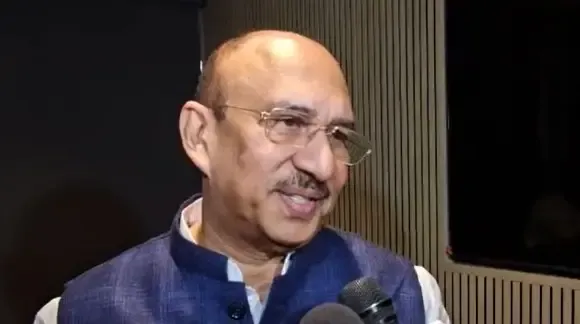
Biju Janata Dal (BJD) leader Santrupt Misra on Saturday, 19 September 2026, called on the Central government to identify alternative funding mechanisms for Unified Payments Interface (UPI) infrastructure upgrades and cybersecurity, insisting that the burden must not fall on small businesses and consumers. His remarks come a day after BJD President and Odisha Leader of the Opposition Naveen Patnaik flagged concerns over the recently announced 0.4 per cent Merchant Discount Rate (MDR) on certain UPI transactions above ₹2,000.
What Santrupt Misra Said
Addressing reporters in New Delhi, Misra acknowledged UPI as a 'very important innovation' but questioned the fairness of how its future development would be financed. 'The question is not that it requires funding to create cyber security and improvement in technology platform, rather the question is how is it to be funded? Who pays for it? And how do we ensure that there is a sustainable investment into the process?' he said.
He was unambiguous about the party's position: 'BJD's stand is that the consumers and small businesses have to be protected.' He added that 'there can be many other avenues of funding this process, we have to explore all of that, rather than imposing small businesses with further charges.'
Transparency in Parliamentary Committees
Congress MP Gaurav Gogoi had claimed on social media that the Parliament Standing Committee on Finance had not discussed the UPI charge proposal. Misra said he had no knowledge of this claim, but called on Standing Committee Chairperson Bhartruhari Mahtab to publicly clarify whether the committee had deliberated on the issue and what the nature of those discussions was. He stressed that parliamentary committee proceedings 'need to be more transparent in matters of public interest,' adding: 'Public needs to know what exactly was discussed on a particular matter and why constructive ideas, if present, were not accepted?'
Odisha Congress Compares MDR to 'Jizya Tax'
The political temperature around the MDR announcement rose further as the Odisha Congress drew a sharp historical parallel, comparing the 0.4 per cent MDR on UPI transactions to the medieval Jizya tax. The comparison signals that opposition parties are seeking to frame the charge as a regressive levy targeting ordinary traders and users, ahead of what could be a sustained legislative campaign against it.
Background: Why UPI Charges Are Contentious
UPI has been central to India's digital payments revolution, processing billions of transactions monthly and serving as a lifeline for small merchants across the country. Its zero-MDR policy has been a key driver of adoption, particularly among micro-enterprises and low-income users. Any rollback — even on high-value transactions — risks chilling adoption and disproportionately affecting the informal economy. This is the context in which parties across the opposition are aligning against the proposed charge.
What Happens Next
With multiple opposition voices — including BJD, Congress, and regional parties — coalescing around consumer protection, the Centre will face growing pressure to either roll back the MDR or present a detailed justification. The call for Standing Committee clarification adds a parliamentary accountability dimension that could force a formal debate. Whether the government offers an alternative funding model or holds its position will likely define the political narrative around UPI in the weeks ahead.
Point of View
000 was always going to be politically combustible — UPI's zero-cost promise has been one of the Centre's most visible digital governance wins, and walking it back even partially hands the opposition a ready-made consumer welfare issue. What is notable here is that the criticism is coming not just from Congress, but from BJD — a regional party that has historically been careful about confronting the Centre. Misra's demand for parliamentary committee transparency is the sharper blow: it raises the possibility that the proposal bypassed the usual legislative scrutiny, which, if confirmed, would be a governance accountability story, not merely a policy disagreement. The 'Jizya tax' framing by Odisha Congress, however rhetorically excessive, reflects a calculation that emotive language will resonate with small traders who have built their livelihoods on free UPI.
NationPress
19 Sept 2026
Frequently Asked Questions
What is the UPI MDR charge that opposition parties are objecting to?
The Central government has announced a 0.4 per cent Merchant Discount Rate (MDR) on certain UPI transactions above ₹2,000. Critics, including BJD and Congress, argue this will burden small traders and consumers who have come to rely on free UPI payments.
What is BJD's position on the UPI charge?
BJD's position, as articulated by leader Santrupt Misra, is that consumers and small businesses must be protected. The party wants the government to identify alternative funding sources for UPI's technology and cybersecurity upgrades rather than imposing charges on merchants.
What has Santrupt Misra asked the Parliament Standing Committee to do?
Misra called on Standing Committee Chairperson Bhartruhari Mahtab to publicly clarify whether the Finance Committee discussed the UPI charge proposal and what the nature of that discussion was. He also said parliamentary committee proceedings need to be more transparent on matters of public interest.
How has the Odisha Congress responded to the UPI MDR announcement?
The Odisha Congress strongly criticised the Union government, comparing the 0.4 per cent MDR on UPI transactions to the historic Jizya tax. The comparison is intended to frame the charge as a regressive levy on ordinary traders and users.
Who else has raised concerns about the UPI charges besides Santrupt Misra?
BJD President and Odisha Leader of the Opposition Naveen Patnaik raised concerns a day earlier, on Friday, urging that the interests of common people and small traders such as shopkeepers be protected. Congress MP Gaurav Gogoi also claimed on social media that the Parliament Standing Committee on Finance had not discussed the proposal.