BJP accuses Rahul Gandhi of politicising President Murmu meeting, poses 5 questions on EVMs and SIR
Synopsis
The BJP fired back at Rahul Gandhi on Friday, accusing him of misrepresenting a meeting with President Droupadi Murmu and posing five pointed questions that dare the Congress to produce evidence for its 'vote chori' claims — while citing ballot-paper poll results in Assam to argue that the party's EVM and SIR allegations simply cannot both be true at once.
Key Takeaways
BJP on 9 October 2026 accused Rahul Gandhi of politicising the INDIA bloc's meeting with President Droupadi Murmu .
BJP spokesperson Sudhanshu Trivedi argued Gandhi's twin allegations on EVMs and the Special Intensive Revision (SIR) of electoral rolls are logically contradictory.
BJP cited Silchar Municipal Corporation ballot-paper elections in Assam , where NDA won 34 of 42 seats , as counter-evidence against manipulation claims.
Trivedi posed five formal questions to Congress covering electoral-roll verification, CCTV footage requests, and evidence for Gandhi's account of the presidential meeting.
Congress has been urged to seek CCTV footage within the 45-day statutory window or forfeit the option.
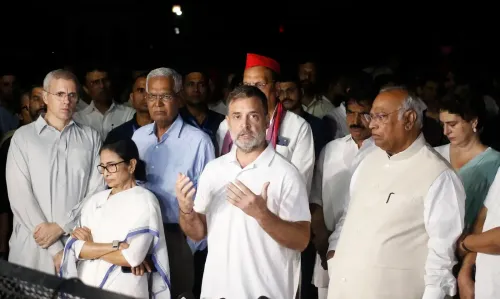
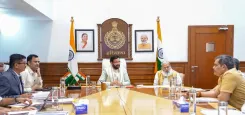
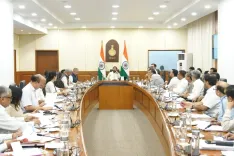
The Bharatiya Janata Party (BJP) on Friday, 9 October 2026, accused Congress leader Rahul Gandhi of politicising his delegation's meeting with President Droupadi Murmu and dragging the country's highest constitutional office into a partisan narrative. The party issued a five-point challenge to the Congress, demanding the opposition substantiate its allegations of 'vote chori' and electoral irregularities before the public.
BJP's Core Accusation
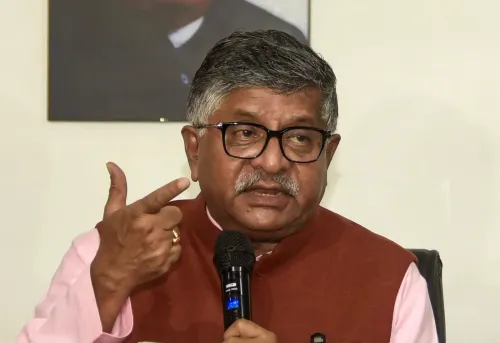
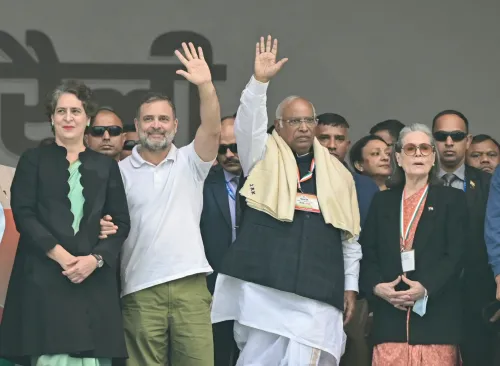
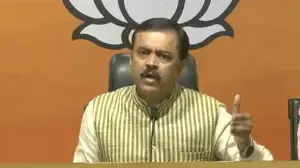
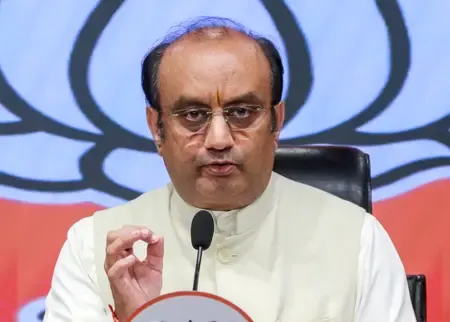
Addressing reporters in New Delhi, BJP national spokesperson and Rajya Sabha MP Sudhanshu Trivedi said Gandhi's remarks following the INDIA bloc delegation's meeting with the President appeared driven more by political considerations than factual evidence. Trivedi maintained that only those physically present at the meeting could accurately represent what had transpired, and questioned Gandhi's claim that President Murmu had responded positively to the delegation's allegations.
Drawing a pointed historical parallel, Trivedi recalled that Gandhi had previously tendered an unconditional apology in court over statements linking the Supreme Court to the 'Chowkidar Chor Hai' slogan during the 2019 Lok Sabha elections. He alleged Gandhi was now making similar unsubstantiated claims — this time in the name of the President — to advance his party's political agenda.
The Electoral Rolls and EVM Allegations
Trivedi also questioned the internal coherence of the Congress's twin allegations: one targeting Electronic Voting Machines (EVMs) and another targeting the Special Intensive Revision (SIR) of electoral rolls. He argued that the two lines of attack were logically contradictory and could not simultaneously hold true, accusing the party of deliberately creating confusion around the electoral process.
The BJP spokesperson further asked whether Congress's Booth Level Agents (BLAs) had verified voter lists during recent by-elections and whether party polling agents had been present at polling stations and counting centres. He questioned whether the Congress had raised any formal objections during the electoral process and urged the party to seek CCTV footage within the stipulated 45-day window rather than citing an expired deadline later.
Silchar Municipal Polls Cited as Counter-Evidence
In a bid to undercut the Congress's broader narrative on electoral manipulation, Trivedi cited the Silchar Municipal Corporation elections in Assam, which were conducted using ballot papers rather than EVMs. He noted that the BJP and its National Democratic Alliance (NDA) allies had won 34 of the 42 seats in that contest. Trivedi argued the result contradicted the opposition's claims that electoral outcomes were being engineered through technological or administrative means.
BJP's Five Questions to Congress
Trivedi formally posed five questions to the Congress party:
First: Did the Congress verify electoral rolls during the by-elections and raise any objections or file complaints regarding them?
Second: Were Congress representatives present during polling and counting, and did they raise objections to any aspect of the CCTV-recorded process?
Third: Will the party seek CCTV footage or other relevant information within the stipulated 45-day period?
Fourth: What evidence supports Gandhi's account of what the President said during the delegation's meeting?
Fifth: Are the EVM manipulation allegations correct, or are the SIR-related irregularity allegations correct — given that both claims cannot simultaneously be true?
Broader Pattern and What Comes Next
This is not the first time the BJP has accused the Congress of targeting constitutional institutions following electoral setbacks. Trivedi reiterated that Gandhi and the Congress must present verifiable evidence rather than use unsubstantiated allegations for political mobilisation. The opposition has not yet formally responded to the BJP's five-point questionnaire, and the political sparring over the SIR process and EVMs is expected to intensify as state election cycles approach.
Point of View
A constitutionally sensitive arena that both sides now risk cheapening. The Congress's dual EVM-and-SIR critique does carry an internal tension Trivedi is right to flag — but the BJP's own Silchar counter-example, while tactically neat, sidesteps the structural questions about the SIR process that civil society groups have separately raised. The story to watch is not which side scores the next point, but whether any formal evidence is ever placed on the table.
NationPress
10 Oct 2026
Frequently Asked Questions
Why did the BJP accuse Rahul Gandhi of politicising the President's meeting?
The BJP accused Rahul Gandhi of misrepresenting what occurred during the INDIA bloc delegation's meeting with President Droupadi Murmu on 9 October 2026, alleging he made claims about the President's response that could not be verified by outsiders. BJP spokesperson Sudhanshu Trivedi argued Gandhi was using the constitutional office to advance a political narrative, just as he had previously used references to the Supreme Court — for which he later apologised.
What is the Special Intensive Revision (SIR) of electoral rolls?
The Special Intensive Revision (SIR) is an Election Commission of India exercise to comprehensively update voter registration lists, adding eligible new voters and removing ineligible entries. The opposition INDIA bloc has protested against the SIR process, alleging it has led to irregular deletions or additions in voter rolls.
What are the five questions the BJP posed to the Congress?
The BJP asked whether Congress verified electoral rolls and filed objections during recent by-elections; whether its agents were present and raised objections during polling and counting; whether it would seek CCTV footage within the 45-day deadline; what evidence supports Gandhi's account of the President's reaction; and whether the EVM manipulation or the SIR irregularity allegation is correct, given both cannot simultaneously be true.
How did the BJP use the Silchar Municipal Corporation results against the Congress?
BJP spokesperson Sudhanshu Trivedi cited the Silchar Municipal Corporation elections in Assam — conducted via ballot papers, not EVMs — where the BJP and NDA allies won 34 of 42 seats. He used the result to argue that electoral outcomes were not being engineered through EVMs, since the same alliance won even when machines were not in use.
What happens next in the BJP-Congress dispute over EVMs and SIR?
The Congress has not yet formally responded to the BJP's five-point questionnaire as of 9 October 2026. The dispute over EVM integrity and the SIR process is expected to continue, particularly as state election cycles draw closer and both parties look to frame voter trust as a campaign issue.