CM Sai Honours Tribal Legacy at Karma Tihar 2026
Synopsis
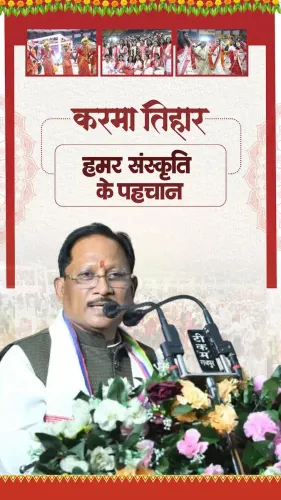
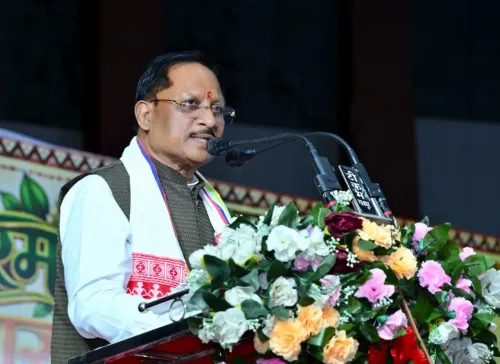
Chief Minister Vishnu Deo Sai addressed Karma Tihar 2026 at Raipur's Balbir Singh Juneja Indoor Stadium, honouring the tribal community's 'incomparable' role in India's freedom struggle and invoking the legacy of Veer Narayan Singh.
Key Takeaways
CM Vishnu Deo Sai addressed Karma Tihar 2026 at Balbir Singh Juneja Indoor Stadium, Raipur on 10 October 2026 .
Sai described the tribal community's contribution to India's independence struggle as 'incomparable' (atulaniya) .
The event invoked the legacy of Veer Narayan Singh , widely considered Chhattisgarh's first freedom fighter , executed by the British in 1857 .
Chhattisgarh's Scheduled Tribe population constitutes roughly 32 percent of the state's total — among the highest in India.
Sai, Chhattisgarh's first tribal Chief Minister , has consistently used tribal festivals as platforms for Janjatiya Gaurav recognition.
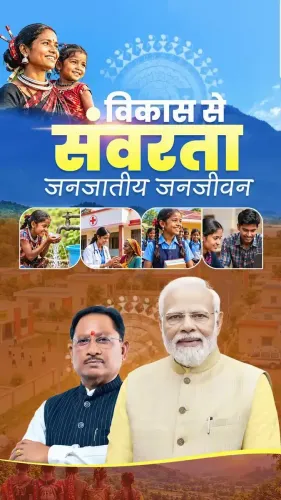
The #JanjatiyaGaurav campaign aligns with the central government's Janjatiya Gaurav Divas observed on 15 November , Birsa Munda's birth anniversary.
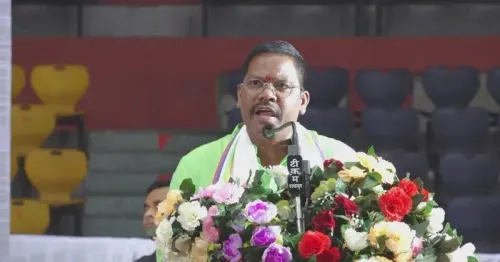
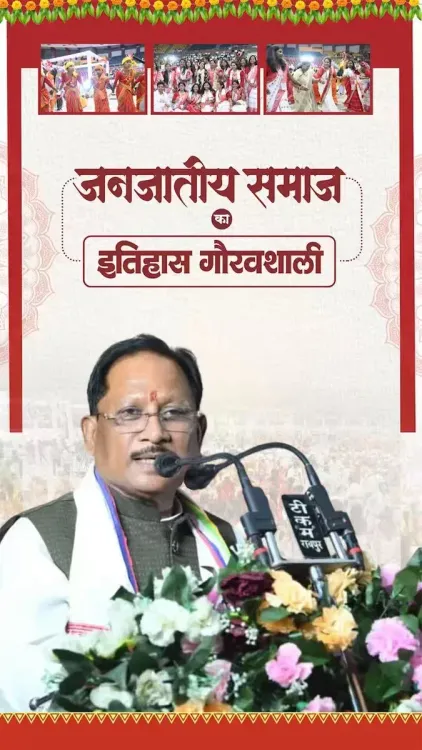
At Balbir Singh Juneja Indoor Stadium in Raipur on Saturday, 10 October 2026, Chhattisgarh Chief Minister Vishnu Deo Sai delivered a pointed tribute to the tribal communities whose sacrifices shaped India's freedom — a reminder that the independence movement was never just an urban story.
Speaking at the Karma Tihar 2026 celebrations, CM Sai declared: 'Hamare janjatiya samaj ka itihas gauravshali raha hai' — 'The history of our tribal society has been glorious.' He added that the contribution of the tribal community in the country's struggle for independence has been 'atulaniya' — incomparable.
Karma Tihar: A Festival That Carries History
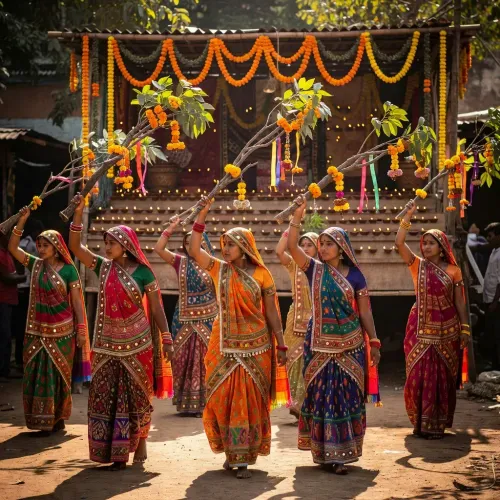
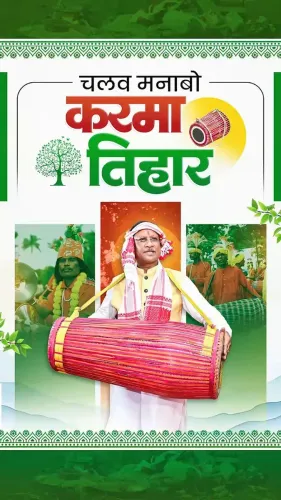
Karma Tihar is one of the most significant festivals celebrated by the tribal communities of Chhattisgarh, Jharkhand, and adjoining belts of central India. Rooted in the worship of the Karma tree, the festival honours nature, fertility, and ancestral identity. In Chhattisgarh, it has been elevated in recent years into a platform for asserting tribal cultural pride and political recognition.
The hashtag #VeerNarayanSingh in the official post points directly to one of the community's most celebrated martyrs — Veer Narayan Singh, widely regarded as the first freedom fighter from what is now Chhattisgarh, who was publicly executed by the British in Raipur in 1857. His name invoked at this gathering is no accident: it connects the festival's celebratory spirit to a lineage of resistance.
Sai's Consistent Push for Janjatiya Identity
Chief Minister Vishnu Deo Sai, himself from the Kurmi tribal community, assumed office in December 2023 as Chhattisgarh's first tribal Chief Minister under the BJP government. His appointment was widely read as a deliberate signal to the state's substantial Scheduled Tribe population, which accounts for roughly 32 percent of Chhattisgarh's total population — one of the highest proportions among major Indian states.
Since taking office, Sai has consistently used events like Karma Tihar to reinforce the narrative of tribal contributions being acknowledged at the highest level of the state. The #JanjatiyaGaurav framing echoes the central government's Janjatiya Gaurav Divas, observed annually on 15 November — the birth anniversary of Birsa Munda — as part of a broader effort to embed tribal heroes into mainstream national history.
Why This Moment in Raipur Matters
Holding this celebration at the Balbir Singh Juneja Indoor Stadium — one of Raipur's largest indoor venues — signals scale and deliberate visibility. This is not a quiet ritual; it is a state-sponsored affirmation that tribal culture and its freedom-fighting legacy deserve the largest stage available.
In a state where tribal land rights, forest access, and political representation remain live issues, a Chief Minister who is himself from the community using this platform to invoke independence-era sacrifice sends a message that travels well beyond the stadium walls.
The history is glorious, CM Sai said — and by choosing Karma Tihar to say it, he made sure the future is watching.
Point of View
Sai is working to translate symbolic recognition into durable political loyalty. The invocation of Veer Narayan Singh is particularly significant: embedding 19th-century tribal martyrs into the mainstream freedom-struggle narrative counters long-standing grievances that this history was overlooked in textbooks and public memory. Whether symbolic gestures translate into concrete gains — on land rights, forest access, and economic mobility — will ultimately define how this administration is judged by the very communities it celebrates.
NationPress
10 Oct 2026
Frequently Asked Questions
What is Karma Tihar and where is it celebrated?
Karma Tihar is a major festival of the tribal communities of central India, particularly in Chhattisgarh and Jharkhand, centred on the worship of the Karma tree and celebrating nature, fertility, and ancestral identity. In 2026, Chhattisgarh's state celebrations were held at Balbir Singh Juneja Indoor Stadium in Raipur.
Who is Vishnu Deo Sai and what is his connection to the tribal community?
Vishnu Deo Sai is the Chief Minister of Chhattisgarh and the state's first tribal Chief Minister, belonging to the Kurmi tribal community. He assumed office in December 2023 after the BJP's victory in the state assembly elections.
Who was Veer Narayan Singh?
Veer Narayan Singh is widely regarded as the first freedom fighter from what is now Chhattisgarh. He led an uprising against British rule and was publicly executed in Raipur in 1857, making him a revered martyr for the region's tribal communities.
What is Janjatiya Gaurav Divas?
Janjatiya Gaurav Divas is observed annually on 15 November, the birth anniversary of tribal icon Birsa Munda. It was instituted by the central government to recognise the contributions of tribal communities to India's history and freedom movement.
What percentage of Chhattisgarh's population is from Scheduled Tribes?
Scheduled Tribes account for approximately 32 percent of Chhattisgarh's total population, one of the highest proportions among major Indian states, making the community politically and culturally central to the state's identity.