Lowy Index: BJP cites India rank to counter Rahul Gandhi
Synopsis
BJP MP Ravi Shankar Prasad cited India’s third-place ranking in the Lowy Institute’s Asia Power Index to challenge Rahul Gandhi’s warning of an economic disaster. Gandhi’s remarks focused on unemployment and education, while the index assesses broader measures of regional power.
Key Takeaways
BJP MP Ravi Shankar Prasad cited the Lowy Institute’s Asia Power Index 2026 at a press conference in New Delhi .
India ranked third in Asia with 40.5 points , according to the report cited by Prasad.
Prasad said the index assessed 27 countries using 131 indicators .
India scored 56.2 points for future resources and 70.3 points for diplomatic influence, he said.
Prasad said Prime Minister Narendra Modi ranked second in Asia for influence, behind Chinese President Xi Jinping .
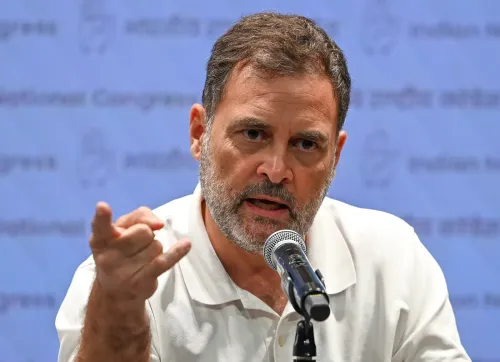
Rahul Gandhi had alleged major unemployment and education problems while speaking at an American university.
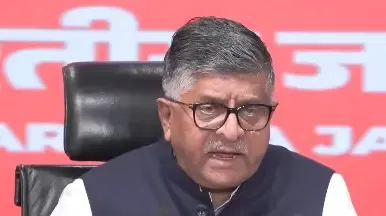
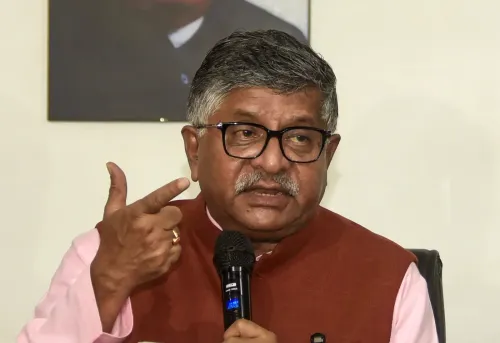
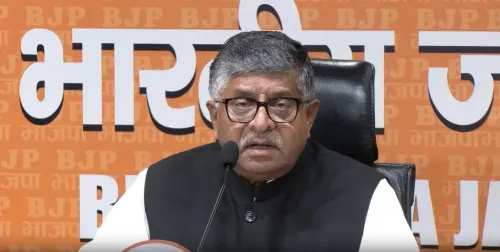
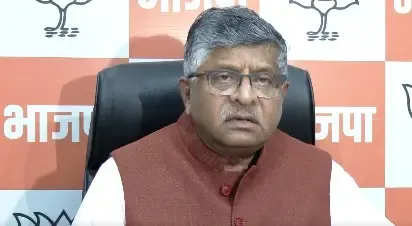
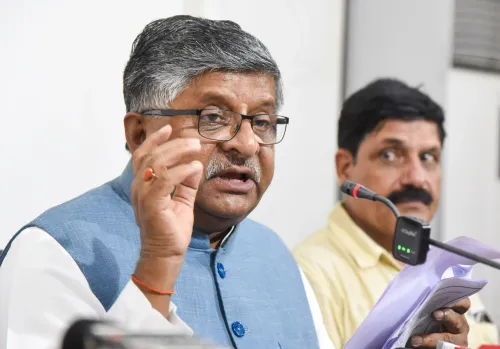
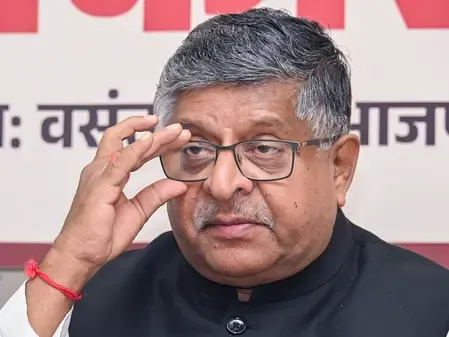
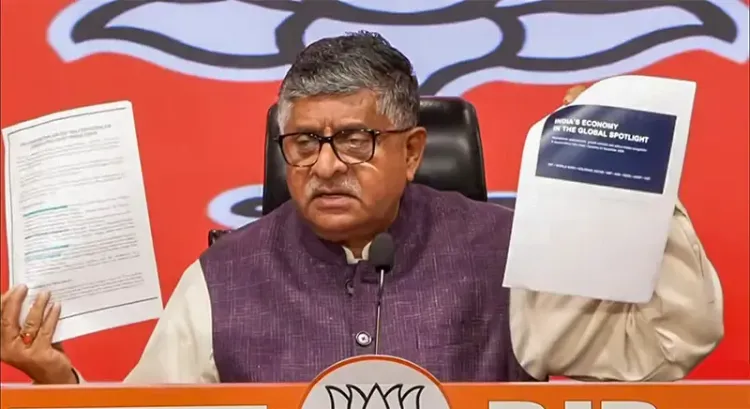
The Lowy Institute’s Asia Power Index 2026 became the focus of a political exchange on the economy as Bharatiya Janata Party (BJP) MP Ravi Shankar Prasad cited India’s third-place ranking to rebut Congress leader Rahul Gandhi. Speaking at a press conference in New Delhi on Monday, 23 November, Prasad accused Gandhi of making misleading statements about the country’s economic condition during visits abroad.
Prasad pointed to the Australian think tank’s assessment after Gandhi, the Leader of the Opposition in the Lok Sabha, warned at an American university that India was facing an economic disaster and alleged major problems with unemployment and education.
India’s position in the Lowy index
Prasad said the Asia Power Index 2026 assessed 27 countries across Asia using 131 indicators. According to the report as cited by him, India scored 40.5 points overall and ranked as the region’s third-most powerful country.
He also highlighted a score of 56.2 points for future resources, which he said reflected India’s economic outlook and long-term potential. India scored 70.3 points for diplomatic influence, a category he identified as a major strength.
Prasad described the Lowy Institute as an independent Australian organisation established in 2003 that studies global strategic and economic trends. The index figures he cited cover multiple measures of national power, rather than unemployment or education alone.
Prasad’s response to Gandhi
The BJP MP said Prime Minister Narendra Modi was ranked the second-most influential leader in Asia after Chinese President Xi Jinping, having moved up three positions. He presented the rankings as relevant to Gandhi’s criticism of India’s performance.
“Rahul Gandhi is travelling abroad and displaying a great deal of ignorance about the country, seeking to portray India in the worst possible terms. But today, I want to bring to your attention a very important and latest report by an Australian think tank, the Lowy Institute,” Prasad said.
He also accused Gandhi of failing to examine publicly available assessments before commenting. Prasad said he had previously raised the issue in Parliament and noted that the reports were available on websites.
Gandhi’s economic warning
Gandhi’s remarks at an American university centred on what he described as serious weaknesses in the Indian economy. The Congress leader alleged that the country faced widespread unemployment and substantial shortcomings in its education system.
“The blunt thing is that India is sitting on an economic disaster. That's the reality. One can brush it aside, the media can brush it aside, but India's got a massive unemployment problem. India's got a massive problem with its education system,” Gandhi said.
The account does not name the university or specify when Gandhi made the remarks. It also does not provide employment or education data against which to assess his claims.
Different measures in the debate
Prasad’s response and Gandhi’s warning address different aspects of India’s performance: the former cited an assessment of regional power, while the latter focused on jobs and education. The index rankings and scores cited at the press conference do not, by themselves, resolve the specific claims about those domestic issues.
For people concerned about employment and education, the exchange leaves the underlying questions open. Further evidence on those issues, alongside the index’s detailed findings, would be needed to assess the competing arguments.
Point of View
But it cannot substitute for a close examination of domestic jobs and education outcomes. Both sides should support their arguments with evidence that directly addresses the measures they are debating.
NationPress
23 Nov 2026
Frequently Asked Questions
Why did Ravi Shankar Prasad cite the Lowy Institute report?
Prasad cited the report to counter Rahul Gandhi’s criticism of India’s economic condition. The BJP MP pointed to India’s third-place ranking in the Asia Power Index 2026.
What was India’s score in the Lowy Asia Power Index 2026?
India scored 40.5 points and ranked third in Asia, according to the report cited by Prasad. He said the assessment covered 27 countries and used 131 indicators.
What did Rahul Gandhi say about the Indian economy?
Gandhi said India was facing an economic disaster and alleged major unemployment and education problems. He made the remarks while speaking at an American university.
How did Narendra Modi rank among Asian leaders?
Prasad said Modi ranked as Asia’s second-most influential leader, behind Chinese President Xi Jinping. He said Modi had moved up three positions.
Does the Lowy ranking settle the debate over jobs and education?
The regional power ranking does not by itself settle the specific claims about jobs and education. Prasad cited a broader assessment of national power, while Gandhi’s remarks focused on domestic economic and education problems.