BJP's Rajeev Chandrasekhar credits Modi govt for Kerala's development push
Synopsis
Marking 12 years of the Modi government, Kerala BJP chief Rajeev Chandrasekhar made a sweeping case for Central rule's impact on the state — tenfold railway funding, ₹13,000 crore to farmers, 1.5 crore free foodgrain beneficiaries — while pinning Kerala's fiscal crisis squarely on successive state governments and a Congress he says peddles unaffordable promises.
Key Takeaways
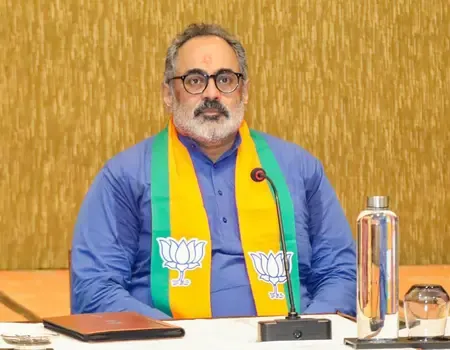
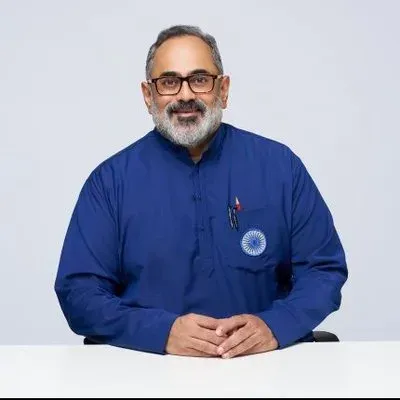
Kerala BJP President Rajeev Chandrasekhar credited the Modi government with driving Kerala's development on 12 June 2025 , marking 12 years of the Modi administration.
Railway allocations to Kerala reportedly increased tenfold under PM Modi's tenure, according to Chandrasekhar.
More than 27.5 lakh farmers in Kerala received around ₹13,000 crore under the PM-Kisan Samman Nidhi scheme.
Approximately 1.5 crore people benefited from free foodgrain distribution; over 22 lakh households received new drinking water connections.
Chandrasekhar attacked the Congress for 'unrealistic election promises' and blamed successive state governments for Kerala's ongoing fiscal crisis.
Central projects cited include Vizhinjam port , Bharatmala , Kochi Water Metro , Ayushman Bharat , and Jal Jeevan Mission .
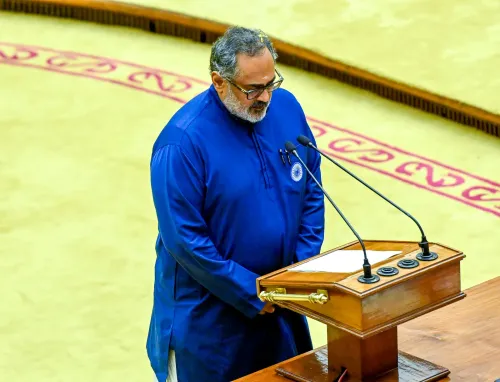
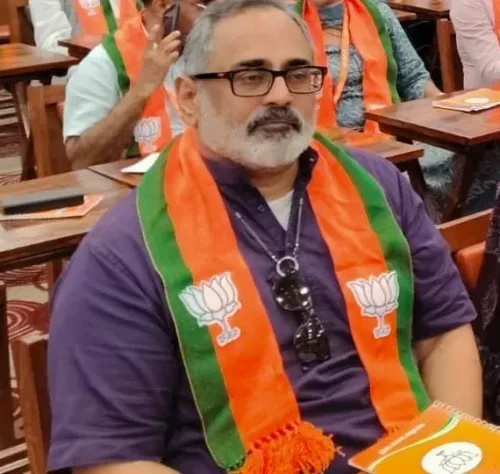
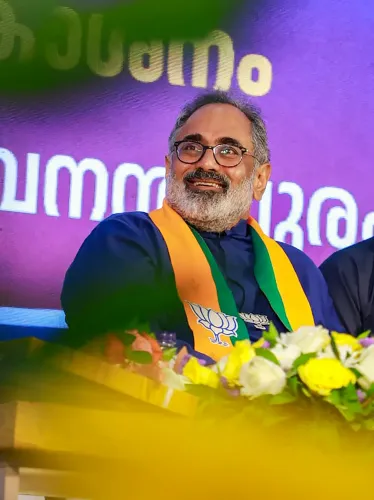
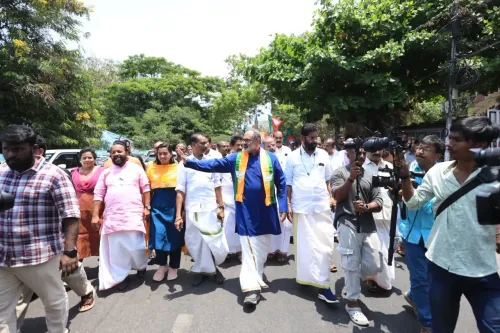
Kerala Bharatiya Janata Party (BJP) President Rajeev Chandrasekhar on Friday, 12 June credited the Narendra Modi-led Union government with driving significant development across Kerala, marking 12 years of the Modi administration. Speaking in Thiruvananthapuram, Chandrasekhar simultaneously accused successive state governments of eroding the state's economic foundations.
Key Claims on Central Investment
Chandrasekhar asserted that railway allocations to Kerala had increased tenfold under Prime Minister Modi's tenure. He further claimed that more than 27.5 lakh farmers in the state had received approximately ₹13,000 crore under the PM-Kisan Samman Nidhi scheme. These figures, he argued, reflected a measurable shift in the Centre's developmental commitment to the state.
Welfare Schemes and Infrastructure Projects
The BJP leader highlighted that around 1.5 crore people in Kerala had benefited from free foodgrain distribution under Central schemes, while more than 22 lakh households had received new drinking water connections. Chandrasekhar pointed specifically to Central support for flagship projects including the Vizhinjam port, the Bharatmala highway programme, the Kochi Water Metro, Ayushman Bharat, and the Jal Jeevan Mission as tangible contributions to the state's growth.
Attack on State Government and Congress
'What Kerala needs is not the politics of promises but the politics of development and economic strength,' Chandrasekhar said, drawing a sharp contrast between what he described as the Modi government's development-oriented approach and the state's current economic challenges. He also took aim at the Indian National Congress (INC), accusing it of offering unrealistic election promises despite being aware of Kerala's precarious finances. According to Chandrasekhar, even documents presented by the state government itself had exposed the depth of the fiscal crisis.
BJP's Pitch for Kerala's Future
The Kerala BJP chief argued that the state's future depended on embracing economic growth, investment attraction, and infrastructure-led progress aligned with India's broader trajectory. He cited India's emergence as a global technology and innovation hub — pointing to advances in startups, digital infrastructure, semiconductor investments, and welfare delivery — as evidence of what responsible governance could achieve. With electoral battles on the horizon across India, Chandrasekhar used the occasion to sharpen the BJP's development pitch in a state where the party has historically struggled to convert Central schemes into electoral gains.
Point of View
From PM-Kisan disbursements to railway allocations, are drawn from Central scheme data and are broadly verifiable, but the causal link between Central spending and Kerala's overall growth trajectory is contested. Kerala's fiscal stress is real, but economists and the state government attribute it partly to the Centre's own revenue-sharing constraints. The BJP's challenge remains converting scheme visibility into votes in a state where the Left and Congress have deep organisational roots — and where voters have historically separated appreciation for Central welfare from endorsement of the BJP at the ballot box.
NationPress
19 Sept 2026
Frequently Asked Questions
What did Kerala BJP chief Rajeev Chandrasekhar say about the Modi government's role in Kerala?
Chandrasekhar claimed that the Modi-led Union government had driven significant development in Kerala over 12 years, citing a tenfold rise in railway allocations, ₹13,000 crore disbursed to 27.5 lakh farmers under PM-Kisan, and Central support for projects like Vizhinjam port and Kochi Water Metro. He made these remarks in Thiruvananthapuram on 12 June 2025.
How much did Kerala farmers receive under PM-Kisan Samman Nidhi according to BJP?
According to Chandrasekhar, more than 27.5 lakh farmers in Kerala received around ₹13,000 crore under the PM-Kisan Samman Nidhi scheme during the Modi government's tenure.
Why did Chandrasekhar criticise the Kerala state government and Congress?
He accused successive state governments of weakening Kerala's economic base and said even state government documents had exposed the severity of the fiscal crisis. He also charged the Congress with making unrealistic election promises despite knowing the state's precarious financial position.
Which Central projects did the BJP highlight as benefiting Kerala?
Chandrasekhar cited the Vizhinjam port, Bharatmala highway programme, Kochi Water Metro, Ayushman Bharat health scheme, and Jal Jeevan Mission as Central initiatives that had substantially contributed to Kerala's development.
What is the political context of Chandrasekhar's statements?
The remarks came as the BJP marked 12 years of the Modi government and with state electoral cycles approaching. The party is seeking to build a development-focused narrative in Kerala, a state where it has historically struggled against the Left and Congress, by highlighting Central scheme delivery and contrasting it with what it calls the state government's fiscal mismanagement.