BJP accuses AAP of U-turn on Punjab electoral roll revision SIR
Synopsis
The BJP has caught the AAP in a sharp contradiction: just ten days after all parties — including the AAP — welcomed Punjab's electoral roll clean-up that struck off 13 lakh names, the AAP-led Assembly passed a proposal opposing the very same exercise. With a Supreme Court rebuke over 50 ward elections in the backdrop, the row raises pointed questions about AAP's relationship with electoral institutions in Punjab.
Key Takeaways
BJP spokesperson Pradeep Bhandari on 23 October 2026 accused the AAP government in Punjab of a U-turn on the Special Intensive Revision (SIR) of electoral rolls.
On 13 October , all parties including the AAP and Congress had welcomed the SIR, during which nearly 13 lakh names were removed from the rolls.
The Punjab Assembly subsequently passed a proposal opposing the same SIR exercise, prompting the BJP's broadside.
The Supreme Court had set aside elections in 50 wards in Punjab, with Bhandari citing this as a judicial indictment of the AAP.
The BJP accused the AAP of using the SIR row to divert attention from failures on drugs, corruption, and lawlessness in the state.
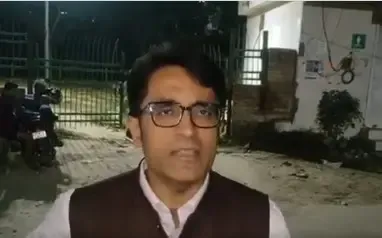
Bharatiya Janata Party (BJP) national spokesperson Pradeep Bhandari on Friday, 23 October 2026, sharply criticised the Aam Aadmi Party (AAP) government in Punjab for passing an Assembly proposal against the Special Intensive Revision (SIR) of electoral rolls, calling it a calculated attempt to divert public attention from the ruling party's governance failures.
The Contradiction at the Centre of the Row
Bhandari pointed out that on 13 October, all major political parties — including the AAP and the Indian National Congress (Congress) — had formally welcomed the SIR exercise, during which nearly 13 lakh names were removed from Punjab's electoral rolls. He challenged the AAP to explain its sudden reversal, arguing that the party was effectively 'fact-checking itself' by now opposing in the Assembly what it had previously endorsed.
The SIR is a periodic Election Commission of India (ECI) process to cleanse voter lists of ineligible, duplicate, or deceased entries. Critics of the AAP's new stance allege the party is selectively opposing the revision because the large-scale deletions may affect its voter base.
BJP Frames It as Diversionary Politics
Bhandari alleged that the AAP was resorting to political theatrics after being cornered on what he described as serious governance failures — specifically citing drugs, corruption, and lawlessness in the state. He accused the party of deploying 'fake drama' to deflect public scrutiny from these issues.
This is not the first time the AAP's Punjab government has faced such allegations. The BJP has consistently framed the ruling party's legislative manoeuvres in the state as an attempt to control the political narrative rather than address ground-level concerns. The SIR dispute fits a pattern of recurring friction between the two parties over electoral processes and institutional oversight.
Supreme Court Observation Cited
The BJP spokesperson also referenced a recent judicial development, recalling that the Supreme Court had set aside elections in 50 wards in Punjab. Bhandari said the court had effectively censured the AAP, characterising its conduct as that of 'Loktantra Ke Dakait' (robbers of democracy) — a phrase he said amounted to a judicial indictment of the party's approach to democratic processes.
Notably, the Supreme Court observation adds institutional weight to the BJP's political critique, lending the controversy a dimension beyond routine inter-party sparring.
What the BJP Wants
Bhandari maintained that the SIR was an essential exercise to ensure free and fair elections in Punjab. He said the BJP's position was consistent: it supported the revision regardless of which party it disadvantaged. He asserted that the people of Punjab were watching the situation closely and would not be misled by what he termed the AAP's repeated attempts to deflect accountability.
The AAP government in Punjab is yet to issue a detailed official rebuttal to the BJP's specific charge of contradiction. How the ruling party responds — and whether the ECI's SIR exercise proceeds without further political interference — will determine the next phase of this dispute.
Point of View
The Supreme Court's intervention in 50 Punjab ward elections signals that electoral integrity in the state is already under judicial scrutiny, making the AAP's legislative pushback against the ECI process politically and institutionally risky.
NationPress
24 Oct 2026
Frequently Asked Questions
What is the Special Intensive Revision (SIR) of electoral rolls in Punjab?
The Special Intensive Revision (SIR) is a periodic Election Commission of India process to cleanse voter lists by removing ineligible, duplicate, or deceased entries. In Punjab, the latest SIR exercise resulted in the removal of nearly 13 lakh names from the electoral rolls.
Why is the BJP accusing the AAP of a U-turn?
On 13 October, all parties including the AAP and Congress had welcomed the SIR exercise. The AAP-led Punjab Assembly subsequently passed a proposal opposing the same exercise, which the BJP characterises as a direct contradiction of the party's earlier stated position.
What did the Supreme Court say about Punjab elections?
According to BJP spokesperson Pradeep Bhandari, the Supreme Court set aside elections in 50 wards in Punjab and issued observations that he described as a censure of the AAP's approach to democratic processes, using the phrase 'Loktantra Ke Dakait' (robbers of democracy).
What is the AAP's position on the SIR?
The AAP government in Punjab passed an Assembly proposal opposing the SIR exercise, though it had reportedly supported the process as recently as 13 October. The party has not yet issued a detailed rebuttal to the BJP's specific charge of contradiction.
Why does the BJP say the AAP is opposing the SIR?
The BJP alleges the AAP is opposing the SIR to divert public attention from governance failures related to drugs, corruption, and lawlessness in Punjab, rather than for any principled objection to the electoral roll revision process.