Did AAP Secure a Resounding Victory in Punjab's Rural Areas?

Synopsis
In an unexpected twist, Punjab's rural voters have rallied behind AAP, granting them a decisive mandate in the recent elections. This victory not only reflects trust in governance but also hints at a shifting political landscape in the state. Could this be the dawn of a new era for AAP and its governance policies?
Key Takeaways
70 percent of seats won by AAP in Punjab elections.
Strong public endorsement of Chief Minister Mann .
Significant shift in voter sentiment towards pro-incumbency.
Continued focus on governance and development initiatives.
AAP’s expansion plans across other states.
Chandigarh, Dec 18 (NationPress) In a striking verdict from the rural core, voters in Punjab delivered a significant mandate to the Aam Aadmi Party (AAP) during the Zila Parishad and Block Samiti elections, offering the ruling government a strong endorsement of its governance.
With more than 70 percent of the available seats won, the results showcased a robust pro-incumbency sentiment, as AAP National Convenor Arvind Kejriwal noted that the outcome reflects the populace's faith in Chief Minister Bhagwant Mann and his government’s 'politics of work,' including initiatives such as the 'Yudh Nashe Virudh' (war against drugs), irrigation reforms, dependable electricity, road development, employment growth, education, and healthcare improvements.
As AAP surpassed the Congress, Akali Dal, and BJP by considerable margins, Chief Minister Mann remarked that the results left no ambiguity regarding the public sentiment, emphasizing that the outcome serves as a reminder of the responsibility and humility with which his administration must continue to engage with the citizens of Punjab.
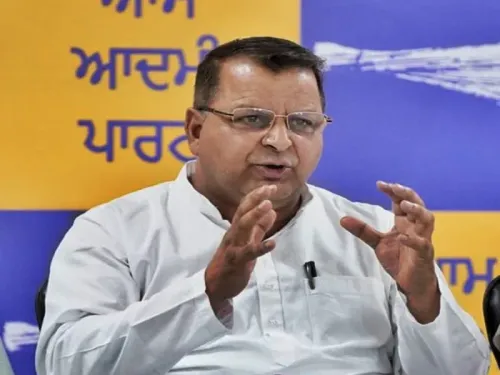
In a press conference held in Mohali, Kejriwal stated that the extent and character of this mandate signify not anti-incumbency but a clear pro-incumbency wave favoring the ruling party, particularly in rural sectors.
Kejriwal communicated, “The preliminary results indicate that AAP has nearly swept rural Punjab. It feels as if there is an extremely strong wave supporting AAP. Approximately 70 percent of the seats in both the Zila Parishads and the Block Samitis have been clinched by AAP. This is quite significant.”
He further asserted that the verdict serves as a clear affirmation of the endeavors undertaken by the Punjab administration under Chief Minister Mann.
“This signifies that the rural populace of Punjab has endorsed the efforts of the AAP government led by Bhagwant Mann. In political contexts, what is typically deemed as an anti-incumbency factor appears to have transformed into a pro-incumbency element. The citizens are satisfied with the government’s performance, and thus they have offered this robust endorsement,” he explained.
Responding to comparisons with previous elections held merely three days prior, which were deemed free and fair, Kejriwal remarked, “The entire polling process and the counting were recorded. I aim to provide solid evidence demonstrating how fair these elections were.”
Quoting detailed statistics, the AAP leader noted, “There are 580 seats throughout Punjab that were won with a margin of fewer than 100 votes. Among these, AAP secured 261 seats by a margin of fewer than 100 votes, while the opposition claimed 319 seats. Had there been any exploitation of machinery or pressure tactics, a single phone call to a DC or an SDM could have easily shifted those 319 seats to our favor. We refrained from such actions, seeking to uncover the true will of the populace.”
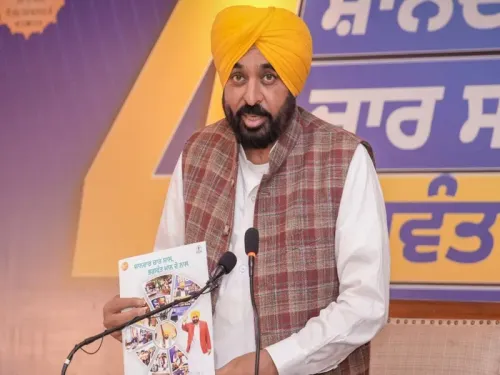
CM Mann indicated that this triumph is a result of the work accomplished over the previous four years. He expressed gratitude to the AAP members for their dedicated efforts to elevate the party’s campaign momentum in these elections.
“While I was in Japan inviting investors to Punjab, the energetic AAP youth ensured a resounding victory for the party in these elections. This overwhelming success has instilled in us a greater sense of humility and accountability to serve the people of our state,” he affirmed.
Mann stated that AAP won 67 percent of the Block Samiti seats and 72 percent of the Zila Parishad seats, thereby capturing nearly 70 percent of the total rural seats.
He criticized the Akali Dal, which claims to be a rural-centric party, for being decimated in these areas while they boast without justification.
“The leadership of Akali Dal is living in a delusional state, believing they can stage a comeback despite being repeatedly rejected by the populace,” said the CM.
Conversely, Mann asserted that AAP is expanding its influence across the country solely on the basis of development and effective governance.
He noted that AAP is now extending its reach to states such as Goa, Gujarat, Jammu and Kashmir, and Kerala, where it is achieving success in local body elections.
Point of View
It is essential to recognize the implications of AAP's recent electoral success in Punjab. The clear endorsement from rural voters signals a shift in the political landscape, emphasizing the importance of governance and development over traditional party loyalties. As the nation watches, this could set a precedent for other states and political parties moving forward.
NationPress
29 Sept 2026
Frequently Asked Questions
What were the key issues in the Punjab elections?
The key issues included development initiatives, anti-drug campaigns, and improvements in infrastructure and healthcare.
How did AAP perform compared to opposition parties?
AAP outperformed Congress, Akali Dal, and BJP, securing over 70% of the seats.
What was the voter turnout in these elections?
The voter turnout was significantly high, reflecting the public's engagement in the electoral process.
What future plans does AAP have post-election?
AAP aims to expand its influence across other states while continuing its governance initiatives in Punjab.
How does this victory impact the Akali Dal?
The Akali Dal faces a challenging future as it has been significantly rejected in rural areas, raising questions about its political relevance.