Falta by-election result: BJP routs TMC in Diamond Harbour stronghold
Synopsis
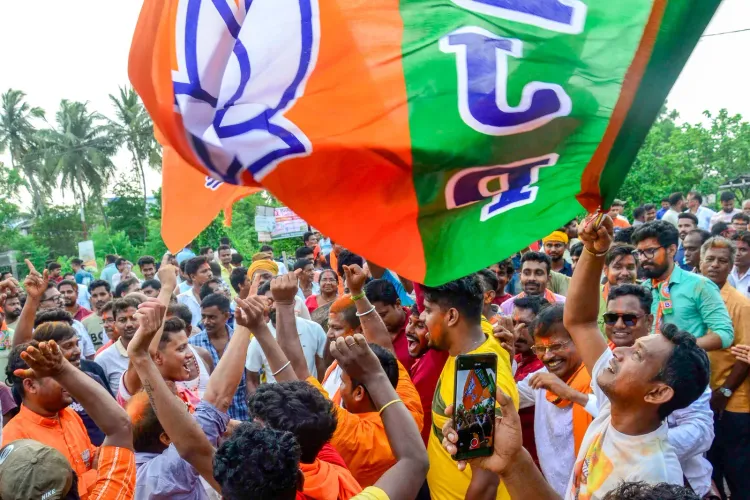
Just two years after Abhishek Banerjee recorded a 1.68-lakh-vote lead in Falta, the BJP swept the constituency with 71% of votes, reducing the TMC — which had held 89% in 2024 — to fourth place with just 4%. The 'Diamond Harbour model' has cracked in its own backyard.
Key Takeaways
The BJP won the Falta Assembly by-election in South 24 Parganas , capturing 71% of votes and defeating the CPI(M) by over one lakh votes .
The TMC finished fourth with just 4% of the vote, down from 89% in the same segment during the 2024 Lok Sabha election .
TMC candidate Jahangir Khan withdrew before polling; the original 29 April poll was scrapped by the Election Commission over EVM tampering allegations.
In the 2024 parliamentary election , Abhishek Banerjee had led in Falta by 1.68 lakh votes out of roughly 2.06 lakh votes polled in the segment.
The BJP also wrested Satgachia by 401 votes ; the TMC retained four other seats in the same round of by-elections.
All candidates except the winner and runner-up in Falta reportedly had their deposits forfeited .
The Falta Assembly by-election in West Bengal's South 24 Parganas district has delivered a stunning political upset, with the Bharatiya Janata Party (BJP) routing the Trinamool Congress (TMC) in a constituency that forms part of the Diamond Harbour Lok Sabha seat — the political bastion of TMC general secretary Abhishek Banerjee. The result has raised sharp questions about the durability of the so-called 'Diamond Harbour model' of governance and electoral dominance.
The 'Singham vs. Pushpa' Contest That Gripped the Nation
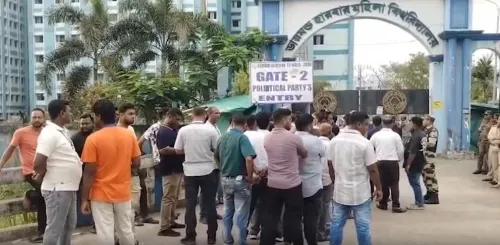
The Falta by-election had already captured national attention before a single vote was cast, framed around a vivid 'Singham vs. Pushpa' narrative. Ajay Pal Sharma, an Indian Police Service (IPS) officer from Uttar Pradesh known for his tough policing style and reputation as an 'encounter specialist', was deployed as the Election Commission of India (ECI) police observer in the constituency. He drew the 'Singham' tag from commentators.
The TMC's candidate, Jahangir Khan — described in certain quarters as a local strongman — adopted the 'Pushpa' identity from the Telugu blockbuster, projecting resilience and grassroots defiance. Khan ultimately withdrew from the race, citing the larger interest of peace and development in Falta.
Key Results and the Scale of the Swing
Polling originally held on 29 April was scrapped by the Election Commission over allegations of tampering with Electronic Voting Machines (EVMs) and other irregularities. When fresh polling concluded, the BJP candidate defeated his nearest rival from the Communist Party of India (Marxist) (CPI(M)) by a margin of over one lakh votes. Notably, the TMC finished fourth, behind even the Indian National Congress (INC).
The vote-share breakdown tells an even starker story. The BJP captured 71% of votes polled, while the CPI(M) secured 19%. The TMC, which had commanded 89% of votes in the 2024 Lok Sabha election in this very segment, collapsed to just 4%. All candidates except the winner and runner-up reportedly had their deposits forfeited.
How Far the 'Diamond Harbour Model' Has Fallen
The scale of the reversal is made more striking by the TMC's recent record in Falta. In the 2024 parliamentary election, Abhishek Banerjee led in all seven Assembly segments comprising the Diamond Harbour Lok Sabha constituency, recording his highest margin in Falta itself — a lead of 1.68 lakh votes out of approximately 2.06 lakh votes polled in the segment. Overall, he polled more than 10.48 lakh votes out of around 15.31 lakh cast, consolidating his winning margin to over seven lakh votes, up from roughly 3.2 lakh in 2019 and about 71,000 in 2014.
In state Assembly elections, the TMC had held Falta since wresting it from the CPI(M) in 2011, with winning margins of over 27,000 votes in 2011, about 23,000 in 2016, and well over 40,000 in 2021. The by-election outcome represents a complete inversion of that trajectory.
Competing Explanations and Political Fallout
Critics have alleged the by-election result was linked to power play and voter intimidation. Abhishek Banerjee and the TMC, however, attributed the outcome to the administration's people-centric initiatives — including efforts to improve health and sports infrastructure — and claimed their organisation remained cohesive.
Across the broader set of by-elections held alongside Falta, the TMC retained four seats — Diamond Harbour, Bishnupur, Maheshtala, Budge Budge, and Metiaburuz — while the BJP wrested Satgachia by a thin margin of 401 votes. But it is Falta that has emerged as the defining data point, a constituency where the TMC's collapse from near-total dominance to a distant fourth place in under two years demands explanation.
What Comes Next
The Falta result will intensify internal scrutiny of the TMC's candidate selection and ground-level organisation in South 24 Parganas. For the BJP, a 71% vote share in a seat the TMC considered impregnable will be cited as proof that the 'Diamond Harbour model' is more fragile than its architects projected. Whether this signals a durable shift in voter sentiment or a localised protest vote will be tested at the next round of Assembly elections in West Bengal.
Frequently Asked Questions
What happened in the Falta Assembly by-election?
The BJP won the Falta Assembly by-election in West Bengal's South 24 Parganas district, securing 71% of votes and beating the CPI(M) by over one lakh votes. The TMC, which had dominated the segment with 89% in the 2024 Lok Sabha election, finished fourth with just 4%.
Why was the original Falta poll on 29 April cancelled?
The Election Commission of India scrapped the 29 April polling in Falta over allegations of tampering with Electronic Voting Machines and other electoral irregularities. Fresh polling was subsequently conducted, producing the results that have now been declared.
Who is Abhishek Banerjee and why does Falta matter to him?
Abhishek Banerjee is the TMC's general secretary and Mamata Banerjee's nephew, who has won the Diamond Harbour Lok Sabha seat — of which Falta is one of seven Assembly segments — three consecutive times. In the 2024 election he led in Falta by 1.68 lakh votes; the by-election collapse there directly undermines the 'Diamond Harbour model' associated with his political brand.
What is the 'Diamond Harbour model'?
The 'Diamond Harbour model' refers to the governance and electoral strategy credited to Abhishek Banerjee in his Lok Sabha constituency, emphasising local development initiatives in health and sports infrastructure alongside tight organisational control. Critics allege it also relied on patronage and intimidation; supporters credit it with the TMC's sustained dominance in the region.
How does the Falta by-election result compare to previous elections there?
The contrast is stark: the TMC held Falta since 2011, with Assembly winning margins of over 27,000 votes in 2011, around 23,000 in 2016, and over 40,000 in 2021. In the 2024 Lok Sabha count for the Falta segment, the TMC led by 1.68 lakh votes. The by-election reversed all of that, with the TMC polling just 4% and finishing fourth.