BJP accuses Rahul Gandhi of lying on Tamil culture, spreading electoral anarchy
Synopsis
BJP's Sudhanshu Trivedi delivered a point-by-point rebuttal of Rahul Gandhi on Sunday, accusing the Leader of Opposition of fabricating claims about Tamil cultural suppression, linking him to foreign interference in India's elections, and calling his Emergency comparison an insult to those who actually suffered under it — all timed to land on the day of PM Modi's Tamil Nadu visit.
Key Takeaways
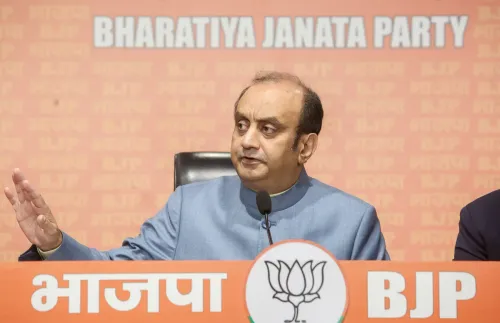
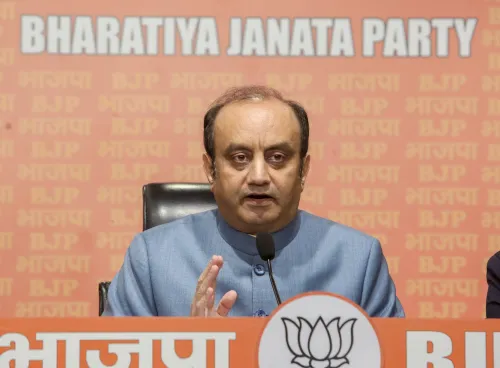
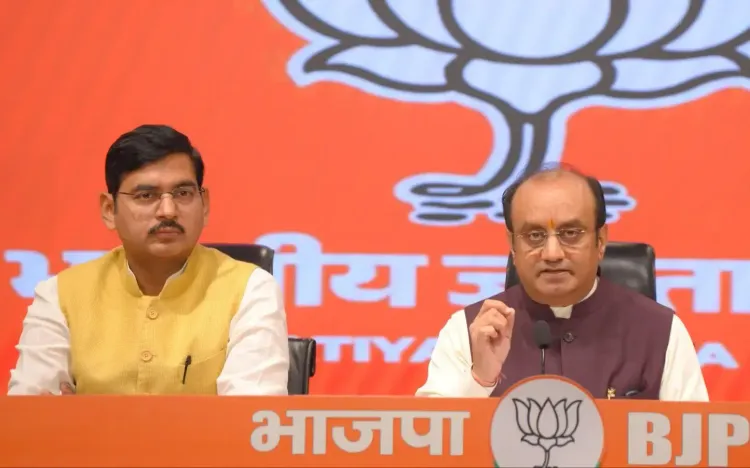
BJP spokesperson Sudhanshu Trivedi held a press briefing in New Delhi on 11 October to rebut Rahul Gandhi's allegations against the Centre.
Trivedi cited the Kashi Tamil Sangamam , PM Modi's gifting of a Russian edition of the Thirukural to Putin , and a Tamil Nadu defence corridor as proof of the Centre's respect for Tamil culture.
BJP accused Gandhi of opposing the Election Commission's voter-roll purification drive and alleged links to foreign interests, citing a reported 2024 statement by US President Donald Trump on USAID spending in India.
Trivedi challenged Gandhi's contradictory positions on EVMs and voter-roll manipulation, saying both claims 'can't be true at the same time.' Gandhi's comparison of Delhi protest curbs to the 1975 Emergency was condemned as an insult to those who were jailed and had their fundamental rights suspended.
BJP accused Gandhi of seeking to turn 'democracy into mobocracy' through illegal protests and divisive rhetoric.
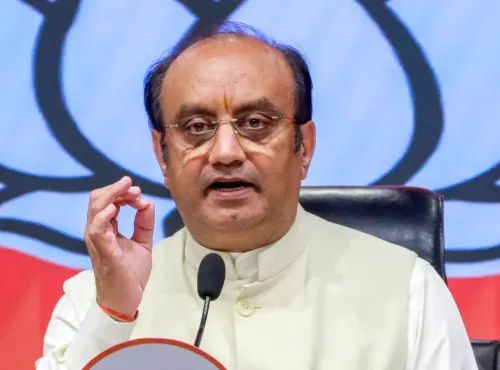
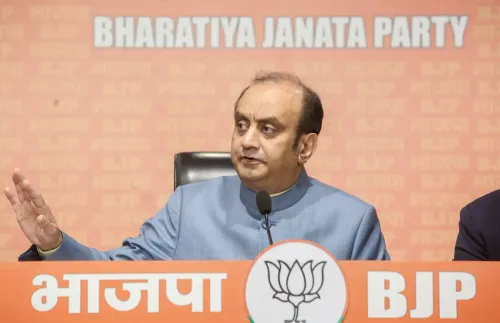
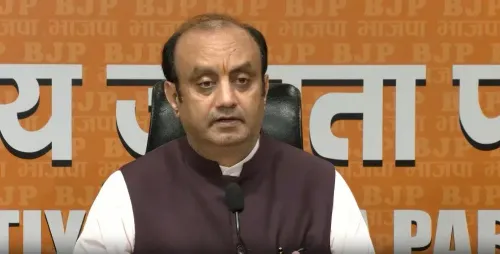
Bharatiya Janata Party (BJP) national spokesperson and Rajya Sabha MP Sudhanshu Trivedi on Sunday, 11 October accused Congress leader and Leader of Opposition in Lok Sabha Rahul Gandhi of spreading falsehoods about the Centre attacking Tamil language and culture, and of fomenting north-south divisions while undermining the country's electoral process. The sharp rebuttal came at a press briefing in New Delhi, coinciding with Prime Minister Narendra Modi's visit to Tamil Nadu.
BJP's Defence of Tamil Cultural Record
Trivedi cited several central government initiatives as evidence of the BJP's commitment to Tamil heritage. He highlighted the launch of the Kashi Tamil Sangamam festival as a symbol of national unity between the Hindi heartland and the Tamil south. He also noted that PM Modi had recently gifted Russian President Vladimir Putin a Russian-language edition of the ancient Tamil classic Thirukural, authored by Saint Thiruvalluvar, during a bilateral meeting. Additionally, the Centre's decision to establish a defence corridor in Tamil Nadu was cited as evidence of its commitment to the state's industrial growth.
'Rahul Gandhi promotes divisibility, but our government focuses on promoting unity,' Trivedi said, pushing back against the Congress leader's recent speeches.
Gandhi's Allegations That Triggered the Response
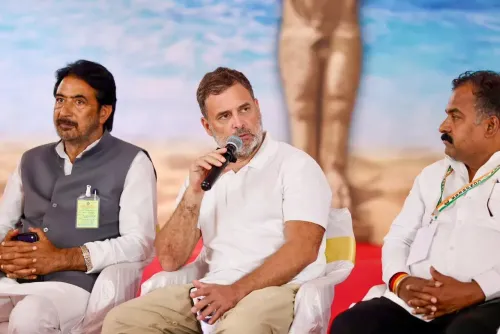
The BJP's counteroffensive followed remarks Gandhi made at earlier rallies and at a Chhatron ki Goonj event in Chennai — held on the eve of PM Modi's Tamil Nadu visit — where the Congress leader alleged that the Centre was treating Tamil identity as secondary. Gandhi had claimed the Union government was systematically undermining the state's language, culture, and history, charges the BJP categorically rejected as fabricated and politically motivated.
Attack on Electoral Integrity Remarks
Trivedi took aim at Gandhi over his vocal opposition to the Special Intensive Revision (SIR) of electoral rolls — a process initiated by the Election Commission of India (ECI) to cleanse voter lists of suspected ineligible entries. He alleged that Gandhi was batting for foreign forces inimical to India's economic interests by opposing the purification drive.
Trivedi referenced a 2024 statement attributed to US President Donald Trump, in which Trump reportedly said that USAID had spent crores of rupees to increase voter turnout in India, suggesting a link between that foreign interest and domestic opposition to the ECI exercise. He said that when the Commission began the voter-roll purification in 2025, 'some people in India' began opposing the process — an apparent reference to the Congress and Gandhi.
Trivedi also challenged Gandhi's internal consistency on electoral manipulation. 'Rahul Gandhi first said the EVMs are managed. Now, he says the electoral rolls are manipulated. I want to ask him if EVMs were indeed managed, then where is there a need to manipulate the voters' list. Both of his claims can't be true at the same time,' Trivedi said.
Emergency Comparison Draws Rebuke
A separate line of attack focused on Gandhi's reported comparison of security curbs imposed during a recent protest against the SIR in Delhi — which Trivedi described as an illegal demonstration — to the Emergency imposed in 1975. Trivedi called the analogy deeply offensive to those who suffered under that period.
'How can curbs over a one km area be compared with the Emergency? During the Emergency, fundamental rights were suspended, and Opposition leaders were put in jail without any hearing,' he said. Trivedi reminded audiences that Parliament's five-year term was extended by one year during the Emergency to bypass elections, and that the Defence of India Rules had empowered imprisonment without bail or hearing for anyone who criticised the government.
'Today, the people are commenting and using foul language against the government and the Prime Minister and still not facing any Emergency-type consequences,' he added. He accused Gandhi of harbouring the 'dangerous ambition' of turning 'democracy into mobocracy.'
Political Context and What's Next
The BJP's full-frontal response reflects a broader battle over the Tamil Nadu political narrative ahead of the state's electoral cycle. Gandhi's recent southern outreach — including multiple Tamil Nadu stops — is widely seen as part of Congress's effort to project a national Opposition identity anchored in regional grievances. The BJP's counter-messaging, centring on cultural respect and institutional integrity, signals that it intends to contest that framing directly. Expect the exchange to intensify as PM Modi's Tamil Nadu visit generates further political theatre over the coming days.
Point of View
The BJP is attempting a reputational frame that goes well beyond Tamil Nadu. The Emergency comparison controversy, meanwhile, risks backfiring — it keeps a reference to India's darkest democratic chapter in the news cycle, which is precisely the association Gandhi's camp wants to cultivate. Neither side is done here.
NationPress
11 Oct 2026
Frequently Asked Questions
What did BJP accuse Rahul Gandhi of regarding Tamil culture?
BJP spokesperson Sudhanshu Trivedi accused Rahul Gandhi of spreading false claims that the Centre is attacking Tamil language, culture, and history. Trivedi cited initiatives such as the Kashi Tamil Sangamam, PM Modi's gifting of the Thirukural to Russian President Putin, and a Tamil Nadu defence corridor as evidence of the Centre's respect for Tamil heritage.
What is the SIR of electoral rolls that sparked the controversy?
The Special Intensive Revision (SIR) is an Election Commission of India exercise to cleanse voter rolls of suspected ineligible entries. BJP accused Rahul Gandhi of illegally protesting against the process and alleged that his opposition aligns with foreign interests, referencing a reported 2024 statement by US President Donald Trump about USAID spending to boost Indian voter turnout.
Why did BJP criticise Gandhi's Emergency comparison?
Rahul Gandhi reportedly compared security curbs imposed during a protest against the SIR in Delhi to the Emergency of 1975. BJP's Trivedi called this an insult to those who suffered under the Emergency, noting that during that period fundamental rights were suspended, Opposition leaders were jailed without hearings, and Parliament's term was extended by one year to avoid elections — circumstances entirely unlike a restricted protest zone.
What contradiction did BJP point out in Rahul Gandhi's electoral claims?
Trivedi noted that Gandhi has at different times claimed both that EVMs were manipulated and that voter rolls are manipulated. He argued that both claims cannot simultaneously be true, using it to characterise Gandhi's attacks on electoral institutions as politically motivated rather than substantive.
What is the broader political context of this BJP-Congress clash over Tamil Nadu?
The clash is unfolding as Congress steps up its southern outreach, with Gandhi making multiple Tamil Nadu stops to build a national Opposition identity around regional and cultural grievances. BJP's counter-messaging on Tamil cultural respect and institutional integrity signals a direct contest over that narrative, particularly as PM Modi's Tamil Nadu visit adds immediate political salience to both sides' claims.