BJP slams AAP govt over Punjab drug crisis, cites Kotkapura exodus
Synopsis
BJP spokesperson R.P. Singh has targeted the Bhagwant Mann government with a pointed X campaign, citing families selling homes in Kotkapura to escape drugs and an inmate allegedly live-streaming narcotics from Hoshiarpur Central Jail — framing both as proof that AAP's 'Yudh Nashiyan Virudh' campaign is a political performance rather than a policy solution.
Key Takeaways
BJP national spokesperson R.P.
Singh on 15 June attacked the Bhagwant Mann-led AAP government in Punjab over its anti-drug record.
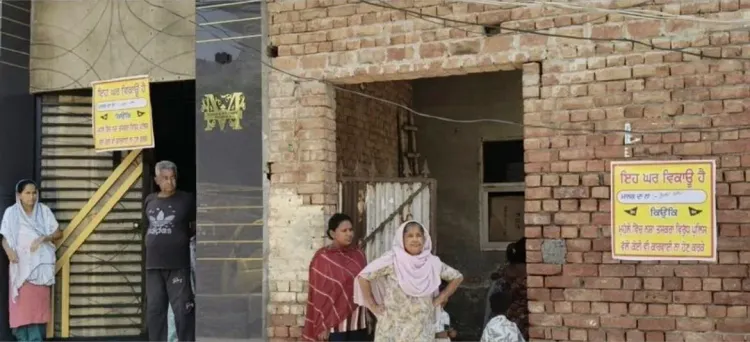
Singh alleged families in Kotkapura's Ram Basti are selling ancestral homes at below-market prices to flee the local drug menace.
An inmate at Hoshiarpur Central Jail allegedly conducted a live video broadcast displaying synthetic narcotics, including ICE (methamphetamine) , and made allegations against prison officials.
The BJP described the AAP's 'Yudh Nashiyan Virudh' anti-drug campaign as a 'toothless media gimmick.' The AAP had made eradicating Punjab's drug crisis a central promise when it swept to power in 2022 .
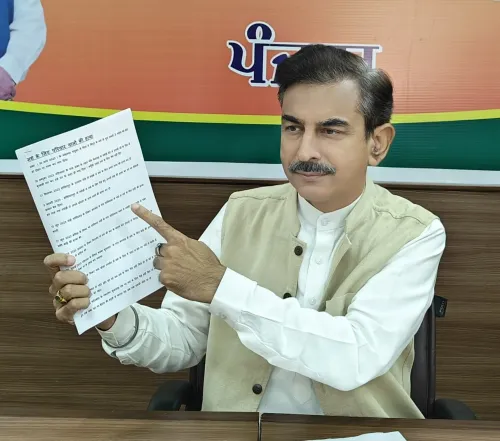
Bharatiya Janata Party (BJP) national spokesperson R.P. Singh on Monday, 15 June mounted a sharp political offensive against the Bhagwant Mann-led Aam Aadmi Party (AAP) government in Punjab, alleging that its flagship anti-drug pledges have crumbled in the face of worsening ground realities. Singh posted his criticism on social media platform X under the hashtag #BhagwantMannFailed, drawing attention to specific incidents across the state that he said expose a governance breakdown.
Kotkapura Families Selling Homes to Flee Drug Menace
Singh highlighted the situation in Kotkapura's Ram Basti locality, where he alleged that law-abiding residents have been forced to put up 'House for Sale' notices on their walls to escape the grip of narcotics in the neighbourhood. He described the trend not as economic migration but, in his words, 'a desperate flight for survival.' According to Singh, parents are reportedly willing to sell ancestral properties at below-market prices to move their children away from what he called the 'omnipresent grip' of Chitta — a colloquial term for synthetic opioids prevalent in Punjab.
Hoshiarpur Jail Incident Cited as Evidence of Systemic Failure
The BJP leader also pointed to an alleged incident at Hoshiarpur Central Jail, claiming that an inmate conducted a live video broadcast from inside the prison while openly displaying synthetic narcotics, including what he identified as ICE (methamphetamine), and making allegations against prison officials. Singh argued that the incident demonstrated that drug networks had penetrated even high-security state institutions. He alleged that local police attempted to categorise the Kotkapura situation as a 'private dispute' rather than a systemic problem — an approach he described as shielding the government from political accountability.
BJP Calls 'Yudh Nashiyan Virudh' Campaign a Media Gimmick
Singh was particularly critical of the AAP government's 'Yudh Nashiyan Virudh' (War Against Drugs) campaign, which the state had promoted as a cornerstone of its anti-narcotics strategy. He characterised it as 'a toothless media gimmick,' arguing that the persistence of open drug trafficking — from street corners in Faridkot to jails in Hoshiarpur — rendered the campaign ineffective in practice. Critics have previously noted that Punjab's drug problem predates the current administration, with successive governments having struggled to contain it, though the AAP had made eradication a central electoral promise.
Political Context and the AAP's Counter-Position
The AAP government came to power in Punjab in 2022 with an emphatic mandate, in part on the strength of its promise to eliminate the drug menace within months. The BJP's renewed offensive comes amid ongoing political rivalry between the two parties at both the state and national level. The AAP government had not issued an immediate formal response to Singh's specific allegations at the time of this report. This is not the first time the BJP has targeted the Mann administration on the drug issue — opposition pressure on this front has been a recurring feature of Punjab's political landscape since the AAP assumed office.
What Happens Next
Singh called on the Punjab government to move beyond 'empty rhetoric, comedy-hour deflection, or staged photo-ops' and deliver concrete administrative action. With state-level political pressure intensifying, the AAP government is likely to face renewed scrutiny over its anti-drug record in the coming weeks. Independent assessments of Punjab's narcotics situation and the effectiveness of the 'Yudh Nashiyan Virudh' campaign are expected to remain a flashpoint in the state's political discourse.
Point of View
Visual, and timed to keep the AAP on the defensive — but the underlying issue is real and predates the Mann government by decades. The Kotkapura anecdote and the Hoshiarpur jail incident are potent precisely because they are verifiable and localised, not abstract statistics. What mainstream coverage tends to miss is that the BJP governed Punjab until 2017 and the Congress until 2022, and neither dented the drug supply chain either. The AAP's singular vulnerability is that it made eradication — not management — its explicit promise, setting a bar no state government has cleared. Singh's campaign exploits that gap ruthlessly, but accountability demands the same scrutiny be applied to the structural failures that preceded the current administration.
NationPress
20 Sept 2026
Frequently Asked Questions
What did BJP's R.P. Singh allege against the AAP government in Punjab?
BJP national spokesperson R.P. Singh alleged on 15 June that the Bhagwant Mann-led AAP government's promises to eradicate Punjab's drug menace have failed, citing families in Kotkapura selling their homes to flee narcotics and an inmate allegedly live-streaming drugs from inside Hoshiarpur Central Jail. He described the government's 'Yudh Nashiyan Virudh' campaign as ineffective.
What happened in Kotkapura's Ram Basti that the BJP highlighted?
According to BJP spokesperson R.P. Singh, families in Kotkapura's Ram Basti locality have reportedly been putting up 'House for Sale' notices and selling ancestral properties at below-market prices to move their children away from rampant drug trafficking in the area. Singh characterised this as a 'desperate flight for survival' rather than routine economic migration.
What was the Hoshiarpur Central Jail incident cited by the BJP?
R.P. Singh alleged that an inmate at Hoshiarpur Central Jail conducted a live video broadcast from inside the prison, openly displaying synthetic narcotics including ICE (methamphetamine) and making allegations against prison officials. Singh argued the incident proved drug networks had infiltrated high-security state institutions.
What is the 'Yudh Nashiyan Virudh' campaign and why is it under criticism?
'Yudh Nashiyan Virudh' — meaning 'War Against Drugs' — is the AAP government's anti-narcotics campaign in Punjab. The BJP has called it a 'toothless media gimmick,' arguing that open drug trafficking from Faridkot to Hoshiarpur's jails demonstrates the campaign has had no measurable impact on the ground.
How does this fit into the broader political picture in Punjab?
The AAP swept Punjab in 2022 partly on a promise to eliminate the drug menace within months. The BJP's sustained campaign on this issue is designed to hold the AAP to that specific, self-imposed standard. Punjab's drug crisis, however, has persisted across multiple governments — BJP, Congress, and now AAP — making it a long-standing structural challenge rather than one of recent origin.