Punjab BJP chief tells CM Mann: Learn from Ranjit Singh's humility before Akal Takht
Synopsis
Punjab BJP president Kewal Singh Dhillon has invoked the humility of Maharaja Ranjit Singh — who accepted punishment from Akal Takht without protest — to challenge CM Bhagwant Mann, who was declared 'Guru-Dokhi' by the same institution but reportedly dismissed it as a political conspiracy. The confrontation places religious authority at the centre of Punjab's political battlefield.
Key Takeaways
Punjab BJP president Kewal Singh Dhillon on 17 June publicly called on CM Bhagwant Mann to learn from history.
Dhillon cited Maharaja Ranjit Singh's submission to Sri Akal Takht Sahib as a model of humility over political power.
Ranjit Singh was declared a tankhaiya by Jathedar Akali Baba Phula Singh but accepted punishment without resistance.
Dhillon alleged Mann dismissed Akal Takht Sahib's declaration of him as 'Guru-Dokhi' and 'anti-Khalsa Panth' as a political conspiracy.
Mann also allegedly questioned the Jathedar and sought to undermine Central Forensic Laboratories reports, according to Dhillon.
The AAP government's formal response to these specific allegations is awaited.
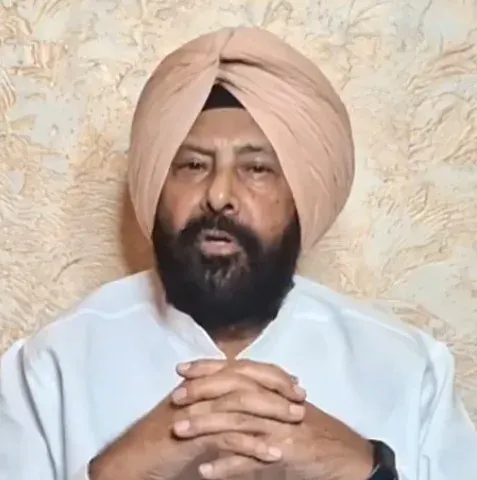
Punjab Bharatiya Janata Party president Kewal Singh Dhillon on Wednesday, 17 June publicly advised Chief Minister Bhagwant Mann to draw lessons from history, invoking the example of Maharaja Ranjit Singh — revered as Sher-e-Punjab — who famously submitted to the authority of Sri Akal Takht Sahib despite commanding one of the most formidable empires of his era.
The remarks, issued through a press release, mark a sharpening of the BJP's political attack on the Aam Aadmi Party (AAP) government in Punjab, drawing on religious and historical symbolism that carries deep resonance in the state.
The Historical Parallel Dhillon Drew
Dhillon recalled that Maharaja Ranjit Singh, whose empire had once checked the advances of Afghan and Mughal forces, was summoned before Sri Akal Takht Sahib and declared a tankhaiya — one guilty of religious misconduct — by Jathedar Akali Baba Phula Singh. Rather than resist or dismiss the verdict, the Maharaja accepted his punishment with complete humility and bowed before the institution.
'Witnessing his extraordinary humility, the sangat forgave him. That was the true identity of Sher-e-Punjab, a leader for whom faith and the Panth stood above every form of political or royal power,' Dhillon said.
He argued that this episode underscores a foundational principle: the authority of Sri Akal Takht Sahib transcends any political office. 'The status and authority of Sri Akal Takht Sahib are higher than any Chief Minister's chair, today, tomorrow, and forever,' he stated.
The Allegation Against CM Mann
Dhillon alleged that Chief Minister Bhagwant Mann responded very differently when Akal Takht Sahib declared him a 'Guru-Dokhi' and 'anti-Khalsa Panth'. Instead of demonstrating humility, Mann reportedly dismissed the declaration as a political conspiracy, according to Dhillon's statement.
Dhillon further alleged that Mann went on to question the Jathedar's authority and attempted to cast doubt on reports from Central Forensic Laboratories — a charge the AAP government has not yet formally responded to in the context of these specific remarks.
The Political Stakes
The BJP's invocation of Akal Takht's authority is a calculated political move in a state where religious institutions command significant public trust. Historically, leaders who have been seen as dismissive of the Akal Takht's edicts have faced considerable social and electoral consequences — a point Dhillon pressed explicitly.
'History has shown that those who challenge Sri Akal Takht Sahib never benefit politically or socially,' he said, adding pointedly: 'Bhagwant Mann should learn from history.'
This comes amid broader tensions between the AAP-led Punjab government and religious bodies, a fault line that opposition parties, including the BJP and the Shiromani Akali Dal, have sought to exploit ahead of future electoral cycles.
What Comes Next
The AAP government's formal response to Dhillon's remarks is awaited. Whether Chief Minister Mann chooses to engage directly with the Akal Takht's declarations or continues to frame them in political terms will likely shape the next phase of this confrontation — one that blends faith, governance, and electoral calculation in equal measure.
Point of View
Not just theology. But the more significant story is structural: the Akal Takht's authority has historically been a double-edged sword, wielded by and against every major party that has governed Punjab. The AAP's challenge is that dismissing the Takht's edicts as 'political' may win a news cycle but risks alienating a constituency that views religious institutions as genuinely sovereign. Dhillon's warning that challengers of the Akal Takht 'never benefit politically or socially' is less a historical observation than a campaign threat — and Mann's response, or silence, will define the BJP's next line of attack.
NationPress
19 Sept 2026
Frequently Asked Questions
What did Punjab BJP chief Kewal Singh Dhillon say about CM Bhagwant Mann?
Dhillon publicly advised CM Bhagwant Mann on 17 June to emulate Maharaja Ranjit Singh's humility before Sri Akal Takht Sahib, after Mann was reportedly declared 'Guru-Dokhi' and 'anti-Khalsa Panth' by the institution. Dhillon alleged Mann dismissed the declaration as a political conspiracy rather than accepting it with humility.
What is the significance of the Maharaja Ranjit Singh reference?
Maharaja Ranjit Singh, despite leading a powerful empire, accepted punishment from Sri Akal Takht Sahib without protest when declared a tankhaiya by Jathedar Akali Baba Phula Singh. Dhillon used this episode to argue that even the mightiest ruler submitted to the Takht's authority — implying Mann should do the same.
What does 'tankhaiya' mean in the Sikh tradition?
A tankhaiya is a person found guilty of religious misconduct under Sikh code of conduct. The declaration is made by the Akal Takht, the highest temporal seat of Sikh authority, and typically carries a prescribed religious punishment.
What has Bhagwant Mann allegedly done to draw BJP's criticism?
According to Dhillon, Mann dismissed the Akal Takht's declaration against him as a political conspiracy, questioned the Jathedar's authority, and allegedly attempted to undermine reports from Central Forensic Laboratories. The AAP government has not formally responded to these specific allegations.
Why does this dispute matter for Punjab politics?
Religious institutions like the Akal Takht carry deep authority in Punjab, and leaders perceived as disrespectful toward them have historically faced electoral and social consequences. The BJP's framing of this dispute as a question of faith versus political arrogance is designed to pressure the AAP government ahead of future elections.