Is BJP Supporting Madras HC's Ruling on Thirupparankandram Deepam While Criticizing DMK's Treatment of Hindu Faith?
Click to start listening
Synopsis
In a significant ruling, the Madras High Court has permitted the lighting of the deepam at Tirupparankundram Hill, a decision welcomed by BJP's Tamil Nadu president, Nainar Nagenthran. This verdict stands as a testament to the ongoing struggle between religious rights and political narratives in Tamil Nadu, sparking discussions about the state's approach to Hindu traditions.
Key Takeaways
- Madras High Court ruling permits lighting of deepam.
- BJP leader welcomes decision, criticizing DMK.
- Ruling emphasizes the importance of religious rights.
- Judicial independence reaffirmed against political interference.
- Public response may influence future governance.
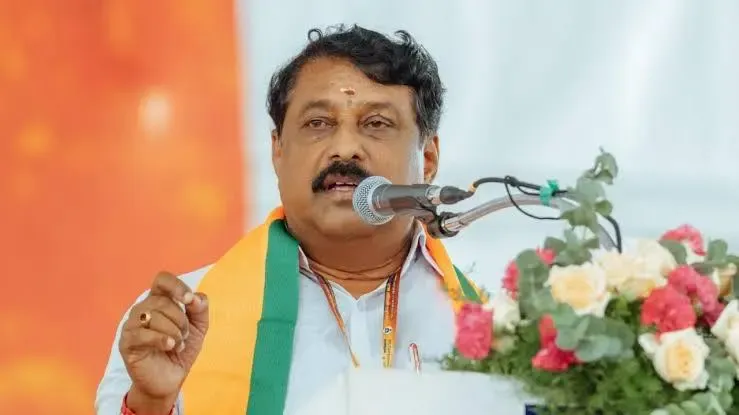
Chennai, Jan 6 (NationPress) The president of BJP's Tamil Nadu unit, Nainar Nagenthran, expressed his support for the Madras High Court's recent ruling that allows the illumination of the deepam at the 'Deepathoon' located on Tirupparankundram Hill.
He criticized the state government for consistently undermining Hindu religious traditions under the pretext of law and order.
Nagenthran stated that the High Court's decision, which rejected the DMK government's appeal to obstruct the lighting of the lamp, reaffirmed its commitment to justice and constitutional principles.
The ruling has provided significant relief to devotees, affirming the belief that the 'Deepathoon' is rightly part of the Tirupparankundram Subramania Swamy Temple.
The court's decision served as a strong admonition to the state government for manipulating law and order to fit its political agenda, according to Nagenthran.
He further stated that framing long-standing religious customs as potential causes of public unrest is both misleading and unacceptable.
The ruling clearly dismissed the DMK's arguments and exposed their alleged manufactured narrative regarding public order.
Despite facing numerous legal defeats concerning Hindu practices, Nagenthran accused the DMK government of continuing its anti-Hindu campaign.
He indicated that the government shows little respect for judicial directives and repeatedly revives the same arguments in appeals.
Nagenthran remarked that even after being reprimanded multiple times by the judiciary, the government has failed to amend its approach.
He asserted that the DMK's alleged disdain for Hindu beliefs demonstrates a hubris of power that will not go unchallenged by the public.
A government that continuously disrespects faith, disregards constitutional norms, and challenges judicial authority will ultimately face the consequences from the people, he concluded.
This verdict represents not only a legal triumph for devotees but also a broader affirmation of religious rights and judicial integrity within the state.
Point of View
The recent ruling by the Madras High Court highlights the ongoing friction between religious traditions and political dynamics in Tamil Nadu. As the BJP celebrates this decision, it underscores the importance of judicial independence in safeguarding constitutional rights. The DMK's response will be crucial in shaping future discussions around religious practices and governance in the region.
NationPress
07/01/2026
Frequently Asked Questions
What was the Madras High Court's ruling?
The Madras High Court ruled in favor of allowing the lighting of the deepam at the Deepathoon atop Tirupparankundram Hill, dismissing the DMK government's appeal to block it.
Who welcomed the ruling?
Nainar Nagenthran, the president of BJP's Tamil Nadu unit, welcomed the ruling as a victory for justice and constitutional values.
What did Nainar Nagenthran criticize?
Nagenthran criticized the DMK government for allegedly acting against Hindu religious practices under the guise of law and order.
What are the broader implications of this ruling?
The ruling is seen as a reaffirmation of religious rights and judicial integrity in the state, as well as a response to the ongoing tensions between political narratives and religious practices.
How did the DMK respond to the ruling?
While the DMK government has not publicly responded to this specific ruling, it has faced criticism for its approach to Hindu practices and judicial challenges.