BJP wins West Bengal: 6 central schemes set for rollout after TMC exit
Synopsis
West Bengal's political shift isn't just about seats — it's about billions in central funds and welfare schemes that never reached residents under TMC rule. From Ayushman Bharat's national health portability to doubled cash transfers for women and youth, the BJP's 207-seat win could materially change what the state's poorest households actually receive.
Key Takeaways
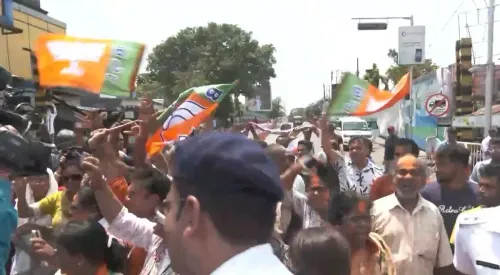
BJP won 207 of 294 seats in the West Bengal Assembly , ending 15 years of TMC rule.
Ayushman Bharat — blocked by the Banerjee Cabinet in favour of Swasthya Sathi — is now expected to be implemented, offering national-level health coverage portability.
Jal Jeevan Mission : West Bengal used only 53% of its ₹24,645 crore central allocation between 2019-20 and 2023-24 .
Matrishakti Bharosa would double women's monthly cash support from ₹1,500 to ₹3,000 ; Yuva Shakti Bharosa would do the same for unemployed youth.
Other schemes awaiting rollout include PMAY , PM Matsya Sampada Yojana , and PM SHRI .
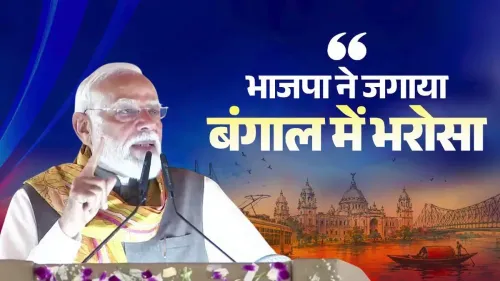
Kolkata, 6 May — The Bharatiya Janata Party (BJP)'s rise to power in West Bengal, ending 15 years of All India Trinamool Congress (TMC) rule under outgoing Chief Minister Mamata Banerjee, has opened the door for a range of centrally-sponsored schemes that had been stalled or partially implemented in the state. Prime Minister Narendra Modi had pledged full implementation of these schemes during his pre-election rallies in the state.
The BJP secured 207 seats in the 294-seat West Bengal Assembly, while the TMC's tally fell sharply to 80 seats from the 215 it had won in 2021. The scale of the mandate gives the new administration a clear runway to align state policy with central programmes that were previously resisted.
Why Central Schemes Were Blocked
Under the Banerjee-led Cabinet, several Union government programmes were not adopted in their full form, reportedly because the state government preferred to promote its own parallel welfare schemes. Critics argued that this approach, while delivering state-branded benefits, left West Bengal residents without access to the broader financial support available under national programmes. This is now set to change under what BJP leaders describe as a "double engine government" — aligned administrations at both the state and Centre.
Ayushman Bharat: The Flagship Rollout
The most prominent scheme awaiting implementation is Ayushman Bharat, the Union government's flagship health insurance programme. The Banerjee Cabinet had declined to adopt it, citing the existence of Swasthya Sathi, the state's own health insurance scheme. A key distinction, however, is that Swasthya Sathi's jurisdiction was confined to West Bengal, while Ayushman Bharat carries national-level applicability — meaning beneficiaries can access cashless treatment across India. With the change of government, residents are now expected to gain access to both the portability and coverage benefits of the central scheme.
Housing, Water and Fisheries Schemes
Under Jal Jeevan Mission, which provides tap water connections to every household, West Bengal used only 53 per cent of its central allocation of ₹24,645 crore between 2019-20 and 2023-24, according to officials, due to delays in proposal submission and documentation. Full implementation is now expected to extend piped water coverage to more households than the TMC's parallel effort had reached.
Pradhan Mantri Awas Yojana (PMAY), which provides Union government funds to eligible low-income families for house construction, had a state-level counterpart called Banglar Bari. With both schemes potentially running in tandem, officials say a larger pool of beneficiaries — including those previously excluded — could receive housing support.
The Pradhan Mantri Matsya Sampada Yojana, which offers financial assistance, insurance, and modern equipment to fishermen, is also expected to be activated. Officials indicate that fuller implementation of the central scheme would extend benefits to a greater number of fishing households than current state-level support covers.
Income Support: Women and Youth Stand to Gain
Two schemes with direct cash transfer implications are particularly significant for household incomes. Under Matrishakti Bharosa, women from eligible income groups would receive ₹3,000 per month — double the ₹1,500 per month provided under the TMC's Lakshmir Bhandar scheme, widely regarded as one of the outgoing government's most popular welfare interventions.
Similarly, under Yuva Shakti Bharosa, unemployed youth would receive ₹3,000 per month to support self-reliance — compared to the ₹1,500 per month promised under the TMC's Yuvashree scheme, launched in April. Specific eligibility conditions apply for the central scheme, officials noted.
Education: PM SHRI and Kanyashree
The Pradhan Mantri Schools for Rising India (PM SHRI) scheme is also expected to be introduced in the state. West Bengal had its own internationally recognised education scheme, Kanyashree, which provides free education for girls from Class 1 through college and university, along with a one-time payment of ₹25,000. The addition of PM SHRI is expected to provide further financial assistance to female students.
As the BJP prepares to take charge, the pace and sequencing of these rollouts will be closely watched — both as a test of administrative capacity and as a signal of how the new government intends to balance central and state welfare frameworks.
Point of View
And millions remained outside Ayushman Bharat's national portability net. The BJP now inherits both an opportunity and an accountability test. Promising implementation is easy; delivering it against West Bengal's complex administrative terrain, and without the same political incentive to brand benefits locally, is another matter entirely.
NationPress
22 Sept 2026
Frequently Asked Questions
Why were central schemes not implemented in West Bengal under TMC?
The TMC government under Mamata Banerjee preferred to promote its own state-branded welfare schemes — such as Swasthya Sathi, Lakshmir Bhandar, and Banglar Bari — rather than adopt central programmes that would credit the Union government. This reportedly led to administrative resistance and delays in implementing schemes like Ayushman Bharat and Jal Jeevan Mission.
What is Ayushman Bharat and why does it matter for West Bengal?
Ayushman Bharat is the Union government's flagship health insurance scheme with national-level applicability, meaning beneficiaries can access cashless treatment across India. Unlike the state's Swasthya Sathi scheme, which was limited to West Bengal, Ayushman Bharat offers portability — a significant benefit for migrant workers and patients seeking treatment outside the state.
How much central funding did West Bengal leave unused under Jal Jeevan Mission?
West Bengal used only 53 per cent of its central allocation of ₹24,645 crore under Jal Jeevan Mission between 2019-20 and 2023-24, according to officials, due to delays in proposal submission and documentation preparation.
How will cash transfers for women and youth change under the new BJP government?
Under Matrishakti Bharosa, eligible women would receive ₹3,000 per month — double the ₹1,500 provided under TMC's Lakshmir Bhandar scheme. Under Yuva Shakti Bharosa, unemployed youth would receive ₹3,000 per month, compared to ₹1,500 promised under TMC's Yuvashree scheme. Specific eligibility conditions apply for the central schemes.
How many seats did BJP win in the West Bengal Assembly election?
The BJP won 207 seats in the 294-seat West Bengal Assembly, while the TMC's tally fell to 80 seats from the 215 it had won in the 2021 election — a dramatic reversal after 15 years of TMC rule.