BJP's Jai Ram Thakur Critiques Himachal Government's Stability
Synopsis
Jai Ram Thakur, former Chief Minister of Himachal Pradesh, critiques the current government's instability and internal strife within the Congress party. He highlights the implications of recent political maneuvers and the inadequate communication among party leaders, illustrating a significant trust crisis.
Key Takeaways
Instability and fear characterize the current Himachal government.
Thakur highlights a crisis of trust within the Congress party.
Internal conflicts are evident regarding the Rajya Sabha nomination.
The government may be influenced by a limited group of associates rather than the Cabinet.
Public discontent among Congress leaders reflects poor communication .
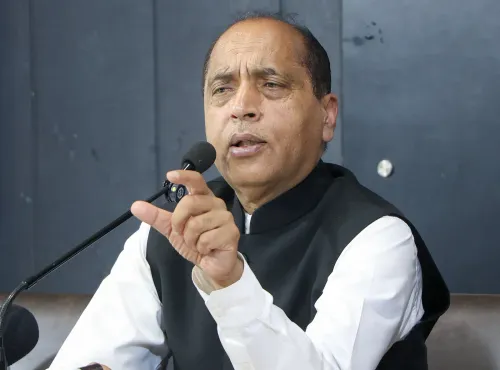
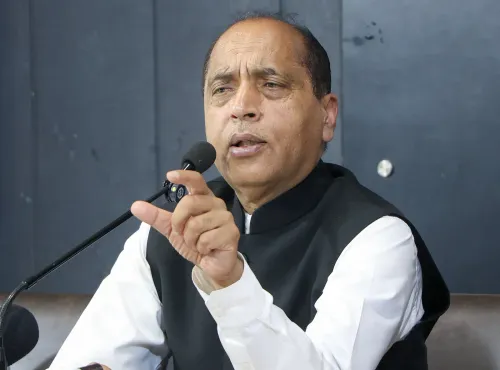
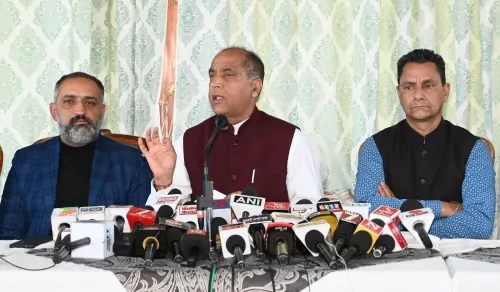
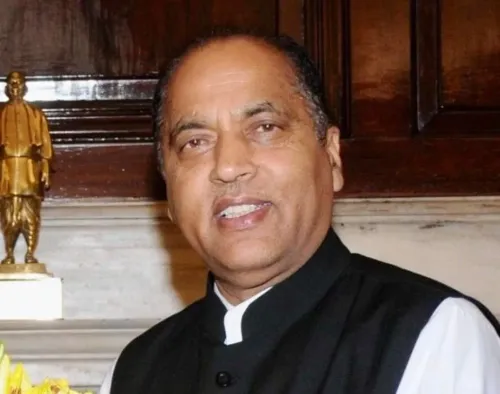
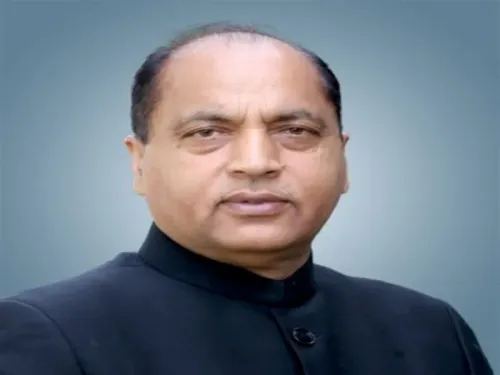
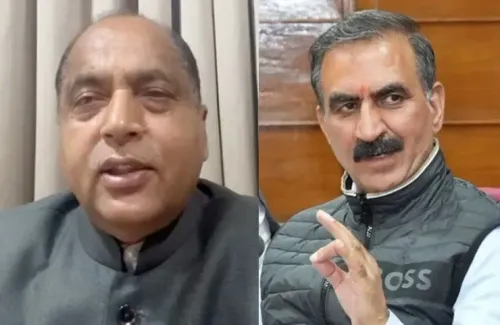
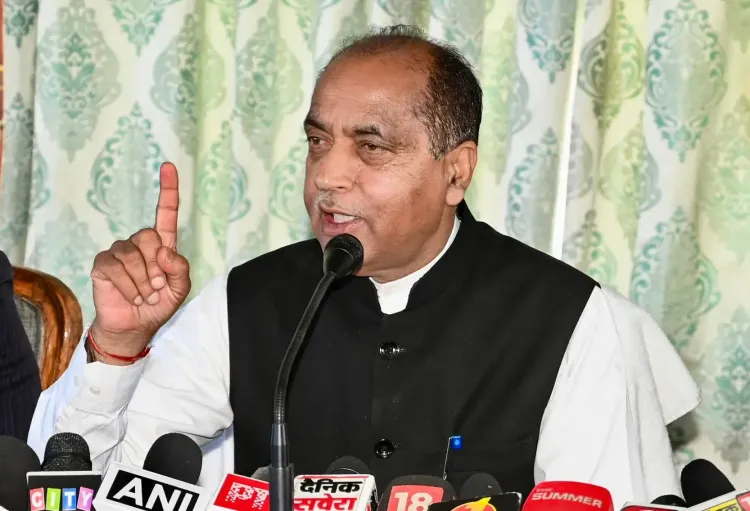
Shimla, March 9 (NationPress) Jai Ram Thakur, the former Chief Minister and current Leader of the Opposition in the Himachal Pradesh Assembly, stated on Monday that the state government is operating in an environment filled with instability and fear, despite holding a decisive majority in the Assembly.
Thakur addressed the media, highlighting that the internal discord and uncertainty within the Congress party clearly signify a serious trust crisis affecting the government. He noted that the Bharatiya Janata Party (BJP) had opted not to nominate a candidate for the upcoming Rajya Sabha election, thereby presenting the Congress with a notable opportunity.
Nevertheless, he criticized the unfortunate internal struggle and confusion within the Congress regarding the Rajya Sabha seat, which he argued revealed the party's internal contradictions.
According to Thakur, numerous senior Congress leaders traveled to Delhi to assert their claims for the Rajya Sabha seat, while others received repeated assurances from the Chief Minister that their nominations were being considered. However, it became apparent that the Chief Minister had misled even his closest colleagues.
He pointed out that some leaders had completed the necessary procedures for filing their nomination papers, believing they would be awarded the party ticket, only to have circumstances shift unexpectedly, resulting in discontent within the Congress ranks.
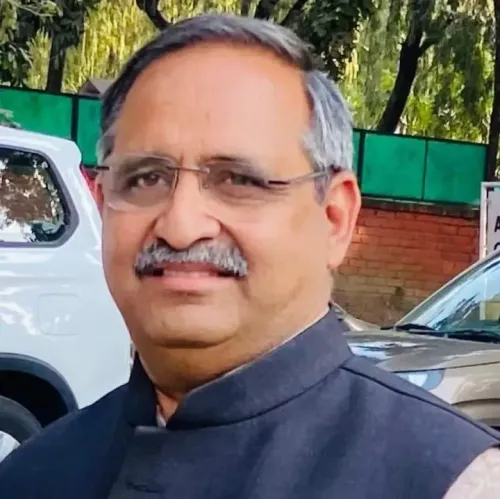
Referring to senior Congress member Anand Sharma, Thakur remarked that Sharma's public distress illustrates a lack of respect and communication within the party. Sharma himself had mentioned that he has always engaged in politics with self-respect and is now facing the consequences for speaking out.
Thakur accused the government of being operated not by the Cabinet, but by what he termed a “circle of friends”, claiming that significant decisions are made outside formal Cabinet meetings by a small group of close associates who determine who is favored and who is marginalized.
Point of View
This content underscores significant political turmoil within the Himachal Pradesh government, revealing internal conflicts within the ruling Congress party. Thakur's statements highlight the ongoing struggle for power and the implications this has for the state's governance.
NationPress
21 Sept 2026
Frequently Asked Questions
What is the current political situation in Himachal Pradesh?
The political situation in Himachal Pradesh is marked by instability, with former Chief Minister Jai Ram Thakur highlighting internal conflicts within the ruling Congress party despite their majority.
Who is Jai Ram Thakur?
Jai Ram Thakur is a former Chief Minister of Himachal Pradesh and the current Leader of the Opposition in the Himachal Pradesh Assembly.
What did Thakur say about the Congress party?
Thakur stated that the Congress party is experiencing a deep crisis of trust, with significant internal confusion regarding their candidate for the Rajya Sabha election.
What concerns did Thakur raise about the government's functioning?
Thakur raised concerns that the government is being run not by the Cabinet, but by a small group of close associates, leading to a lack of transparency and accountability.
What impact does this situation have on governance in Himachal Pradesh?
The internal turmoil within the Congress party may hinder effective governance, leading to uncertainty and a lack of decisive action on key issues.