Mahua Moitra takes sharp dig at Election Commissioner Gyanesh Kumar
Synopsis
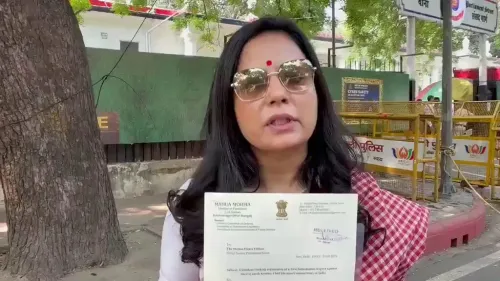
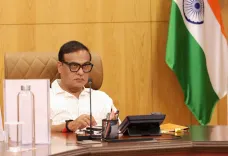
TMC MP Mahua Moitra on 5 November 2026 posted a sharp satirical attack on Election Commissioner Gyanesh Kumar, comparing him to Brazil's Flavio Bolsonaro and mocking his alleged links to electoral malpractice in a post referencing Donald Trump.
Key Takeaways
TMC MP Mahua Moitra posted a satirical attack on Election Commissioner Gyanesh Kumar on 5 November 2026 .
She invoked Flavio Bolsonaro — Brazilian senator and son of former President Jair Bolsonaro — as a symbol of an official fleeing accountability.
The phrase 'vote chori' (vote theft) encapsulates opposition allegations of electoral irregularities in India.
The post mocks Donald Trump using the slang 'Fraand Doland,' referencing US presidential election controversies.
Gyanesh Kumar was appointed Election Commissioner in 2024 and has faced sustained opposition scrutiny.
No official response from the Election Commission of India had been issued at the time of publication.
A blistering political salvo landed on Thursday, 5 November 2026, when TMC MP Mahua Moitra turned to satire to question the credibility of Election Commissioner Gyanesh Kumar — invoking a Brazilian senator's flight from accountability and a pointed jab at a former American president in the same breath.
In the post, Moitra wrote: 'Gyanesh Kumar can do a Flavio Bolsonaro and run away to the US — where he can advise Fraand Doland on how to do vote chori in the Presidential elections in 2 years.' The phrase 'vote chori' (vote theft) is the loaded centrepiece of the attack, a term that collapses a broad opposition grievance — alleged electoral irregularities in India — into three syllables.
The Flavio Bolsonaro reference and what it signals
Flavio Bolsonaro, senator and son of former Brazilian President Jair Bolsonaro, became a symbol internationally of a political figure dodging investigative scrutiny, with multiple corruption investigations trailing him. By drawing the parallel, Moitra is not making a legal allegation — she is reaching for a cultural shorthand that her audience would recognise: an official under fire taking cover abroad rather than answering questions at home.
The reference to 'Fraand Doland' is a phonetic rendering of Donald Trump, the 45th and 47th US President, whom opposition voices in India have frequently cited in debates about the integrity of electronic voting systems and the global pattern of incumbents contesting electoral outcomes. Moitra's use of 'Fraand' — slang for a sycophantic friend — adds a layer of mockery that sharpens the political point.
Opposition scrutiny of the Election Commission's independence
Moitra's broadside is the latest in a recurring pattern. Indian opposition leaders have, over several electoral cycles, raised concerns about the autonomy of the Election Commission of India — from debates over Electronic Voting Machines to the processes by which Election Commissioners are appointed. Gyanesh Kumar, appointed as Election Commissioner in 2024, has been in the crosshairs of opposition commentary since his elevation.
The timing of the post — with no immediate verifiable trigger available from public records — suggests it may be tethered to an ongoing political or institutional development around the Election Commission that the opposition is tracking closely. No official response from the Election Commission had emerged at the time of publication.
Satire and sharp irony have long been Moitra's preferred political weapons. But the underlying charge here — that an election administrator's integrity is compromised — carries weight well beyond a one-liner. If the Election Commission does not respond, the silence itself becomes part of the political narrative the opposition is building.
Point of View
Or not, will shape perceptions of its independence far more than any single social media post.
NationPress
5 Nov 2026
Frequently Asked Questions
Who is Gyanesh Kumar and why is Mahua Moitra criticising him?
Gyanesh Kumar is an Election Commissioner of India appointed in 2024 . TMC MP Mahua Moitra has criticised him in the context of broader opposition allegations about electoral integrity and the independence of the Election Commission.
What does 'vote chori' mean in Mahua Moitra's post?
'Vote chori' is a Hindi phrase meaning 'vote theft.' Moitra used it to allege, satirically, that the Election Commissioner is complicit in electoral malpractice.
Who is Flavio Bolsonaro and why did Moitra mention him?
Flavio Bolsonaro is a Brazilian senator and son of former President Jair Bolsonaro , who has faced multiple corruption investigations. Moitra invoked him as a metaphor for an official evading accountability by fleeing abroad.
What is Mahua Moitra's political party and constituency?
Mahua Moitra is a Lok Sabha MP from Krishnanagar, West Bengal , representing the All India Trinamool Congress (TMC) .
Has the Election Commission responded to Mahua Moitra's post?
As of the time of publication on 5 November 2026 , no official response from the Election Commission of India had been issued regarding Moitra's post.