CM Himanta chairs PM-DeVINE review, directs DPRs for Assam infra push
Synopsis
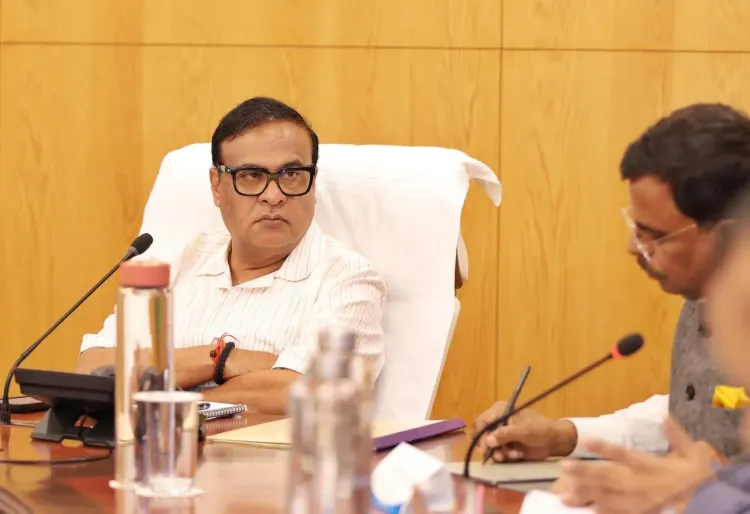
Assam Chief Minister Himanta Biswa Sarma on 5 November 2026 chaired a PM-DeVINE review, directing PWD departments to shortlist high-priority infrastructure projects, expedite DPRs, and prioritise roads, medical colleges, and working women's hostels with strict adherence to scheme guidelines.
Key Takeaways
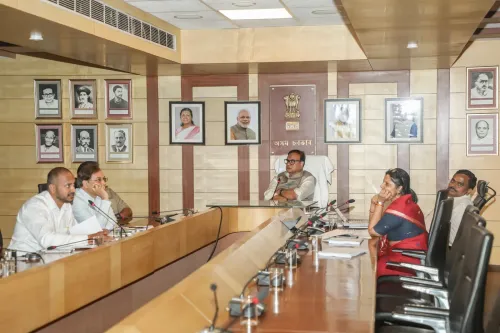
CM Himanta Biswa Sarma chaired a meeting on 5 November 2026 to finalise Assam's proposed projects under PM-DeVINE .
Presentations were made by the PWD departments covering Roads, Health and Education, and Buildings.
The CM directed departments to shortlist projects with balanced geographical coverage across all districts of Assam.
Priority sectors identified: key roads and bridges, medical colleges, university and school buildings, and working women's hostels .
Expedited preparation of Concept Notes and Detailed Project Reports (DPRs) was mandated to enable timely central approvals from MDoNER .
PM-DeVINE was launched in the Union Budget 2022-23 to address infrastructure gaps across the North Eastern Region.
Roads, bridges, medical colleges, and working women's hostels — Assam Chief Minister Dr. Himanta Biswa Sarma wants them all fast-tracked under central funding, and on 5 November 2026 he chaired a focused review meeting to make it happen. The Chief Minister's Office confirmed that the session was convened to finalise proposed projects under the Prime Minister's Development Initiative for North East Region (PM-DeVINE), with presentations from the state's Public Works Department (PWD) spanning its Roads, Health and Education, and Buildings wings.
Four directions that set the clock ticking
CM Sarma issued a crisp set of directives that together form a clear countdown. First, departments must shortlist high-priority infrastructure projects ensuring balanced geographical spread across Assam — a pointed instruction aimed at preventing the usual clustering of investment around larger towns. Second, teams must expedite the preparation of Concept Notes and Detailed Project Reports (DPRs) so that approvals from the central government are not held up at the state end. Third, the CM flagged specific priority categories: key roads and bridges, medical colleges, university and school buildings, and working women's hostels. Fourth, all proposals must strictly adhere to PM-DeVINE guidelines to ensure they qualify for timely sanction.
What PM-DeVINE actually is — and why Assam is moving fast
PM-DeVINE was announced in the Union Budget 2022-23 as a dedicated central scheme to address infrastructure deficits across the North Eastern Region (NER) — gaps that older umbrella programmes had not fully plugged. The scheme is administered by the Ministry of Development of North Eastern Region (MDoNER), which serves as the nodal body for reviewing state proposals, approving Concept Notes, and sanctioning project funds. For Assam, whose districts span challenging terrain from the Brahmaputra flood plains to the hill borders, the scheme represents a significant window for central capital infusion.
The road to actual construction, however, runs through paperwork first. A state's ability to get projects sanctioned depends entirely on the quality and speed of its DPRs. By explicitly directing PWD wings to accelerate that documentation, Sarma is addressing the most common bottleneck in central-scheme utilisation — the gap between announcement and ground-breaking.
Balanced coverage and the women's hostel signal
Two elements of Thursday's directives stand out. The emphasis on balanced geographical coverage suggests an awareness that infrastructure benefits in Assam have historically concentrated in larger urban centres, while remote or border districts lag. The explicit inclusion of working women's hostels as a priority category is an equally pointed signal — it places women's economic mobility infrastructure on the same footing as roads and hospitals, a framing that is relatively uncommon in state-level infrastructure reviews.
The meeting's outcome now moves the action to MDoNER in New Delhi, which will need to clear the Concept Notes before DPRs can proceed to formal sanction. The clock Sarma started on Thursday runs straight into the central government's approval pipeline — and how quickly that pipeline responds will determine whether these priorities translate into steel and concrete on the ground.
Point of View
Accelerating central-scheme utilisation is both a governance imperative and a political asset ahead of any infrastructure-performance audit. The explicit geographical-balance directive reflects a wider Northeast governance trend: states are increasingly pressured to demonstrate that central funds reach peripheral districts, not just state capitals. The inclusion of working women's hostels as a named priority is a small but meaningful evolution in how northeastern state governments are framing infrastructure — linking physical assets to women's workforce participation in a region with growing service-sector employment.
NationPress
5 Nov 2026
Frequently Asked Questions
What is PM-DeVINE scheme?
PM-DeVINE, or the Prime Minister's Development Initiative for North East Region, is a central government scheme announced in the Union Budget 2022-23 to fund infrastructure projects in India's eight northeastern states, administered by the Ministry of Development of North Eastern Region (MDoNER).
What projects will Assam propose under PM-DeVINE?
CM Himanta Biswa Sarma has directed Assam's PWD departments to prioritise key roads and bridges, medical colleges, university and school buildings, and working women's hostels as high-priority proposals under PM-DeVINE, though specific projects have not yet been publicly announced.
What is a Detailed Project Report (DPR) in government schemes?
A Detailed Project Report (DPR) is a comprehensive technical and financial document that a state government prepares for each proposed project; it is a mandatory prerequisite for central government ministries like MDoNER to appraise and sanction funds under schemes like PM-DeVINE.
What is MDoNER's role in PM-DeVINE?
MDoNER — the Ministry of Development of North Eastern Region — is the nodal central ministry that reviews Concept Notes and DPRs submitted by northeastern states, and sanctions project funding under PM-DeVINE.
Why is Assam emphasising balanced geographical coverage in infrastructure projects?
CM Sarma's directive on balanced geographical coverage aims to ensure that PM-DeVINE funds are distributed across Assam's diverse districts, including remote and border areas, rather than concentrating investment in larger towns — a common criticism of past infrastructure programmes in the Northeast.