How is the ‘Double-Engine’ Rule Influencing BJP-Led Mahayuti's Civic Polls Victory?
Synopsis
The BJP-led Mahayuti alliance's impressive win in Maharashtra's civic elections showcases its strengthened grip on urban governance. This achievement reflects the effectiveness of the 'double-engine' leadership model and the alliance's ability to resonate with voters, despite opposition challenges. Discover how these results impact the state's political landscape.
Key Takeaways
BJP-led Mahayuti alliance achieved significant victories in Maharashtra's civic polls.
Double-engine model of governance has proven effective in urban areas.
Strong voter support indicates a focus on administrative performance .
Opposition parties must address organizational weaknesses and craft clearer narratives.
Results may influence upcoming Assembly elections in November 2024.
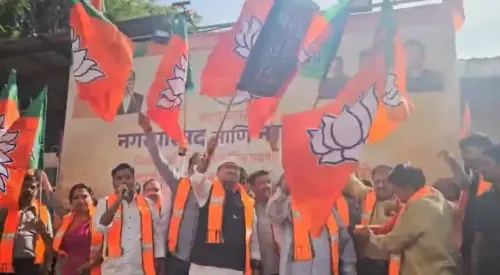
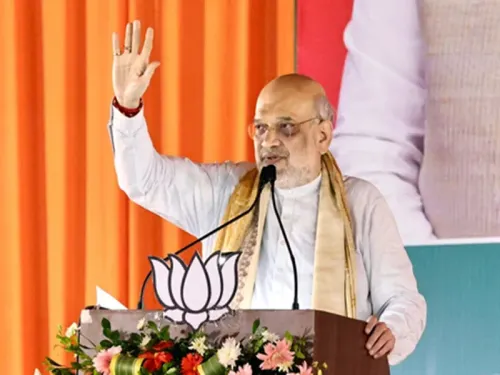
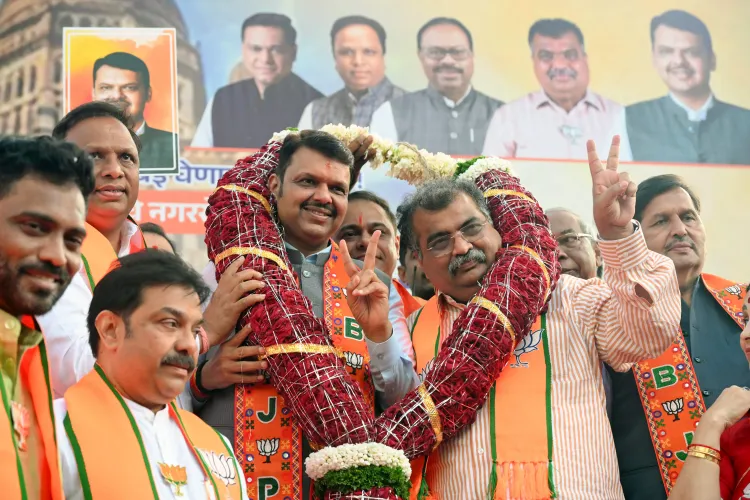
Mumbai, Jan 16 (NationPress) The “double engine” leadership model between the Centre and state appears to have paved the way for the ruling Bharatiya Janata Party-led Mahayuti alliance's significant triumph in urban civic body elections, reinforcing the bloc's momentum following the Assembly elections.
The results from the civic elections suggest that the ruling alliance retains strong support across various regions of the state, despite facing “friendly contests”, a challenge from the reunited Thackeray cousins, and the Congress party's attempts at resurgence amid Rahul Gandhi’s “vote theft” campaign.
The Mahayuti alliance has cemented its presence in major municipal corporations, diminishing the influence of the Thackeray camp and Congress in vital urban areas. It is projected to achieve a majority in the Brihanmumbai Municipal Corporation (BMC), effectively ending the long-standing reign of the then-undivided Shiv Sena, with the BJP emerging as the dominant party.
Similar achievements were noted in cities like Pune, Thane, and Nashik.
Prime Minister Narendra Modi expressed gratitude to the people of Maharashtra through a social media post on X, stating in Marathi: “Thank you, Maharashtra! The enthusiastic citizens of the state have endorsed the NDA's commitment to public welfare and effective governance!”
He continued, “The outcomes of various municipal corporation elections indicate that the bond between the NDA and the people of Maharashtra has strengthened. Our performance and developmental vision have resonated with the populace. I extend heartfelt thanks to all Maharashtra residents. This mandate will propel further progress and celebrate the glorious culture of the state.”
By midday, reports indicated that the BJP was leading in several hundred wards, while the Eknath Shinde-led Shiv Sena was also showing strong results. Initial trends indicated that Shiv Sena had a robust start in Kalyan-Dombivli, Navi Mumbai, and Ulhasnagar, leading in numerous wards across those municipalities.
Meanwhile, in Pune and Pimpri-Chinchwad, the BJP made significant progress.
The elections were conducted for 2,869 seats across 893 wards in the state on January 15, with participation from over 1.03 crore voters this year, following postponements due to COVID-19, legal challenges, and ward delimitation.
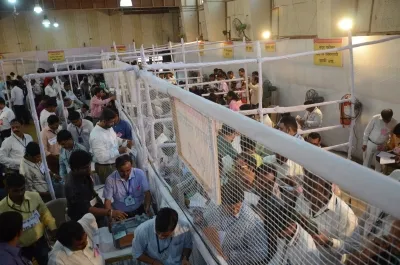
Counting took place at 23 designated centers throughout Mumbai under stringent security protocols and substantial police presence, supervised by an Election Returning Officer at each center.
The November 2024 Maharashtra Assembly elections, which saw the alliance consolidate power at the state level, provided a backdrop that framed the municipal contests as a test of continuity for the ruling coalition. The civic victory also reflects an urban focus, effective local organization, targeted campaigns on developmental and civic issues, and a divided opposition.
The alliance formed by Shiv Sena (Uddhav Balasaheb Thackeray) and Raj Thackeray’s Maharashtra Navnirman Sena (MNS), along with Congress’s attempts to revitalize itself, has not translated into substantial ground mobilization in numerous wards.
The civic results follow the Mahayuti’s notable performance in the November 2024 Assembly elections, where the BJP secured 132 seats – an increase of 27 seats from 2019 – out of the state’s 288 constituencies. Among its allies, the Eknath Shinde-led Shiv Sena won 57 seats, and Ajit Pawar’s Nationalist Congress Party (NCP) garnered 41 seats, with both parties splitting ahead of the Vidhan Sabha elections.
This contrasts with the April-May Lok Sabha elections, where the BJP experienced a 14-seat decline from the previous election, winning only nine out of 48 Parliamentary constituencies in Maharashtra. The Congress managed to strengthen its position, winning 13 seats compared to just one in the previous 2019 Lok Sabha elections.
Now, this civic sweep reinforces the Mahayuti’s grip on urban governance, providing it with greater control over municipal budgets, appointments, and local services. For the opposition, these results have once again highlighted organizational shortcomings and the necessity for clearer local narratives.
The outcome also indicates that urban voters are rewarding perceived administrative effectiveness and visible civic efforts, rather than solely identity or regional considerations.
Point of View
It is evident that the recent civic poll results highlight the BJP-led Mahayuti alliance's ability to consolidate power in urban areas. The impressive performance, despite opposition challenges, suggests a prioritization of effective governance and administrative performance among voters. This trend could reshape the political dynamics in Maharashtra as the alliance continues to reinforce its presence.
NationPress
22 Sept 2026
Frequently Asked Questions
What is the significance of the ‘double-engine’ leadership?
The ‘double-engine’ leadership refers to the coordinated governance approach between the Centre and state, enhancing efficiency and policy implementation at local levels.
How did the BJP perform in the recent civic polls?
The BJP emerged as the single largest party in several municipal corporations, including securing a majority in Brihanmumbai Municipal Corporation, marking a significant electoral victory.
What challenges did the ruling alliance face in the elections?
The ruling alliance faced challenges from the reunited Thackeray cousins and Congress's revival efforts, but managed to maintain strong support across the state.
What does this victory mean for the opposition parties?
The results highlight organizational weaknesses within opposition parties and indicate the need for clearer local narratives to connect with urban voters.
How does this impact future elections in Maharashtra?
This civic sweep strengthens the Mahayuti's control over urban governance, setting the stage for its influence in upcoming elections, including the November 2024 Assembly polls.