BJP's 'Save Democracy' march in Indore: MP CM Yadav targets Congress over SIR
Synopsis
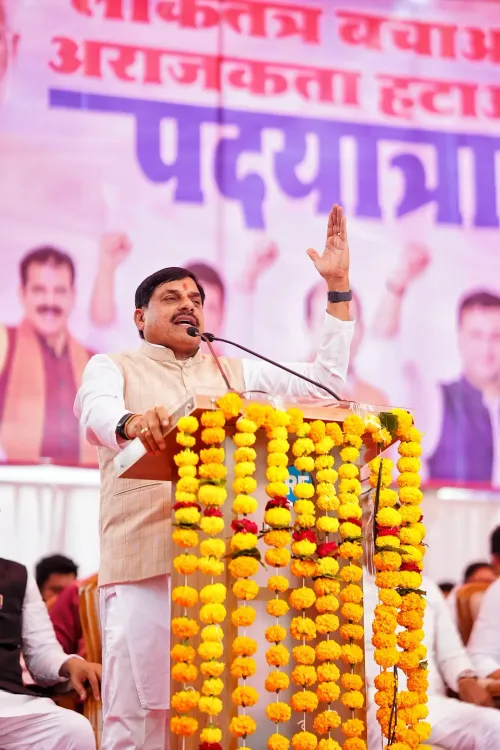
The BJP brought over one lakh people onto the streets of Indore on 30 October for its 'Save Democracy, Remove Anarchy' march — a direct attack on the Congress over its opposition to the Special Intensive Revision of electoral rolls. With MP CM Mohan Yadav accusing the opposition of seeking to protect foreign nationals and duplicate entries on voter lists, the march signals the BJP is turning the SIR row into a major political battleground in Madhya Pradesh.
Key Takeaways
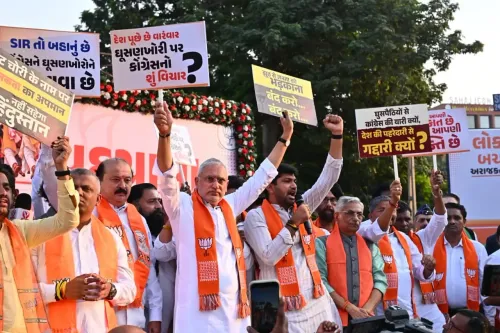
The BJP organised a large-scale 'Loktantra Bachao-Arajkata Hatao' foot march in Indore on 30 October 2026 .
The BJP claimed over one lakh participants attended the march.
MP Chief Minister Mohan Yadav warned the Congress and Rahul Gandhi against 'politics of anarchy', invoking comparisons with Bangladesh and Nepal .
State BJP President Hemant Khandelwal accused the Congress of opposing the Special Intensive Revision (SIR) to keep foreign nationals and deceased persons on voter rolls.
Biplab Kumar Deb described the march as a public awareness campaign, not an electoral rally.
Union Minister Mansukh Mandaviya said the turnout reflected public support for PM Modi's vision of a developed India.
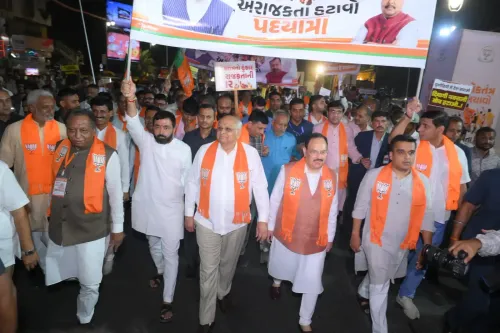
The Bharatiya Janata Party (BJP) on Friday, 30 October 2026, organised a large-scale 'Loktantra Bachao-Arajkata Hatao' (Save Democracy, Remove Anarchy) foot march in Indore, Madhya Pradesh, with Chief Minister Mohan Yadav and senior party leaders accusing the Congress of undermining democratic institutions and opposing the Special Intensive Revision (SIR) of electoral rolls for political advantage. The BJP claimed attendance of over one lakh participants, making it one of the largest political mobilisations by the party in the state in recent months.
Key Leaders and Turnout
The march drew Union Minister Mansukh Mandaviya, State BJP President Hemant Khandelwal, and the party's National General Secretary and Madhya Pradesh In-charge Biplab Kumar Deb, alongside several state ministers, Members of Parliament, Members of the Legislative Assembly, and representatives of social and business organisations. The breadth of leadership presence underscored the event's significance as a coordinated state-wide political statement.
What CM Yadav Said
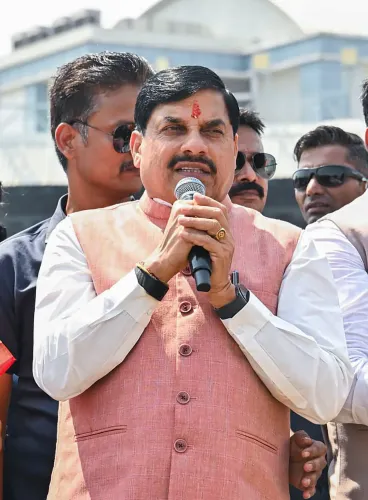
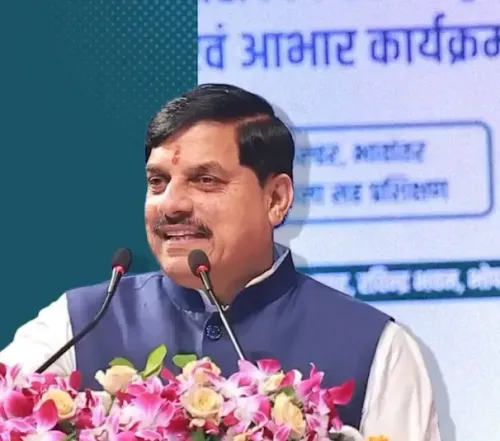
Addressing the gathering, Chief Minister Yadav described the turnout as a direct warning to the opposition. 'The massive gathering in Indore is a clear warning to Rahul Gandhi, the Congress and other opposition parties. Those attempting to create anarchy in the country out of their lust for power should understand that no force can stop the BJP's lotus from blooming,' he said.
Yadav alleged that the Congress, having failed to secure power through democratic processes, was attempting to discredit elected governments and destabilise constitutional institutions. He also accused the party and its allies of trying to replicate conditions similar to those witnessed in Bangladesh and Nepal by challenging elected governments and autonomous bodies. He administered an oath to participants to protect democratic values and uphold the dignity of constitutional institutions.
BJP's Attack on Congress Over Electoral Roll Revision
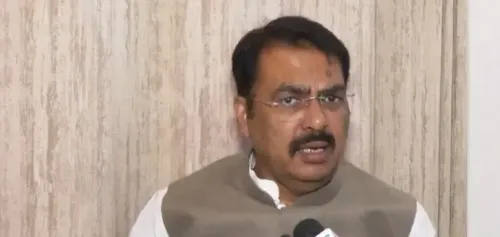
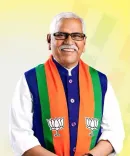
State BJP President Khandelwal trained his fire on the Congress over its opposition to the Special Intensive Revision (SIR) of electoral rolls. 'Earlier, the Congress used to question EVMs and now it is opposing SIR. It wants the names of foreign nationals and deceased persons to remain in electoral rolls and multiple entries of the same individual to continue for political gains,' Khandelwal alleged.
He also pointed to the Congress's recent performance in Legislative Council elections in four states, where the party reportedly suffered a significant defeat despite voting being conducted through ballot papers rather than EVMs — a detail Khandelwal used to rebut Congress's recurring criticism of electronic voting. He called on the party to introspect rather than repeatedly questioning electoral processes.
Deb and Mandaviya Weigh In
Biplab Kumar Deb framed the march not as an electoral exercise but as a public awareness campaign. 'This is not an electoral march of the BJP but a campaign to create awareness against forces that want to divide the country and weaken its unity and integrity,' he said. Deb alleged that the Congress lacked both concrete policy issues and a development vision, and was questioning constitutional institutions out of political frustration.
Union Minister Mandaviya said the large participation reflected public commitment to democracy and to Prime Minister Narendra Modi's vision of a developed India. He described the march as a sign of the BJP's organisational strength in Madhya Pradesh.
Broader Political Context
The march comes amid a national BJP campaign around the SIR of electoral rolls, a process the Election Commission of India has undertaken to clean up voter lists. The Congress and several opposition parties have raised objections to the revision exercise, claiming it risks disenfranchising legitimate voters — a charge the BJP has countered by alleging the opposition wants inflated rolls to benefit from irregular entries. This is the latest in a series of BJP-organised mobilisation events across states ahead of what analysts see as a period of heightened political activity. All eyes will now be on how the Congress responds to the BJP's escalating pressure campaign on the electoral rolls issue.
Point of View
Not merely wrong — a sharper rhetorical escalation than standard party-politics attacks. What mainstream coverage misses is that the SIR row is also a proxy for a deeper fight over institutional credibility: both sides are vying to be seen as the guardian of democratic processes ahead of what could be a consequential election cycle. The real accountability question is whether either party engages substantively with the legitimate concerns of voters who fear being dropped from or incorrectly retained on electoral rolls.
NationPress
30 Oct 2026
Frequently Asked Questions
What is the BJP's 'Loktantra Bachao-Arajkata Hatao' march in Indore?
It is a large-scale foot march organised by the Bharatiya Janata Party on 30 October 2026 in Indore, Madhya Pradesh, themed 'Save Democracy, Remove Anarchy'. The BJP used the event to attack the Congress over its opposition to the Special Intensive Revision of electoral rolls and to accuse the party of undermining democratic institutions.
What is the Special Intensive Revision (SIR) of electoral rolls, and why is it controversial?
The SIR is an Election Commission of India exercise aimed at cleaning up voter lists by removing deceased persons, duplicate entries, and ineligible names. The Congress and some opposition parties have objected to the process, claiming it risks disenfranchising genuine voters, while the BJP alleges the opposition wants irregular entries preserved for political benefit.
Who attended the BJP march in Indore on 30 October?
The march was attended by Madhya Pradesh Chief Minister Mohan Yadav, Union Minister Mansukh Mandaviya, State BJP President Hemant Khandelwal, National General Secretary and MP In-charge Biplab Kumar Deb, along with state ministers, MPs, MLAs, and representatives of social and business organisations. The BJP claimed over one lakh participants.
What did CM Mohan Yadav say about the Congress at the Indore march?
CM Yadav accused the Congress of pursuing 'politics of anarchy and negativity' after failing to win power through democratic processes. He warned Congress and Rahul Gandhi against creating instability, drew comparisons with situations in Bangladesh and Nepal, and administered an oath to participants to uphold constitutional institutions.
What did BJP's Hemant Khandelwal say about Congress and EVMs?
State BJP President Khandelwal alleged that after repeatedly questioning EVMs, the Congress was now opposing the SIR process to ensure the names of foreign nationals, deceased persons, and duplicate entries remain on voter rolls. He cited the Congress's defeat in Legislative Council elections in four states — where ballot papers were used — as evidence that its electoral losses are not due to EVMs.