BJYM national executive resolution 2025: Viksit Bharat by 2047, youth warned against 'anarchy'
Synopsis
BJYM's national executive has drawn a sharp ideological line — backing Modi's Viksit Bharat ambition while branding foreign-funded protests and 'Dimagi Naxal' networks as threats to youth. The resolution is less a policy document than a political mobilisation blueprint, framing the 2047 development target as inseparable from constitutional loyalty and rejection of street-level disruption.
Key Takeaways
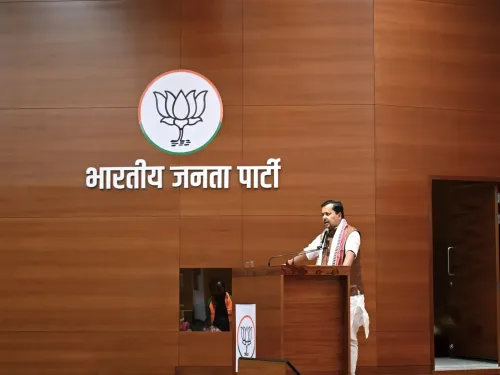
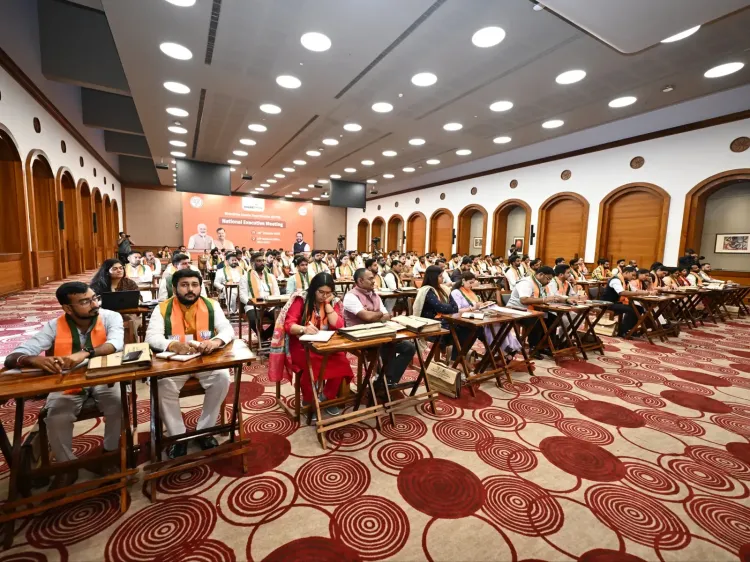
BJYM adopted a political resolution at its national executive meeting on 29 October 2025 in New Delhi .
The resolution backs the Viksit Bharat @2047 vision and calls on youth to channel aspirations into nation-building.
It warns against networks labelled 'Dimagi Naxal' and alleged foreign-funded protests — characterisations that reflect the party's political position, not independently verified findings.
Flagship schemes cited include NEP 2020 , Mudra , PLI , Chandrayaan-3 , Khelo India and Lakhpati Didi .
BJYM pledged awareness campaigns in universities and digital counter-misinformation networks.
Ambedkar's 'Grammar of Anarchy' was invoked to argue that democratic dialogue must replace street agitation.
The Bharatiya Janata Yuva Morcha (BJYM), the youth wing of the Bharatiya Janata Party (BJP), on Thursday, 29 October 2025, adopted a political resolution at its national executive meeting in New Delhi, charting a roadmap for India's youth to contribute to a developed nation by 2047 while guarding democratic institutions against what the organisation describes as anarchic forces and foreign-funded destabilisation.
Core Vision: Viksit Bharat @2047
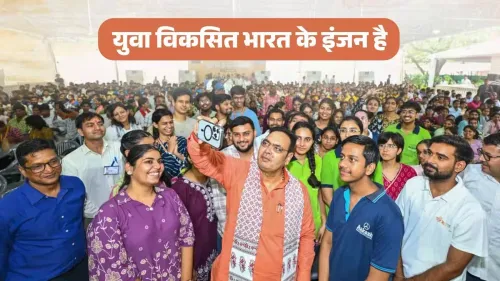
The resolution positions India's young population as central to the Viksit Bharat @2047 vision — the government's stated goal of achieving developed-nation status by the centenary of independence. BJYM called on youth to reject propaganda, uphold constitutional values and channel energy into nation-building rather than disruptive agitation.
Prime Minister Narendra Modi's flagship programmes featured prominently: Digital India, the Unified Payments Interface (UPI), Direct Benefit Transfer (DBT), the Jan Dhan-Aadhaar-Mobile (JAM) trinity and the Ayushman Bharat Digital Mission were credited with widening access to public services across socioeconomic strata.
Education, Entrepreneurship and Self-Reliance
The National Education Policy (NEP) 2020 was highlighted for its emphasis on mother-tongue instruction, multidisciplinary learning and innovation. The resolution cited schemes including Pradhan Mantri Kaushal Vikas Yojana, PM Vishwakarma and Mudra as instruments of youth empowerment and entrepreneurship development.
On economic self-reliance, BJYM pointed to Make in India, Atmanirbhar Bharat, the Production-Linked Incentive (PLI) scheme and PM Gati Shakti as drivers of manufacturing growth. India's expanding startup ecosystem — notably participation from entrepreneurs in smaller cities and women-led enterprises — was also highlighted as evidence of broadening opportunity.
Science, Sports and Cultural Milestones
The resolution celebrated India's space achievements — Chandrayaan-3, Aditya-L1 and the ongoing Gaganyaan programme — alongside indigenous COVID-19 vaccines as markers of scientific self-sufficiency. Future-facing missions including the India AI Mission, National Quantum Mission, Semiconductor Mission and Anusandhan National Research Foundation were identified as pillars of next-generation research capability.
In sports, Khelo India and the Target Olympic Podium Scheme were credited with nurturing talent from rural and tribal backgrounds. Women-led development — through schemes such as Lakhpati Didi and Namo Drone Didi — and environmental priorities including the National Green Hydrogen Mission and Mission LiFE also figured in the resolution.
Warning Against 'Anarchy' and Foreign Influence
A substantial section of the resolution expressed concern over what BJYM characterises as misinformation campaigns, foreign-funded protests and networks it labels 'Dimagi Naxal' or 'urban Naxal' — terms the party uses to describe those it accuses of radicalising youth or destabilising democratic institutions. These characterisations reflect the resolution's political position and do not constitute independently verified findings about any particular group.
Invoking B.R. Ambedkar's warning against the 'Grammar of Anarchy', the resolution argued that social and political demands must be pursued through constitutional mechanisms and democratic dialogue, not street agitation or violence.
Commitments and Action Plan
BJYM adopted several concrete commitments: launching awareness drives in universities, colleges and coaching centres; building digital networks to counter AI bots, fake accounts and extremist narratives; and opposing — through democratic and legal means — perceived insults to the Indian Army, national symbols and constitutional institutions. The organisation also pledged to discourage youth from participating in what it termed foreign-funded agitation and disruptive politics, while promoting transparency on education, employment and examination reforms.
With these pledges on record, attention will now turn to how BJYM translates this resolution into ground-level mobilisation ahead of several state assembly cycles over the coming year.
Point of View
A move that will energise the base but is unlikely to persuade sceptics. What the resolution does not do is engage substantively with youth unemployment, exam-paper leak controversies or the skilling gap — precisely the bread-and-butter issues that determine whether young voters stay with or drift away from the party. Citing Ambedkar against anarchy is a deft constitutional move, but the credibility test is whether BJYM applies the same constitutional standard when its own affiliates resort to intimidation on campuses.
NationPress
30 Oct 2026
Frequently Asked Questions
What did BJYM resolve at its national executive meeting on 29 October 2025?
BJYM adopted a political resolution backing the Viksit Bharat @2047 development goal, endorsing the Modi government's key schemes and warning youth against alleged foreign-funded protests and 'Dimagi Naxal' networks. The resolution also laid out commitments on digital counter-misinformation and campus awareness campaigns.
What is the 'Dimagi Naxal' reference in the BJYM resolution?
'Dimagi Naxal' is a term used by the BJP and its affiliates to describe individuals or networks they accuse of radicalising youth or destabilising institutions through ideological means rather than armed action. The characterisation is the party's political position and does not reflect independently established findings about any group.
Which government schemes did BJYM highlight in its resolution?
The resolution cited Digital India, UPI, DBT, JAM, Ayushman Bharat Digital Mission, NEP 2020, PM Kaushal Vikas Yojana, Mudra, Make in India, PLI, Chandrayaan-3, Khelo India, Lakhpati Didi and the National Green Hydrogen Mission, among others.
Why did BJYM invoke B.R. Ambedkar in its resolution?
BJYM cited Ambedkar's warning against the 'Grammar of Anarchy' to argue that social and political demands should be pursued through constitutional mechanisms and democratic dialogue rather than street protests or violence. It is a recurring rhetorical device used by the BJP to frame opposition protests as anti-constitutional.
What action commitments did BJYM make in the resolution?
BJYM committed to running awareness campaigns in universities, colleges and coaching centres; expanding digital networks to counter fake accounts, AI bots and extremist content; opposing perceived insults to national symbols through legal means; and discouraging youth from participating in what it terms foreign-funded or disruptive agitation.