West Bengal ripe for industrial investment, says Blue Star CMD Vir S Advani
Synopsis
Blue Star CMD and CII Western Region Chairman Vir S Advani is making a pointed case for West Bengal as India's next industrial frontier — a state that has seen real estate capital but little manufacturing investment. With raw material costs in the AC industry up 8–10% on West Asia tensions, the broader industry is under pressure even as it hunts for new growth geography.
Key Takeaways
Vir S Advani , CMD of Blue Star Limited and CII Western Region Chairman, called West Bengal a significant untapped industrial investment opportunity on 5 May 2025 .
The state has seen limited manufacturing investment historically, with capital concentrated in real estate rather than industry.
CII Western Region will focus on quality, digitalisation, and sustainability for its 2,500 members , of which 80% are SMEs.
Policy advocacy will target Maharashtra , Gujarat , Madhya Pradesh , and Goa to improve ease of doing business.
Raw material costs in the air conditioning industry have risen 8–10% due to West Asia geopolitical tensions — the steepest increase in over a decade.
A portion of the cost increase is likely to be passed on to consumers, with the industry working on design optimisation to limit the impact.
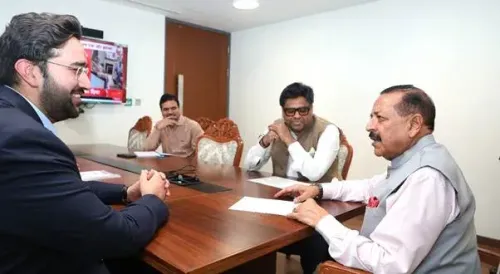
Vir S Advani, Chairman of the Confederation of Indian Industry (CII) Western Region and Chairman & Managing Director of Blue Star Limited, on Tuesday said that West Bengal presents a significant and largely untapped opportunity for industrial investment, adding that the time is right for the state to attract meaningful capital from the manufacturing sector.
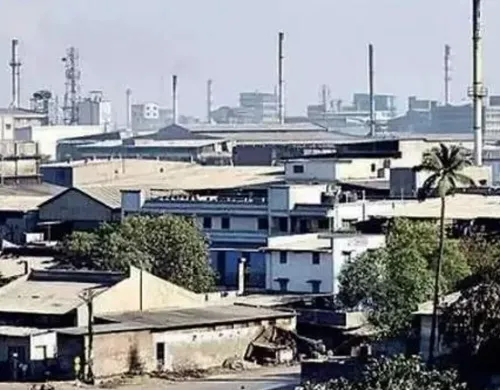
West Bengal's Industrial Gap
Speaking to news agency IANS in Mumbai, Advani noted that West Bengal has historically seen limited participation from industry compared to other Indian states. While real estate has attracted some investment, manufacturing has remained largely absent.
"In West Bengal, we think that there is a lot of opportunity. In the state, there has been very little investment from the industry. There has been some investment in real estate, but there has been less in the industry," he said. This comes amid a broader push by several state governments to attract manufacturing units as companies diversify supply chains away from China.
CII Western Region's Competitiveness Agenda
On the broader agenda for the CII Western Region, Advani said the focus will be on strengthening competitiveness across industries — particularly among small and medium enterprises (SMEs), which account for nearly 80 per cent of the region's 2,500 members. He stressed that competitiveness today extends well beyond cost efficiency.
"We will focus on quality and digitalisation. We will focus on sustainability. We have to invest a lot in all these areas so that our capabilities increase," he told IANS. Advani added that building stronger capabilities across the supply chain will be essential to making Indian industry globally competitive.
The CII also plans to intensify policy advocacy across key western states — Maharashtra, Gujarat, Madhya Pradesh, and Goa — with an emphasis on improving ease of doing business and reducing operational costs for companies.
Raw Material Costs Surge on Geopolitical Pressures
Advani flagged a sharp rise in raw material prices driven by geopolitical tensions in West Asia, noting that the air conditioning industry has seen input costs climb by 8–10 per cent in a short period. He described this as one of the steepest increases in over a decade, comparable only to the cost shocks seen in the aftermath of the global financial crisis.
While companies across the sector are working on engineering changes, product redesign, and supplier renegotiations to absorb some of the pressure, Advani acknowledged that a portion of the cost increase is likely to be passed on to end consumers.
"So, this cost increase will take a long time. We will see. The entire industry is working to optimise the design and reduce the cost," he said. The outlook for near-term price relief in the air conditioning segment remains uncertain, with the full impact of raw material inflation yet to fully reflect in retail prices.
What's Next
With the CII Western Region sharpening its focus on SME competitiveness, policy advocacy, and sustainability, Advani's remarks signal a broader industry intent to rebalance India's manufacturing geography — and West Bengal is being positioned as a key frontier in that effort.
Point of View
Not a state government promotional event. The state has long been perceived as an investment laggard due to historical labour tensions and policy uncertainty — and a CII Western Region chairman saying 'the time is ripe' is a signal worth tracking. That said, intent and capital are different things; West Bengal has heard similar optimism before without a manufacturing surge following. On raw material costs, the 8–10% spike in AC input prices is a canary in the coal mine for consumer durables broadly — if companies cannot absorb it through redesign, the inflationary pass-through could dampen demand precisely when the summer season should be driving volumes.
NationPress
16 Sept 2026
Frequently Asked Questions
What did Blue Star CMD Vir S Advani say about West Bengal?
Vir S Advani said West Bengal holds significant untapped industrial investment potential, noting that the state has historically seen very little manufacturing investment despite some activity in real estate. He called the current moment ripe for change.
What is the CII Western Region's focus for 2025?
The CII Western Region is focusing on improving competitiveness among its 2,500 members — 80% of whom are SMEs — through quality improvement, digitalisation, and sustainability. It also plans policy advocacy in Maharashtra, Gujarat, Madhya Pradesh, and Goa to ease the cost of doing business.
Why have raw material costs risen in the air conditioning industry?
Geopolitical tensions in West Asia have driven a sharp rise in raw material prices, pushing input costs for the air conditioning industry up by 8–10% in a short period. Advani described it as the steepest increase in over a decade, comparable to post-global financial crisis levels.
Will consumers face higher prices for air conditioners?
Advani indicated that while companies are working on engineering changes and redesign to offset some costs, a portion of the raw material cost increase is likely to be passed on to consumers. The full retail price impact has not yet been determined.
Which states is CII Western Region targeting for policy advocacy?
The CII Western Region plans to intensify policy advocacy in Maharashtra, Gujarat, Madhya Pradesh, and Goa, with a focus on improving ease of doing business and reducing operational costs for member companies.