Did BMC Elections Expose Eknath Shinde's Weakness?
Click to start listening
Synopsis
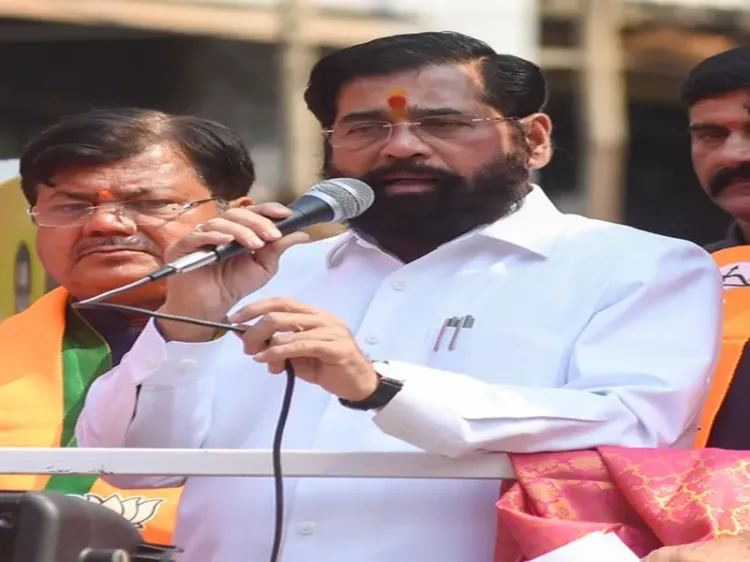
The recent BMC elections have revealed serious challenges for Deputy CM Eknath Shinde's faction of Shiv Sena, with political analysts pointing to dynastic politics and local disconnect as key factors for their poor performance. Can Shinde recover before the 2029 elections?
Key Takeaways
- Shiv Sena's reliance on dynastic candidates backfired.
- The Thackeray brand remains strong among voters.
- Strategic campaigning fell short of expectations.
- Internal party dynamics need urgent reevaluation.
- Future elections will be influenced by current perceptions.
Mumbai, Jan 17 (NationPress) While the BJP-led Mahayuti alliance celebrated its overall triumph in the 29 municipal corporations across Maharashtra, Deputy Chief Minister Eknath Shinde's faction of Shiv Sena experienced a stark reality check. In the crucial BMC elections, the much-discussed "Shinde charisma" failed to resonate, with the party managing to secure only 29 out of the 90 contested seats, primarily thanks to the BJP's backing.
The most notable outcome was the loss of several prominent candidates who were relatives of Deputy CM Shinde’s senior ministers and leaders.
Despite Deputy CM Shinde's efforts to negotiate for 90 seats based on the strength of former corporators who switched allegiance from the Thackeray camp, the decision to field family members proved detrimental. Notable losses in the “dynasty” category included Samadhan Sarvankar, the son of former MLA Sada Sarvankar; the daughter of MP Ravindra Waikar; the sister-in-law of former MP Rahul Shewale; along with the children of MLAs Ashok Patil and Mangesh Kudalkar.
Except for Shiv Sena legislator Tukaram Kate, most senior leaders couldn't secure victories for their family members. Local party workers are now questioning why Deputy CM Shinde prioritized familial connections over merit and local appeal.
Political analysts and internal party sources have identified several key reasons for this underwhelming performance. The loyalty of the core Marathi voter base in Mumbai to the “Thackeray brand” significantly impacted the results, with many rejecting those they view as “traitors”.
While Deputy CM Shinde focused on resolving seat-sharing disputes and campaigning in his strongholds of Thane, Kalyan-Dombivli, and Ambernath, his presence in Mumbai was limited to just two rallies and three roadshows.
Party insiders acknowledged that poor strategic planning and lack of coordination hindered Deputy CM Shinde’s ability to connect with many candidates' constituencies during the campaign. Additionally, flawed ticket distribution adversely affected the party's performance.
Tickets were often awarded to family members of senior leaders instead of dedicated grassroots workers, hampering the Shinde faction's ability to effectively counter the emotional and political narrative established by the Thackeray faction.
The ongoing tension between the BJP and the Shinde faction regarding seat-sharing and future claims on constituencies further weakened the alliance's cohesion.
Although Deputy CM Shinde has expressed intentions to install a Mahayuti Mayor in Mumbai, the electoral numbers indicate a necessity for deep reflection. Beyond the Thane-Kalyan region, his faction has struggled to establish a pan-Maharashtra appeal.
Experts caution that if Deputy CM Shinde fails to acknowledge the prevailing realities and move past dynastic politics, justifying the retention of the “Bow and Arrow” symbol he acquired from the Thackerays will become increasingly difficult. With threats emerging from both opposition forces and perceived “friendly” allies, the path to the 2029 Assembly elections appears challenging for Deputy CM Shinde.
(Sanjay Jog can be contacted at sanjay.j@ians.in)
Point of View
The results of the BMC elections are a clear indication of shifting political loyalties in Maharashtra. Eknath Shinde's reliance on dynastic connections over merit has led to significant losses, raising questions about the efficacy of his leadership and strategy moving forward. The need for introspection and a shift in approach is paramount.
NationPress
17/01/2026
Frequently Asked Questions
What were the main factors contributing to Shiv Sena's poor performance in the BMC elections?
Key factors include the failure of dynastic politics, loyalty to the Thackeray brand among Marathi voters, and ineffective campaign strategies.
How did the BJP influence the BMC election results?
The BJP's support was crucial, allowing Shinde's faction to secure some seats, but ultimately, it wasn't enough due to the negative perception of dynastic candidates.
What does this mean for Eknath Shinde's political future?
If Shinde does not adapt his approach and address the concerns of local party workers, his political future and the faction's relevance could be at risk.