How is NDMC's Smart Irrigation System Promoting Sustainability?
Click to start listening
Synopsis
The NDMC is set to revolutionize irrigation with a new Smart Irrigation System, spearheaded by Kuljeet Singh Chahal. This innovative approach not only conserves water but also enhances resource efficiency across New Delhi's green spaces. Discover how this initiative will benefit the city's environment and its inhabitants!
Key Takeaways
- Implementation of Smart Irrigation Systems
- Focus on water conservation
- Reduction of water wastage
- Enhanced horticultural practices
- Utilization of recycled water
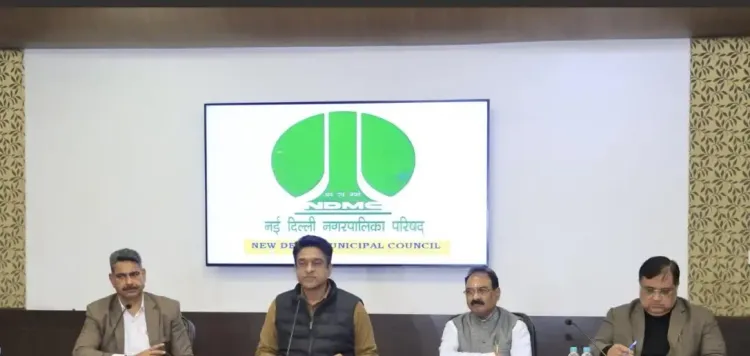
New Delhi, Jan 17 (NationPress) The New Delhi Municipal Council (NDMC) is implementing a Smart Irrigation System to foster sustainable development and enhance the efficient use of resources, announced Vice-Chairperson Kuljeet Singh Chahal on Saturday.
This initiative will see the deployment of advanced, automated, and mechanized irrigation systems across parks, gardens, and green spaces, ensuring that water is allocated precisely where and when it is needed.
Chahal emphasized that this system is designed to encourage water conservation, minimize water wastage and waterlogging, boost plant health, optimize human resource utilization, and considerably lower operational costs.
In the initial phase, smart irrigation systems are planned for installation along 11 major roads, covering an aggregate length of approximately 19.28 km for horticultural applications.
This initiative will reduce the reliance on water tankers, thus contributing to a decrease in air pollution, he explained.
The roads targeted include areas surrounding Nehru Park, Peshwa Road, Mandir Marg, R.K. Ashram Marg, Bhai Veer Singh Marg, Shanti Path, Panchsheel Marg, Ashoka Road, C-Hexagon, Aurobindo Marg, and Akbar Road.
Tenders for this undertaking are already out, with openings scheduled for January 23 and 27, Chahal added.
"The contract is expected to be awarded before March 2026, with completion timelines varying from six months to a year, contingent upon the length of the road. The estimated budget for this phase is Rs 15.94 crore," he stated.
Chahal further revealed that upon successful execution of Phase-I, the smart irrigation project will be expanded in the year 2026–27 to encompass 11 additional main roads and five significant gardens, spanning nearly 19.61 km.
This phase will include Maharishi Raman Marg, Lodhi Estate Lanes, Max Muller Marg, Subramaniyam Bharti Marg, San Martin Marg, Jesus and Mary Road, Manas Marg, Madhulimya Marg, Satya Marg, Chandragupt Marg, and Niti Marg, along with the Covered Nallah Park behind Satya Sadan, Lodhi Garden, Talkatora Garden, Sanjay Lake Park, and the Children's Park at Madhulimya Marg.
The estimated budget for this phase is about Rs 16 crore, he noted.
Chahal also mentioned that recycled water from Decentralised Sewage Treatment Plants (DSTPs) located throughout the NDMC area is being utilized for irrigation. This practice reduces reliance on fresh drinking water and promotes sustainable and efficient water resource management.
Currently, 12 DSTPs are operational in the NDMC area, supplying treated water for irrigation in various parks and green spaces, underscoring NDMC's strong commitment to environmental sustainability.
Point of View
The initiative by NDMC represents a crucial step towards sustainable urban development. By embracing modern irrigation technology, the council is not just addressing immediate environmental concerns but is also setting a precedent for other municipalities across the country. This proactive approach reflects a growing recognition of the importance of resource conservation in combating climate change.
NationPress
17/01/2026
Frequently Asked Questions
What is the Smart Irrigation System?
The Smart Irrigation System is an advanced, automated irrigation approach being implemented by NDMC to optimize water usage in parks and green spaces.
How will this initiative impact water conservation?
This initiative will promote water conservation by ensuring that water is used only as needed, thereby reducing wastage and improving resource efficiency.
What areas will be affected by the new irrigation system?
The initiative will cover 11 major roads and several parks, including Nehru Park and Lodhi Garden, among others.
When will the Smart Irrigation System be operational?
The first phase is expected to be awarded by March 2026, with completion timelines varying from six months to a year.
How is recycled water being utilized in this initiative?
Recycled water from Decentralised Sewage Treatment Plants is being used for irrigation, reducing reliance on fresh water.