Amit Shah backs ₹8,970 cr Guwahati–Tezpur corridor
Synopsis
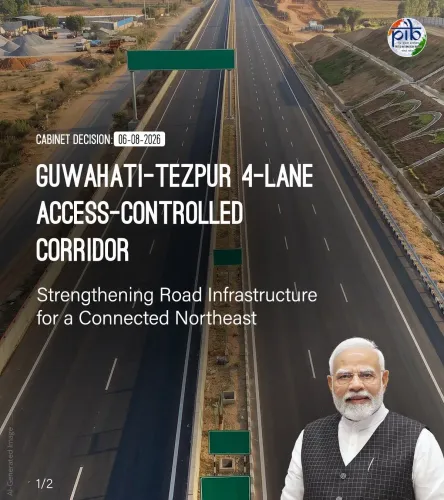
The Union Cabinet has approved the ₹8,970 crore Guwahati–Tezpur access-controlled corridor in Assam. Home Minister Amit Shah called it a new artery of development aligned with PM Modi's vision for the Northeast, promising employment and connectivity to the state's remotest areas.
Key Takeaways
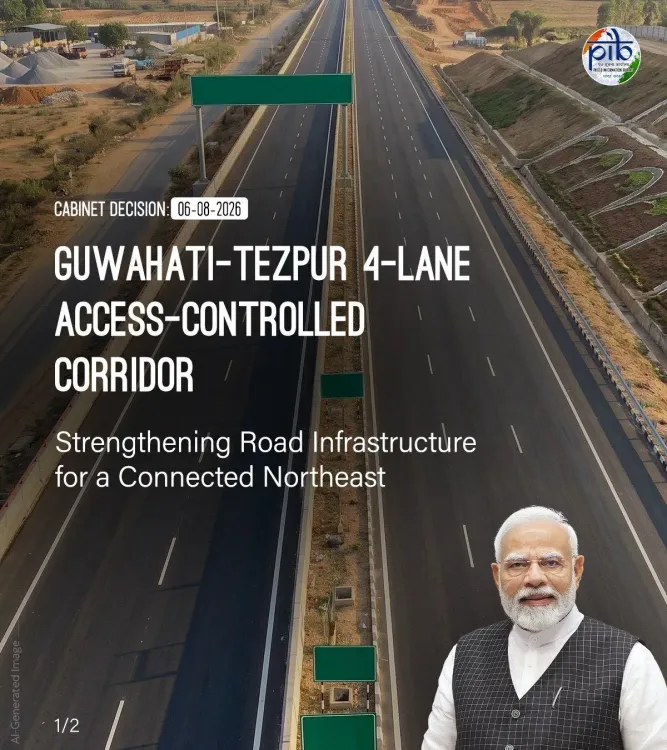
The Union Cabinet approved the ₹8,970 crore Guwahati–Tezpur access-controlled corridor , also known as the Baihata Chariali–Tezpur route.
Union Home Minister Amit Shah announced the approval on 6 August 2026 , posting in both English and Assamese.
The corridor links Guwahati , Assam's commercial capital, with Tezpur , a strategically located town near the Arunachal Pradesh foothills.
The project is positioned within the Act East Policy and Bharatmala Pariyojana frameworks that have driven Northeast infrastructure investment since 2014–15.
Key milestones ahead include land acquisition, construction tendering, and fund release scheduling before ground work can begin.
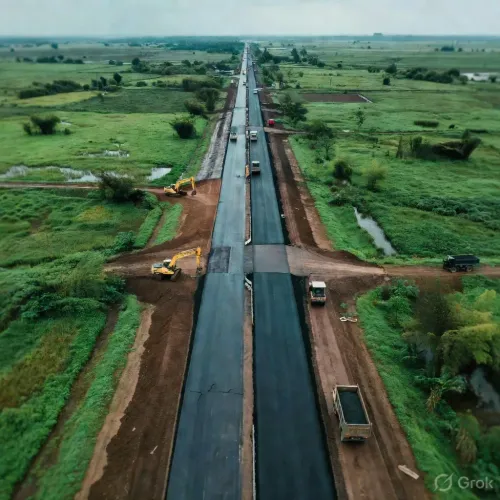
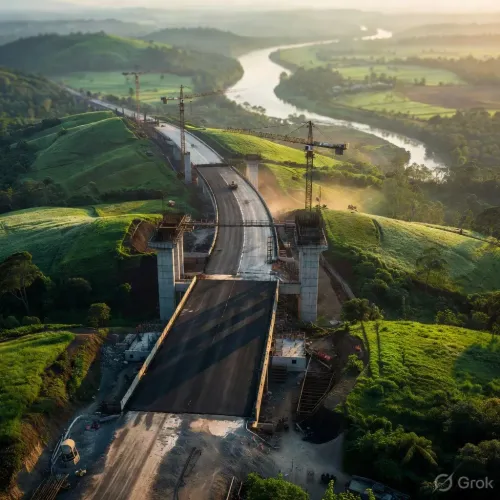
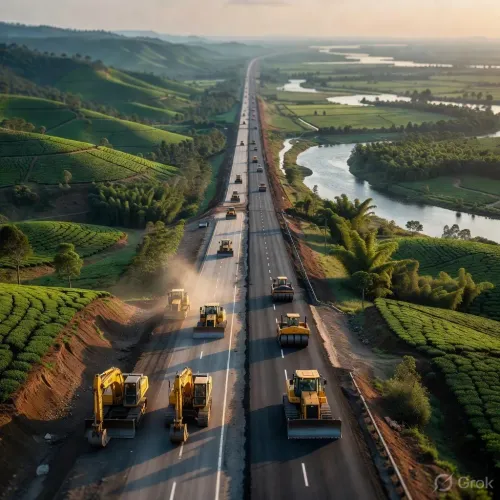
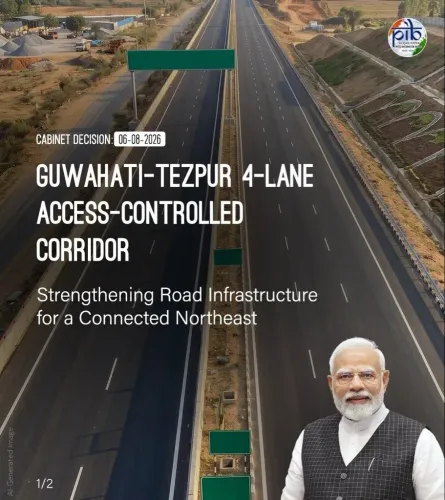
A ₹8,970 crore access-controlled highway is set to stitch together two of Assam's most strategically vital centres — and Union Home Minister Amit Shah says it is exactly the kind of artery a developed Northeast demands. The Union Cabinet has approved the Guwahati–Tezpur access-controlled corridor, also described as the Baihata Chariali–Tezpur route, marking one of the most significant road infrastructure commitments to the state in recent years.
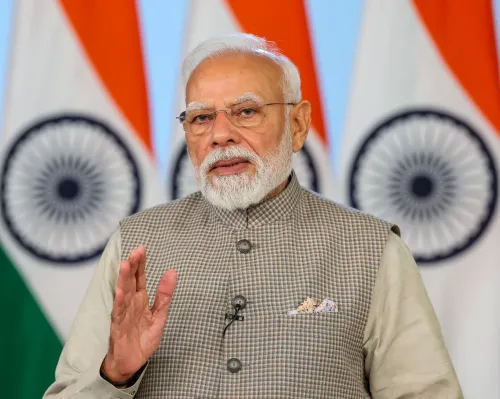
Posting on 6 August 2026, Shah framed the project in both English and Assamese, calling it 'a firm step towards a developed Assam, envisioned by Modi Ji' and 'a new artery of development and commerce' that will 'channel the benefits of growth to the remotest corners of the state spurring employment.' The bilingual post — rare in its deliberate use of Assamese script — signals the political weight the ruling establishment is placing on this approval.
What the Guwahati–Tezpur corridor actually means for Assam
Guwahati, the commercial capital of the Northeast, and Tezpur, a strategic town in central Assam sitting close to the foothills of Arunachal Pradesh, are currently connected by a highway that runs through dense traffic corridors and river crossings. An access-controlled expressway-grade corridor between the two would cut travel times sharply and open a dedicated freight lane for goods moving between the Brahmaputra valley's agricultural belt and Guwahati's markets and rail head. At ₹8,970 crore, the project is among the larger single-state highway investments sanctioned in the Northeast. Construction employment — both direct and indirect — is expected to be a near-term benefit even before the road opens.Bharatmala and the Act East thread running through this approval
This cabinet nod does not arrive in isolation. Since 2014, the central government's Act East Policy has prioritised physical connectivity in the Northeast as the foundation for economic integration with Southeast Asia. The Bharatmala Pariyojana, launched in 2015, provided the programmatic and financial architecture for accelerating national highway construction across the region, with Assam receiving multiple project sanctions over successive years. The Guwahati–Tezpur corridor fits squarely into that lineage — a controlled-access spine that complements broader investments in bridges, rail links, and border trade infrastructure across Assam and its neighbouring states. Each approval in this chain incrementally reduces the Northeast's traditional infrastructure deficit relative to peninsular India.What comes next on the ground
Cabinet approval is the starting gun, not the finish line. Land acquisition across the corridor's alignment, construction tendering, and the sequencing of fund releases will determine how quickly the project moves from sanction to steel and concrete. Complementary investments — rail linkages, feeder roads into remote districts, and bridge upgrades over Brahmaputra tributaries — will decide whether the corridor's promised reach into the 'remotest corners' of the state becomes reality or remains aspiration. For now, the approval gives the BJP a concrete deliverable to anchor its development narrative in Assam ahead of future electoral cycles — and gives the state a project whose scale, if executed on schedule, could genuinely reshape its economic geography.Point of View
It strengthens the government's Act East credentials; if it stalls, it becomes a ready-made opposition talking point.
NationPress
21 Sept 2026
Frequently Asked Questions
What is the Guwahati–Tezpur access-controlled corridor?
It is a newly approved ₹8,970 crore expressway-grade highway project connecting Guwahati, Assam's largest city, with Tezpur in central Assam, also described as the Baihata Chariali–Tezpur route.
Who approved the Guwahati–Tezpur corridor?
The Union Cabinet of India approved the project, with Home Minister Amit Shah announcing the decision on 6 August 2026.
How much will the Guwahati–Tezpur corridor cost?
The project has been approved at a cost of ₹8,970 crore.
What is the significance of this corridor for Assam?
The access-controlled highway is expected to cut travel times between Guwahati and Tezpur, open dedicated freight lanes, generate construction employment, and improve connectivity to remote parts of Assam.
How does this project relate to Bharatmala Pariyojana?
The corridor aligns with the Bharatmala Pariyojana launched in 2015 and the Act East Policy from 2014, both of which prioritise highway and connectivity infrastructure across India's northeastern states.