Cabinet clears ₹1,570 crore ship repair facility at Gujarat's Vadinar
Synopsis
India's Cabinet has cleared a ₹1,570 crore ship repair facility at Vadinar, Gujarat — the country's first capable of servicing vessels up to 300 metres. For years, large foreign-flagged ships have bypassed Indian ports for repairs abroad; this project is a direct bid to change that, curb foreign exchange outflow, and anchor India's western coast as a serious maritime repair hub.
Key Takeaways
The CCEA , chaired by PM Modi , approved a ₹1,570 crore ship repair facility at Vadinar, Gujarat on 5 May 2025 .
The facility will be jointly developed by Deendayal Port Authority (DPA) and Cochin Shipyard Limited (CSL) .
It will include a 650-metre jetty and two large floating dry docks, capable of servicing vessels up to 300 metres in length.
India currently lacks domestic capacity to repair vessels exceeding 230 metres , leading to significant foreign exchange outflow.
The project is expected to create approximately 290 direct and 1,100 indirect jobs across ship repair, logistics, and ancillary sectors.
The initiative supports Maritime India Vision 2030 and Maritime Amrit Kaal Vision 2047 .
The Cabinet Committee on Economic Affairs (CCEA), chaired by Prime Minister Narendra Modi, on Tuesday, 5 May 2025, approved a ₹1,570 crore proposal for the development of a state-of-the-art Ship Repair Facility at Vadinar in Gujarat, marking a significant expansion of India's national ship repair ecosystem. The facility, to be jointly developed by the Deendayal Port Authority (DPA) and Cochin Shipyard Limited (CSL), is designed to address a long-standing gap in the country's maritime infrastructure.
What the Project Entails
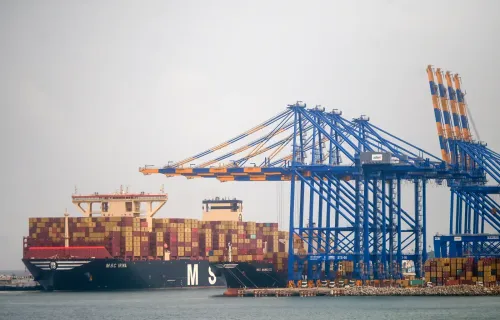
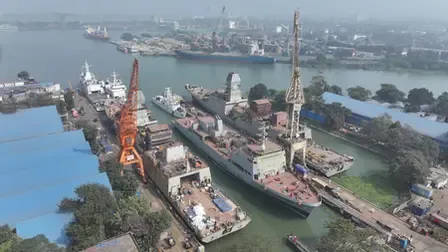
The Vadinar Ship Repair Facility is planned as a brownfield development, comprising a 650-metre jetty, two large floating dry docks, dedicated workshops, and associated marine infrastructure. The facility's design will enable the repair of vessels up to 300 metres in length — a capability India currently lacks, as the country has no adequate domestic capacity to service large vessels exceeding 230 metres.
Vadinar's natural deep-draft conditions, strong connectivity to major international shipping routes, and proximity to key ports including Mundra and Kandla make it a strategically optimal location, particularly for large commercial and foreign-flagged vessels, according to an official statement issued after the CCEA meeting.
Addressing a Critical Infrastructure Gap
India has historically been unable to service its largest inbound vessels domestically, forcing high-value repair work to be routed to foreign shipyards — resulting in significant foreign exchange outflow. The new facility is expected to substantially reduce this dependence by bringing large-vessel repair capacity onshore for the first time at scale.
Notably, enhanced turnaround times and a strengthened repair capability on the western coast are projected to improve the overall competitiveness of Indian ports. This comes amid India's broader push to position itself as a global maritime hub under the Maritime India Vision 2030 and Maritime Amrit Kaal Vision 2047 frameworks.
Employment and Economic Impact
The project is expected to generate approximately 290 direct jobs and around 1,100 indirect jobs across ship repair, logistics, and ancillary industries, according to the official statement. Beyond direct employment, the facility is intended to catalyse growth in maritime ancillary services and MSMEs in the surrounding region, contributing to broader regional economic development.
Skill development opportunities are also a stated priority, with the project designed to build a trained workforce capable of sustaining high-value maritime repair operations over the long term.
Institutional Roles and Strategic Alignment
The Deendayal Port Authority, the administrative body overseeing Kandla Port, will co-implement the facility alongside Cochin Shipyard Limited, one of India's largest public-sector shipbuilders. The partnership brings together port infrastructure expertise and shipbuilding technical capability under a single project framework.
The initiative is aligned with India's long-term maritime objectives and represents one of the more significant capital commitments to western-coast port infrastructure in recent years. Detailed implementation timelines have not yet been disclosed; further operational details are expected as the project moves into its execution phase.
Point of View
Singapore, or China represents both lost revenue and a foreign exchange drain. The Vadinar approval is a meaningful step, but the real test lies in execution: brownfield maritime projects in India have a mixed record of cost and timeline overruns. The DPA-CSL partnership is sensible on paper, combining port authority reach with shipbuilding expertise, but the absence of a disclosed implementation timeline is a gap worth watching. If delivered on schedule, Vadinar could genuinely shift the economics of western-coast shipping; if it follows the pattern of delayed infrastructure commitments, the foreign exchange outflow it aims to plug will continue.
NationPress
26 Sept 2026
Frequently Asked Questions
What is the Vadinar Ship Repair Facility approved by the Cabinet?
It is a ₹1,570 crore brownfield ship repair facility approved by the CCEA on 5 May 2025, to be built at Vadinar in Gujarat. The facility will include a 650-metre jetty and two floating dry docks, capable of servicing vessels up to 300 metres in length.
Who will build and operate the Vadinar ship repair facility?
The facility will be jointly developed and implemented by the Deendayal Port Authority (DPA), which oversees Kandla Port, and Cochin Shipyard Limited (CSL), a major public-sector shipbuilder. The partnership combines port infrastructure expertise with shipbuilding technical capability.
Why does India need a new ship repair facility at Vadinar?
India currently lacks domestic capacity to repair large vessels exceeding 230 metres, forcing high-value repair work to be sent to foreign shipyards and resulting in significant foreign exchange outflow. The Vadinar facility will extend that capability to vessels up to 300 metres.
How many jobs will the Vadinar ship repair project create?
The project is expected to generate approximately 290 direct jobs and around 1,100 indirect jobs across ship repair, logistics, and ancillary industries, according to the official government statement.
How does the Vadinar project align with India's maritime policy goals?
The facility is directly aligned with Maritime India Vision 2030 and Maritime Amrit Kaal Vision 2047, both of which aim to position India as a global maritime hub. It is also intended to catalyse growth in MSMEs and maritime ancillary services along the western coast.