PM Modi: Cabinet Clears Pradhan Mantri Surya Sarovar Yojana
Synopsis
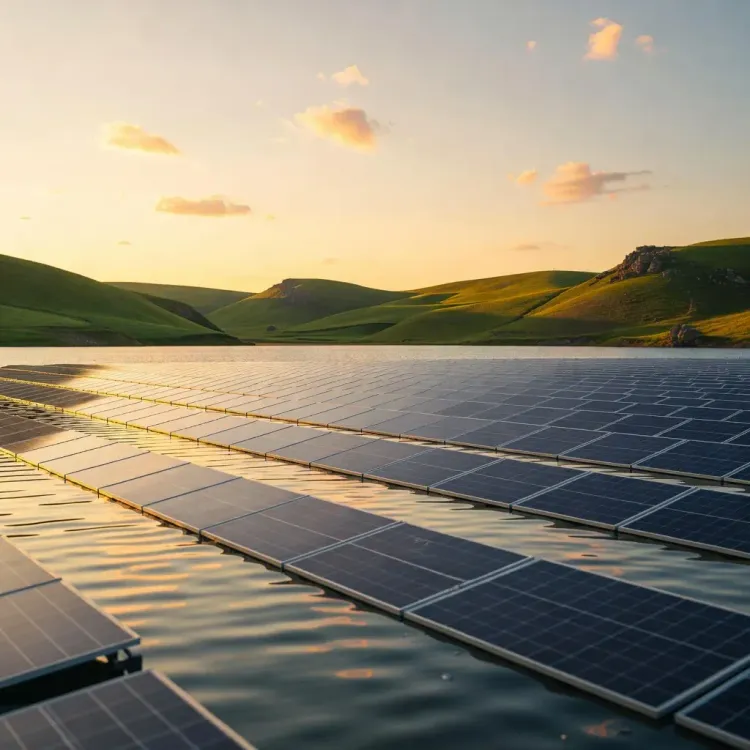
The Union Cabinet has approved the Pradhan Mantri Surya Sarovar Yojana, deploying solar installations on India's reservoirs and inland water bodies. The scheme covers every state and union territory, reduces CO₂ emissions, and advances India's 500 GW non-fossil energy target by 2030.
Key Takeaways
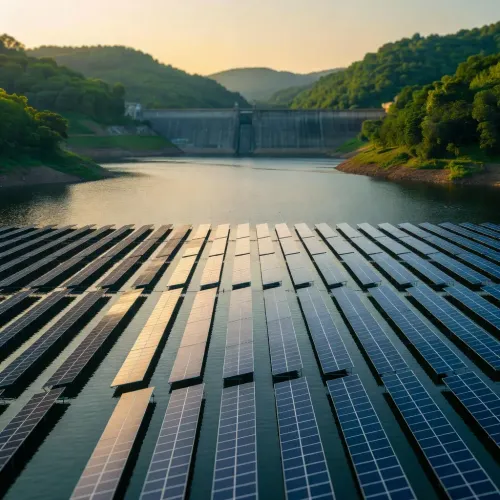
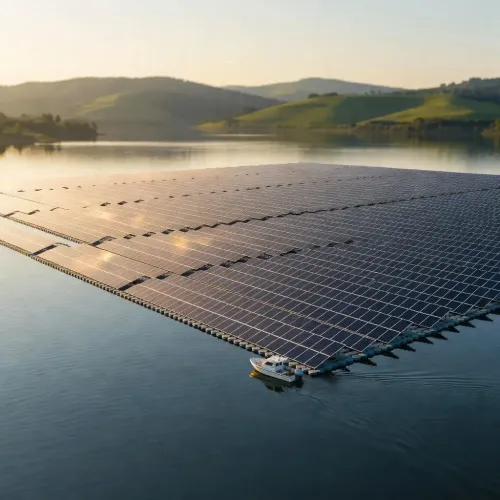
The Union Cabinet has approved the Pradhan Mantri Surya Sarovar Yojana to install solar capacity on India's reservoirs and inland water bodies.
The scheme covers every state and union territory in India, making it the broadest floating-solar framework to date.
It is designed to reduce CO₂ emissions while expanding clean-energy capacity without competing for agricultural or forest land.
The scheme builds on India's solar policy lineage dating to the Jawaharlal Nehru National Solar Mission (2010) and supports the 500 GW non-fossil capacity target by 2030 pledged at COP26 .
Floating solar on water bodies also reduces surface evaporation, offering a secondary water-conservation benefit.
Detailed guidelines, funding patterns, and state-wise allocations are expected in the coming months.
India's reservoirs and inland water bodies are about to pull double duty — storing water and generating clean electricity. Prime Minister Narendra Modi announced on Friday, 31 July 2026 that the Union Cabinet has approved the Pradhan Mantri Surya Sarovar Yojana, a nationwide scheme to deploy solar installations across the country's water bodies, covering every state and union territory while cutting CO₂ emissions.
Solar on water: what the scheme actually does
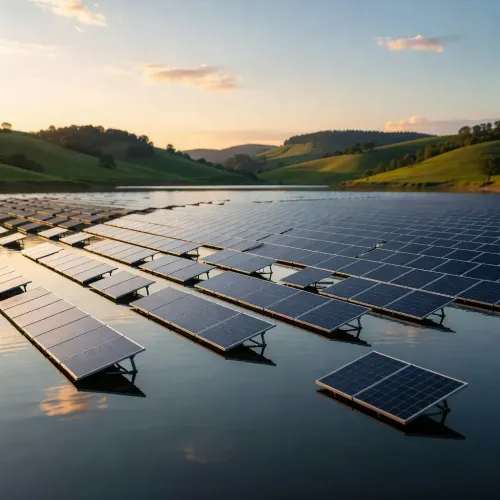
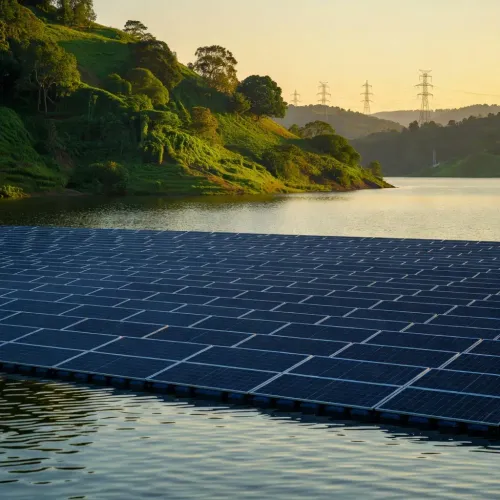
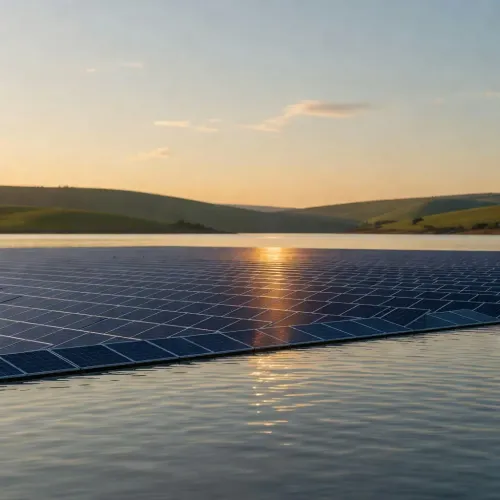
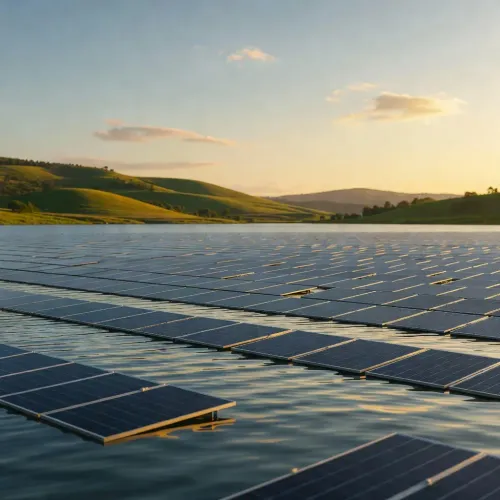
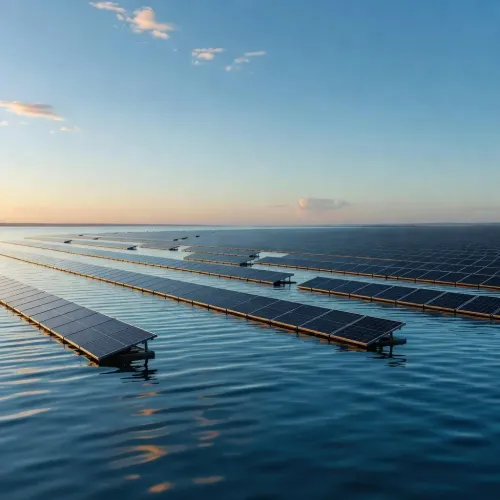
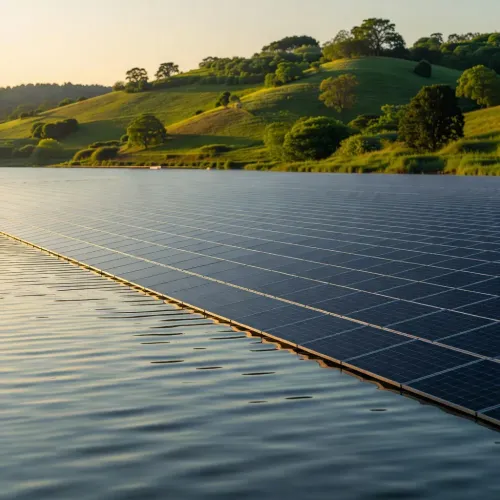
The core logic of the Pradhan Mantri Surya Sarovar Yojana is elegantly practical. India has long faced a fundamental tension in its solar push: panels need land, and land is scarce, expensive, and often contested. Floating solar installations on reservoirs sidestep that conflict entirely — the water surface is already state-owned, largely idle, and often close to existing grid infrastructure. As a bonus, the panels reduce surface evaporation, stretching water resources further in a country increasingly anxious about drought.
Pilots of this approach have already run in several states, quietly proving the model. The new central scheme pulls those experiments under a single national framework, pairing central government funding with state-level execution — the same architecture that has driven India's broader solar scale-up since the Jawaharlal Nehru National Solar Mission launched in 2010.
Where this fits in India's 2030 clean-energy race
At COP26 in 2021, India committed to reaching 500 GW of non-fossil fuel energy capacity by 2030. That target has driven a succession of solar programmes, but the gap between ambition and installed capacity has kept policymakers searching for scalable, low-friction models. Floating solar on reservoirs — abundant, distributed, and politically uncontroversial — is one of the cleaner answers to that pressure.
The scheme's nationwide reach is its sharpest feature. By covering every state and union territory, the Centre avoids the patchwork progress that has hampered earlier programmes where only land-rich or policy-ready states moved quickly. Detailed guidelines, the funding pattern, and state-wise project allocations are expected in the coming months.
What renewable energy developers and states will watch next
For state governments and renewable energy developers, the immediate questions are practical: which water bodies qualify, what is the viability gap funding structure, and how quickly can project pipelines be tendered. The scheme's ambition — every state, every union territory — is only as durable as the implementation machinery behind it. India's track record on central solar schemes is mixed: strong on targets, variable on last-mile execution. The Surya Sarovar Yojana will be judged by how fast shovels hit water.
Point of View
The Centre replicates the federal architecture that gave the rooftop and utility-scale solar programmes their scale. The harder test will be speed: India's 2030 non-fossil target is only four years away, and the gap between Cabinet approval and commissioned megawatts has historically been wide. Whether this scheme closes that gap or adds to the ledger of well-designed but slowly executed programmes will define its legacy.
NationPress
15 Sept 2026
Frequently Asked Questions
What is the Pradhan Mantri Surya Sarovar Yojana?
The Pradhan Mantri Surya Sarovar Yojana is a Cabinet-approved central government scheme that installs solar power infrastructure on India's reservoirs and inland water bodies, generating clean electricity without using agricultural or forest land.
Which states will benefit from the Surya Sarovar Yojana?
The scheme covers every state and union territory in India, making it a nationwide programme rather than one limited to specific regions.
How does floating solar on reservoirs help the environment?
Floating solar panels generate clean electricity and reduce CO₂ emissions. They also reduce water evaporation from reservoir surfaces, offering an additional water-conservation benefit.
How does this scheme connect to India's 2030 renewable energy target?
India pledged at COP26 in 2021 to achieve 500 GW of non-fossil fuel energy capacity by 2030. The Surya Sarovar Yojana contributes to that target by unlocking a large, underused surface area — water bodies — for solar deployment.
When will the Pradhan Mantri Surya Sarovar Yojana be implemented?
The Union Cabinet approved the scheme on 31 July 2026. Detailed guidelines, funding structures, and state-wise project allocations are expected to be released in the coming months.