Jaishankar: Cabinet OKs Rail Project, Chemical Parks Scheme
Synopsis
The Union Cabinet on 24 July 2026 approved a Rs 1,264 crore railway multi-tracking project adding 46 km across Karnataka and Andhra Pradesh, and the BHAVYA Rasayan scheme to set up three dedicated Chemical Parks with up to Rs 1,000 crore central grant each, as announced by EAM Dr. S. Jaishankar.
Key Takeaways
The Union Cabinet , chaired by PM Narendra Modi , approved two major decisions on 24 July 2026 .
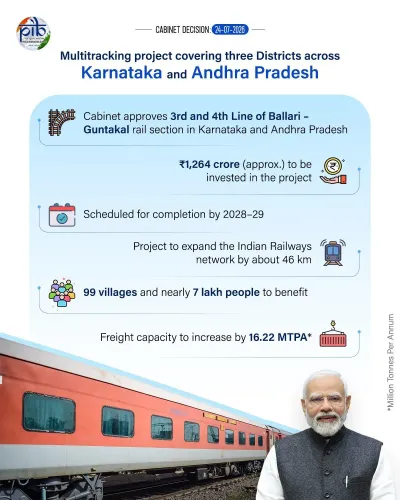
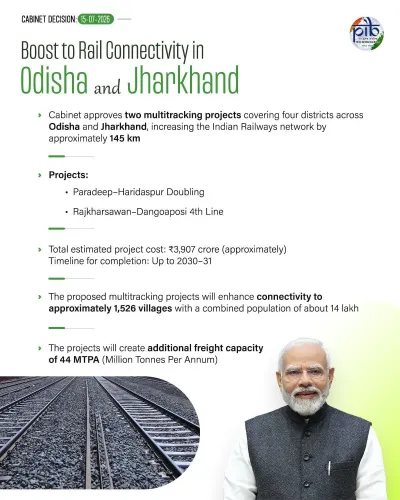
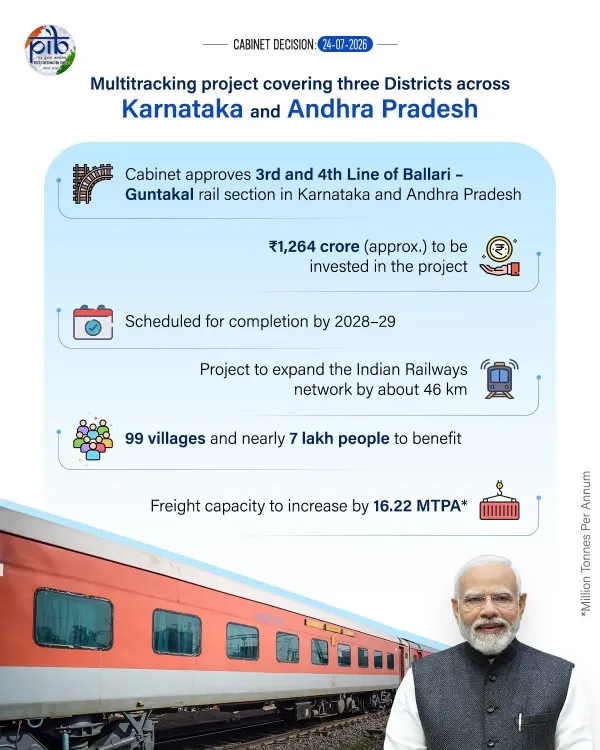
A Rs 1,264 crore railway multi-tracking project will add approximately 46 km to the Indian Railways network across three districts in Karnataka and Andhra Pradesh by 2028-29 .
The project will enhance connectivity for approximately 99 villages in the two southern states.
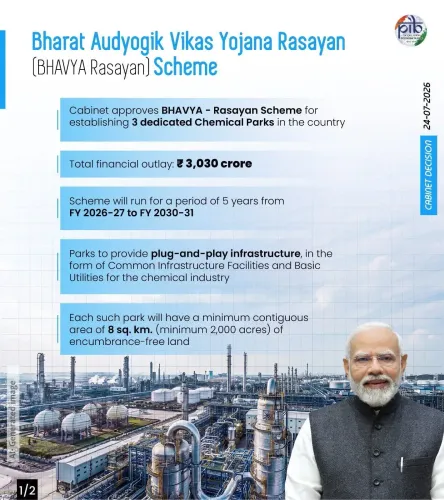
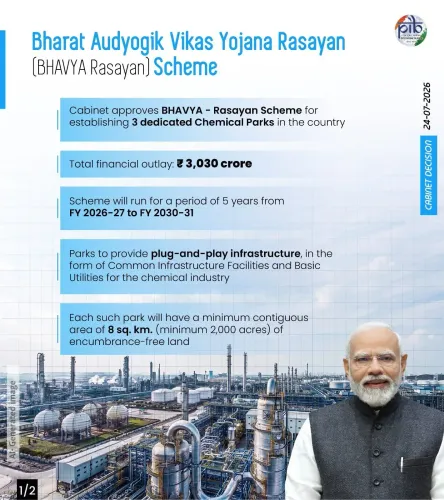
The BHAVYA Rasayan scheme will fund three dedicated Chemical Parks with a Central grant of up to Rs 1,000 crore per park .
The chemical parks scheme runs from FY 2026-27 to FY 2030-31 and targets lower logistics costs across the chemical value chain.
Union External Affairs Minister Dr. S. Jaishankar on Friday, 24 July 2026, announced two major decisions approved by the Union Cabinet under the chairmanship of Prime Minister Narendra Modi — a Rs 1,264 crore railway multi-tracking project spanning Karnataka and Andhra Pradesh, and a new chemical parks scheme with a central grant of up to Rs 1,000 crore per park.
Context
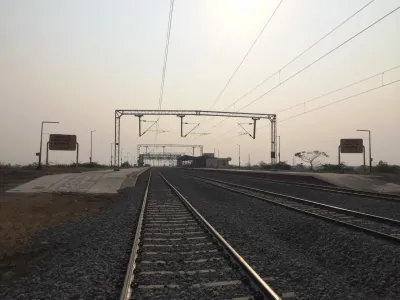
The Union Cabinet cleared a multi-tracking project worth Rs 1,264 crore that will extend the Indian Railways network by approximately 46 kilometres across three districts in Karnataka and Andhra Pradesh. The project is targeted for completion by 2028-29 and is expected to improve connectivity for approximately 99 villages in the region.
Multi-tracking — the addition of parallel rail lines on existing corridors — has been a recurring instrument in Indian Railways' capacity expansion strategy, reducing bottlenecks and enabling faster freight and passenger movement. This approval fits into a broader pattern of targeted rail investments in southern India.
Policy Backdrop
The railway approval aligns with the Pradhan Mantri Gati Shakti National Master Plan, launched in 2021, which seeks to integrate multimodal infrastructure planning across road, rail, ports, and logistics. The plan has been a guiding framework for large-scale connectivity investments, particularly in regions with dense agricultural and industrial activity.
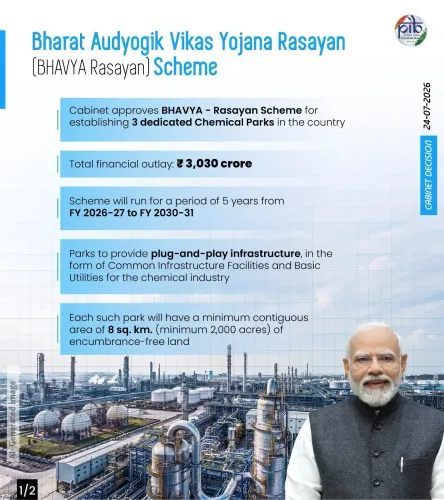
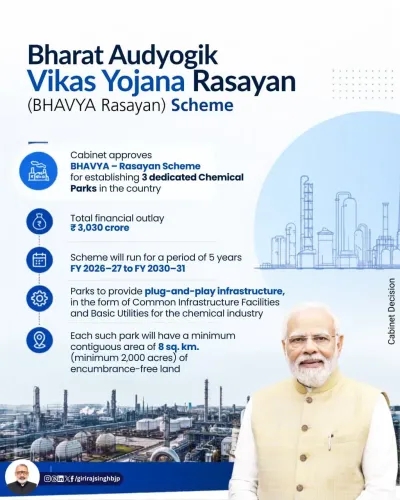
Separately, the Cabinet approved the Scheme of Chemical Parks Bharat Audyogik Vikas Yojana Rasayan (BHAVYA Rasayan), running from FY 2026-27 to FY 2030-31. The scheme targets the establishment of three dedicated Chemical Parks, with the Central government providing a grant of up to Rs 1,000 crore per park. The stated objective is to develop the chemical industry 'along the entire value chain,' with an explicit focus on reducing logistics costs. This sits alongside the Make in India initiative, launched in 2014, which has sought to build integrated domestic manufacturing ecosystems across sectors including chemicals.
Stakeholders and Impact
The railway project's most immediate beneficiaries are the estimated 99 villages across the three districts in Karnataka and Andhra Pradesh that will gain improved rail connectivity. Enhanced rail access typically lowers freight costs for agricultural produce and enables better access to markets, healthcare, and employment for rural populations.
For the chemical sector, the BHAVYA Rasayan scheme addresses a long-standing concern of the domestic industry: fragmented infrastructure and high logistics overheads that reduce competitiveness against imports. Dedicated chemical parks with shared utilities and integrated supply chains are expected to attract both domestic manufacturers and foreign investment into a sector that spans pharmaceuticals, agrochemicals, and specialty chemicals.
What's Next
Attention will now turn to the rollout timelines for the approved railway sections and the process for selecting sites for the three proposed Chemical Parks under BHAVYA Rasayan. The scheme runs through FY 2030-31, giving the government a five-year window to operationalise the parks and demonstrate measurable impact on the chemical value chain.
With southern India's rail network set for expansion and a structured push to anchor chemical manufacturing through dedicated parks, both decisions signal the government's continued use of targeted public investment to build productive infrastructure ahead of the next electoral cycle.
Point of View
In this case chemicals, to simultaneously address connectivity gaps and manufacturing competitiveness. The southern India rail project carries regional political salience given ongoing competition for development spending between Karnataka and Andhra Pradesh. The BHAVYA Rasayan scheme, with its five-year horizon and per-park grant ceiling, is structured to attract private co-investment rather than function as a pure subsidy, aligning with the government's broader industrial park model. Together, the decisions reinforce a pattern of using Cabinet announcements to signal policy momentum ahead of the next general election cycle.
NationPress
23 Oct 2026
Frequently Asked Questions
What is the BHAVYA Rasayan scheme approved by the Union Cabinet?
BHAVYA Rasayan — full name 'Bharat Audyogik Vikas Yojana Rasayan' — is a Central government scheme approved in July 2026 to establish three dedicated Chemical Parks in India, running from FY 2026-27 to FY 2030-31, with a Central grant of up to Rs 1,000 crore per park to develop the chemical industry across its entire value chain and reduce logistics costs.
Which states will benefit from the Rs 1,264 crore railway multi-tracking project?
The Rs 1,264 crore multi-tracking project covers three districts across Karnataka and Andhra Pradesh, adding approximately 46 km to the Indian Railways network and improving connectivity for around 99 villages by 2028-29.
What did the Union Cabinet decide on 24 July 2026?
The Union Cabinet, chaired by PM Narendra Modi, approved two decisions on 24 July 2026: a Rs 1,264 crore railway multi-tracking project in Karnataka and Andhra Pradesh, and the BHAVYA Rasayan scheme for three dedicated Chemical Parks with up to Rs 1,000 crore Central grant each.
How many villages will the Karnataka-Andhra Pradesh rail project connect?
The approved multi-tracking project is expected to enhance rail connectivity for approximately 99 villages across three districts in Karnataka and Andhra Pradesh.
What is multi-tracking in Indian Railways?
Multi-tracking refers to the addition of parallel rail lines alongside existing tracks on a corridor, which increases network capacity, reduces congestion, and allows more trains to run simultaneously — improving both freight movement and passenger services.