CM Himanta's Cachar Police Bust 22 MT Fertiliser Smuggling

Synopsis
Cachar Police intercepted 22 metric tonnes of subsidised fertiliser being smuggled out of Assam on 21 November 2026. CM Himanta Biswa Sarma publicly praised the operation, warning that anyone diverting farmer-allocated stock will face legal consequences under sustained state enforcement.
Key Takeaways
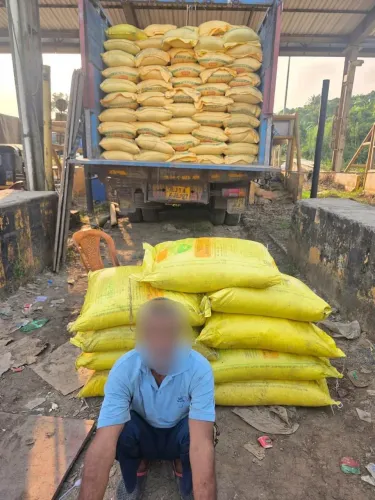
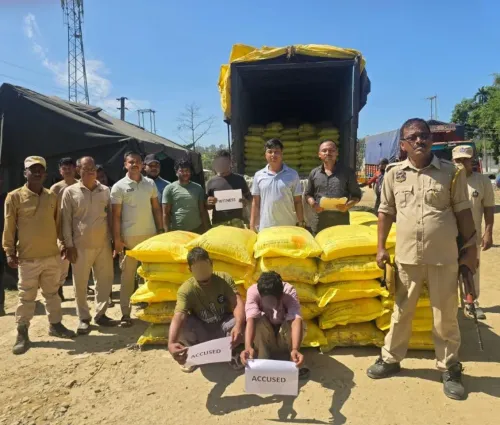
22 metric tonnes of subsidised fertiliser was seized by Cachar Police in southern Assam on 21 November 2026 .
The stock was being smuggled out of Assam, diverting supplies meant for registered farmers under the central government's subsidy programme.
CM Himanta Biswa Sarma confirmed the operation on X, crediting prior surveillance for the successful interception.
Cachar district borders Bangladesh and Manipur, making it a persistent hotspot for cross-border commodity smuggling.
India's Nutrient Based Subsidy (NBS) policy (introduced 2010 ) creates a price gap that incentivises black-market diversion of agricultural inputs.
Sarma's public statement doubles as a deterrent warning to smuggling networks operating across Assam's supply chain.
Twenty-two metric tonnes of subsidised fertiliser — every bag earmarked for Assam's farmers — was intercepted mid-smuggling by Cachar Police on Saturday, 21 November 2026, in a crackdown that Assam Chief Minister Himanta Biswa Sarma publicly credited as a direct result of sustained surveillance on black-market networks operating in the state's southern districts.
The Bust: 22 Metric Tonnes Stopped at the Border
The seizure, confirmed by CM Sarma on X, targeted smugglers attempting to move heavily subsidised fertiliser out of Assam — diverting stock that the central government's subsidy programme had routed exclusively to registered farmers. 'Smugglers had their eyes on the open market. We had ours on them,' Sarma wrote, in a pointed signal that enforcement agencies had been tracking the network before moving in.
Cachar district, in southern Assam bordering Bangladesh and Manipur, has historically been a hotspot for cross-border and inter-state commodity diversion. The geography makes it a natural pressure point — and, for enforcement agencies, a proving ground.
Why Subsidised Fertiliser Is a Smuggler's Prize
India's Nutrient Based Subsidy (NBS) policy, introduced in 2010, provides targeted price relief on urea and other key fertilisers to keep agricultural input costs manageable for small and marginal farmers. The gap between the subsidised price and the open-market rate is precisely what makes diversion profitable. A bag meant to reach a paddy farmer in Cachar at a fraction of its market cost can be resold elsewhere for multiples of that — and at 22 metric tonnes, the volume seized Saturday represents a significant quantity of stock that would have vanished from the legitimate supply chain entirely.
Assam has repeatedly run enforcement operations against such diversion, particularly in its southern and border-adjacent districts where supply chains are harder to monitor and smuggling networks are well-established.
Sarma's Message to the Supply Chain
The CM's post was as much a warning as a commendation. 'Divert their share and you'll face the law,' he wrote — 'their' being Assam's farmers. The framing was deliberate: this is not a routine policing matter but a question of whose interests the state machinery is aligned with. By naming Cachar Police and Assam Police directly, Sarma also signalled institutional accountability and public recognition for ground-level enforcement teams.
Analysts tracking the Northeast's agricultural economy will note that such seizures, while individually significant, point to a structural challenge: subsidy-driven price distortions create persistent incentives for diversion that no single bust eliminates. The question now is whether Saturday's operation triggers a wider audit of fertiliser distribution and monitoring mechanisms across Assam's vulnerable districts.
For the farmers waiting on those bags — it is a rare moment when the system caught up with those who would have robbed them of it.
Point of View
Sarma converts a supply-chain enforcement story into a political statement about whose side the state is on — the farmer's, not the smuggler's. The structural problem, however, runs deeper: as long as subsidy-driven price distortions persist under the NBS framework, enforcement alone cannot eliminate the economic logic of diversion. Whether Saturday's bust accelerates a state-level review of fertiliser distribution monitoring — or remains a one-off headline — will be the real governance test.
NationPress
21 Nov 2026
Frequently Asked Questions
What was seized by Cachar Police in Assam in November 2026?
22 metric tonnes of subsidised fertiliser was seized by Cachar Police on 21 November 2026 as it was being smuggled out of Assam, according to CM Himanta Biswa Sarma.
Why is subsidised fertiliser smuggled out of Assam?
India's Nutrient Based Subsidy (NBS) policy provides fertiliser to farmers at heavily discounted prices. The gap between the subsidised rate and the open-market price creates a profit incentive for smugglers who divert the stock and resell it elsewhere.
What is the Nutrient Based Subsidy policy for fertilisers?
The Nutrient Based Subsidy (NBS) policy was introduced by the central government in 2010 to provide targeted price subsidies on urea and other fertilisers to registered farmers, aiming to reduce agricultural input costs while curbing indiscriminate diversion.
Why is Cachar a hotspot for fertiliser smuggling in Assam?
Cachar district in southern Assam shares borders with Bangladesh and Manipur, making it geographically vulnerable to cross-border and inter-state smuggling of subsidised commodities including fertiliser.
What did CM Himanta Biswa Sarma say about the fertiliser seizure?
CM Sarma stated on X: 'Smugglers had their eyes on the open market. We had ours on them,' and warned that anyone diverting farmer-allocated subsidised fertiliser would 'face the law,' while commending Cachar Police and Assam Police for the operation.