CM Bhupendra Patel Opens Two-Day Labour Ministers' Chintan Shivir in Gandhinagar
Synopsis
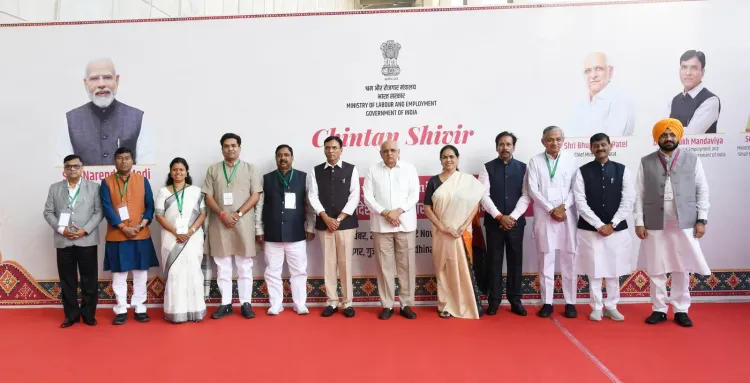
Gujarat Chief Minister Bhupendra Patel inaugurated a two-day national Chintan Shivir of state and UT Labour Ministers at Gandhinagar's Mahatma Mandir on 21 November 2026, spotlighting implementation of India's four labour codes, the Gujarat Social Security Fund, and the Shramsetu portal as building blocks for a skilled, secure workforce by 2047.
Key Takeaways
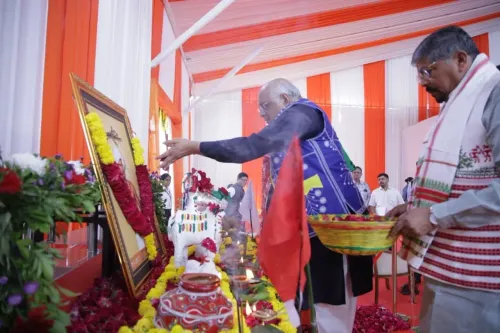
Gujarat CM Bhupendra Patel inaugurated the two-day Chintan Shivir of Labour and Employment Ministers from all states and UTs at Mahatma Mandir, Gandhinagar on 21 November 2026 .
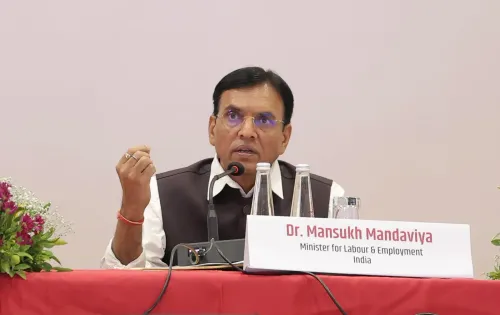
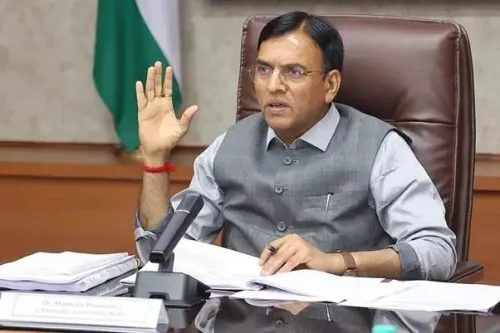
Union Ministers Mansukh Mandaviya and Shobha Karandlaje were present alongside state cabinet colleagues.
The shivir focuses on effective implementation of four new labour codes that consolidated 44 central labour laws passed in 2019-2020 .
Gujarat's Gujarat Social Security Fund and Shramsetu portal were highlighted as state-level models for extending welfare to unorganised workers.
PM Modi's 'Shram Eva Jayate' mantra and the Viksit Bharat @ 2047 vision framed the overarching goals of the conclave.
The Chintan Shivir format has been a tool of centre-state cooperative federalism on policy alignment since 2014 .
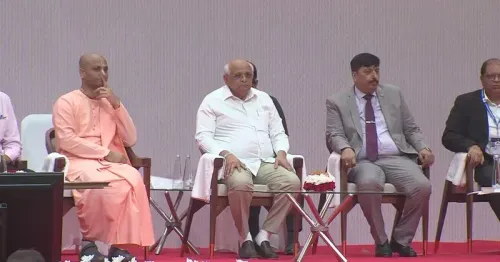
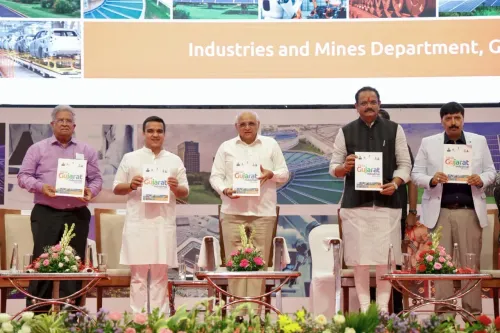
A two-day national conclave that could shape how India's four new labour codes finally reach the ground opened on Saturday, 21 November 2026, at Mahatma Mandir, Gandhinagar — with Gujarat Chief Minister Bhupendra Patel inaugurating the Chintan Shivir (policy retreat) of Labour and Employment Ministers from every state and Union Territory in the country.
Who sat in the room — and why it matters
Union Minister of Labour and Employment Mansukh Mandaviya and Minister of State Shobha Karandlaje joined Gujarat's cabinet colleagues on the dais, flanked by their counterparts from across India's states and UTs. That lineup is the point: the Chintan Shivir format, institutionalised since 2014 under Prime Minister Narendra Modi's cooperative-federalism push, is designed precisely to close the gap between legislation passed in New Delhi and welfare actually delivered at the district level. These are not photo-ops. They are, in CM Patel's own framing, a 'take-off platform' for good governance.
Patel quoted the PM's guiding mantra — 'Shram Eva Jayate' (Labour alone triumphs) — positioning workers' contribution to nation-building as the highest policy priority. The slogan is a deliberate riff on the constitutional phrase Satyameva Jayate, signalling that dignity of labour sits at the ideological centre of this administration's development agenda.
Four labour codes and Gujarat's own delivery rails
The centrepiece of the agenda is the effective implementation of four labour codes — the Code on Wages (2019) and the three codes on Industrial Relations, Social Security, and Occupational Safety passed in 2020. Together they consolidate 44 colonial-era central labour laws into a modern, simplified framework intended to widen coverage, especially for unorganised and gig workers. That consolidation is law on paper; getting states to frame and notify matching rules is where the real battle is.
Gujarat is already running two instruments Patel highlighted as models. The Gujarat Social Security Fund extends benefits to workers outside the formal sector — a category that makes up the vast majority of India's workforce. The Shramsetu portal goes further: a digital platform that connects workers directly to scheme registrations, welfare disbursements, and grievance redressal without the friction of a bureaucratic chain. Both initiatives build on the state's earlier worker-registration drives under the Unorganised Workers' Social Security Act, 2008.
The 2047 target that gives this urgency
CM Patel closed his inauguration message with an explicit link to Viksit Bharat @ 2047 — the government's flagship vision of a fully developed India by the centenary of Independence. Building that India, he argued, requires a sashakt workforce (empowered workforce), and this collective deliberation must chart the direction. It is a framing that elevates a policy retreat into a milestone on a generational timeline. The question the shivir must answer: can the states collectively accelerate rule-notification for the labour codes so that the welfare architecture on paper becomes welfare in workers' hands?
As the two-day manthan (churning) unfolds inside Mahatma Mandir — the same convention centre that has hosted marquee national policy events for over a decade — the signal from Gandhinagar is that India's labour reform story has moved from legislation to implementation, and Gujarat intends to show the way.
Point of View
But state-level rule notifications remain incomplete, creating a gulf between legislative intent and worker benefit. By hosting this conclave and foregrounding Gujarat's own Social Security Fund and Shramsetu portal, CM Patel is positioning his state as an implementation benchmark that peer governments are expected to emulate. The Viksit Bharat 2047 framing is politically significant — it ties routine inter-ministerial coordination to a long-horizon national promise, raising the accountability stakes. Whether the shivir produces binding timelines for state rule-notifications, or remains consultative, will determine whether this iteration advances the reform arc or adds to the optics.
NationPress
21 Nov 2026
Frequently Asked Questions
What is the Chintan Shivir of Labour Ministers about?
The two-day Chintan Shivir held at Mahatma Mandir, Gandhinagar, brings together Labour and Employment Ministers from all Indian states and Union Territories to deliberate on implementing the four new labour codes and strengthening worker welfare delivery.
What are India's four new labour codes?
India's four labour codes — on Wages (2019), Industrial Relations, Social Security, and Occupational Safety (all 2020) — consolidate 44 older central labour laws to simplify regulations and expand coverage, especially for unorganised workers.
What is the Gujarat Social Security Fund?
The Gujarat Social Security Fund is a state-level initiative that extends social security benefits to unorganised and gig workers in Gujarat who may not be covered under formal employer-linked schemes.
What is the Shramsetu portal in Gujarat?
Shramsetu is a digital platform launched by the Gujarat government that connects workers directly to welfare scheme registrations, benefit disbursements, and grievance redressal, reducing bureaucratic delays.
What is 'Shram Eva Jayate' and who coined it?
'Shram Eva Jayate' — meaning 'Labour alone triumphs' — is a slogan championed by Prime Minister Narendra Modi to place workers' dignity and contribution at the centre of India's development narrative, referenced at the inauguration by CM Bhupendra Patel.