Cachar Police seize 10,000 Yaba tablets in Barak River bust
Synopsis
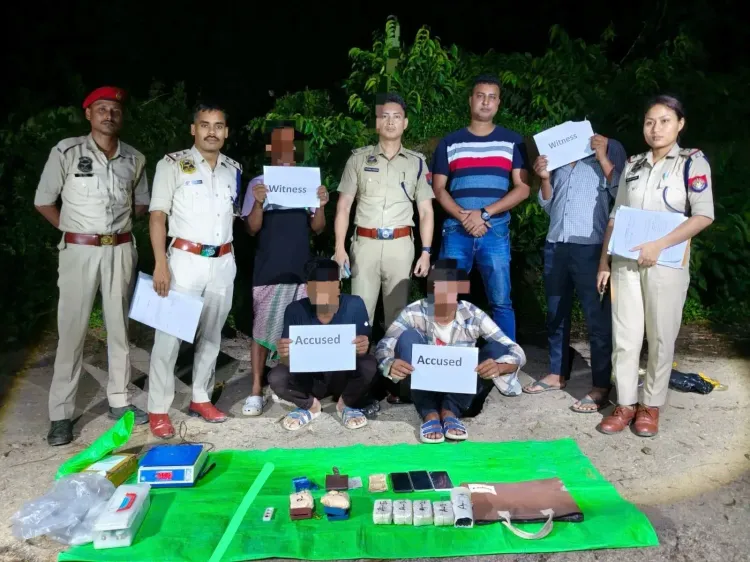
Cachar Police intercepted a mechanized boat on the Barak River near Lakhipur on May 22, 2026, seizing 10,000 Yaba tablets and 21g of heroin and arresting two persons. Chief Minister Himanta Biswa Sarma commended the team under the ongoing Assam Against Drugs campaign.
Key Takeaways
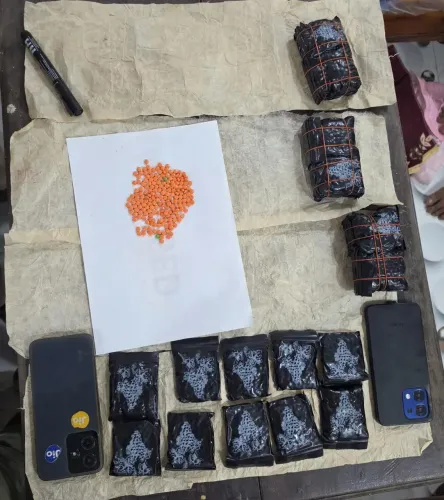
10,000 Yaba tablets and 21 grams of heroin were seized from a mechanized boat on the Barak River near Lakhipur , Cachar district.
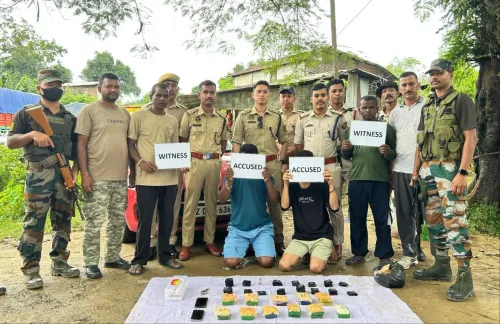
Two individuals were arrested in the operation conducted by Cachar Police on May 22, 2026 .
Himanta Biswa Sarma publicly applauded the operational team for their alertness.
The seizure is part of the state's ongoing Assam Against Drugs campaign, active since 2021 .
The Barak River corridor is a documented transit route for narcotics entering Assam from Myanmar and Bangladesh .
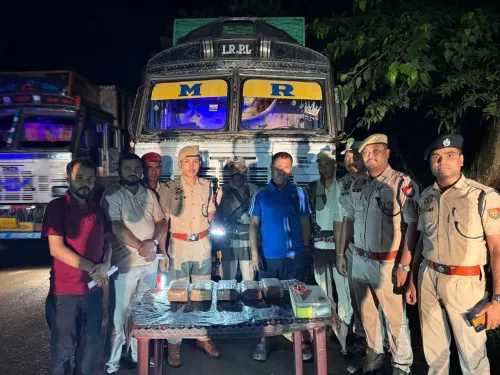
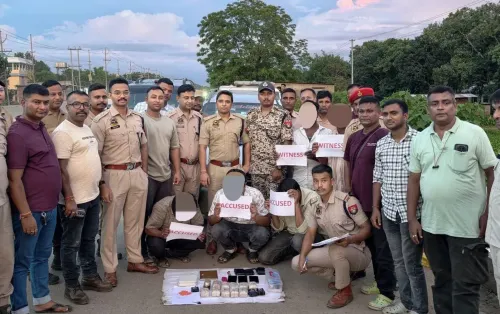
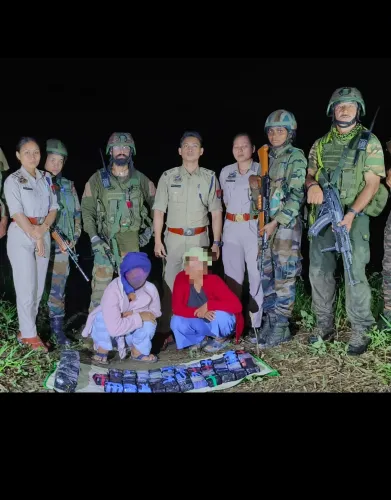
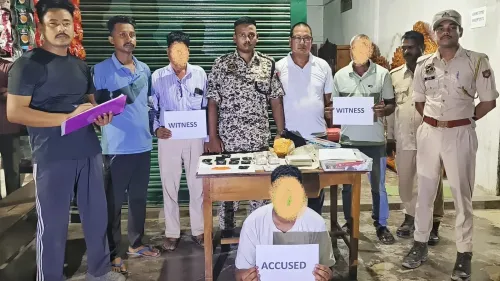
Cachar Police intercepted a mechanized boat on the Barak River near Lakhipur on Friday, May 22, 2026, seizing 10,000 Yaba tablets and 21 grams of heroin and arresting two individuals in the operation. The Chief Minister's Office of Assam announced the bust on Saturday, noting that Chief Minister Dr. Himanta Biswa Sarma had personally applauded the operational team for their alertness.
Context
Lakhipur, a town in Cachar district in southern Assam, sits along one of the state's most active narcotics smuggling corridors. The Barak River and its tributaries have long served as transit routes for synthetic drugs moving from the Myanmar and Bangladesh borders into the Indian hinterland. Mechanized boats offer smugglers speed and cargo capacity, making riverine interceptions a critical component of enforcement strategy in the region.
The seizure of 10,000 Yaba tablets — a methamphetamine-caffeine combination pill widely trafficked from Myanmar — alongside heroin points to the continued flow of narcotics through Assam's southern river network. Two suspects were taken into custody following the interception.
Policy Backdrop
The Assam Against Drugs campaign, launched under Chief Minister Sarma after he took office in 2021, has made anti-narcotics enforcement a flagship law-and-order priority for the state government. The campaign combines police action, public awareness drives, and coordination with border agencies to choke supply routes. Between 2022 and 2024, Cachar and neighbouring districts recorded multiple mechanized-boat interceptions as part of intensified riverine operations.
Assam's geographic position adjacent to the Golden Triangle — the Southeast Asian region that accounts for a significant share of global heroin and synthetic drug production — makes it a frontline state in India's narcotics containment effort. Successive state administrations have treated the issue as a core governance challenge, but the current administration has escalated both the frequency of operations and the political visibility of each seizure.
Stakeholders and Impact
Cachar Police, the district force responsible for riverine and border anti-smuggling operations in southern Assam, conducted the interception. The operation reflects the force's continued deployment of surveillance on the Barak River corridor, a stretch that has seen repeated interdictions in recent years. CM Sarma's public commendation of the team is consistent with the administration's practice of recognising field units to sustain operational morale.
For border communities and youth in Cachar and adjoining districts, the sustained enforcement presence is intended to disrupt the retail supply chain that feeds local drug dependency. Civil society groups working on rehabilitation in the region have previously noted that supply-side interdiction needs to be paired with demand-reduction programmes to produce lasting results.
What's Next
Assam Police is expected to release periodic narcotics seizure data that will indicate whether the pace of riverine interceptions is accelerating ahead of the next state assembly session. Analysts and opposition lawmakers will watch whether the government tables follow-up proposals — including border-fencing extensions or enhanced riverine patrol budgets — in the legislature. The two arrested individuals are likely to face prosecution under the Narcotic Drugs and Psychotropic Substances Act, with the case adding to a growing docket of river-route trafficking prosecutions in Cachar.
As long as the Golden Triangle supply chain remains active and demand persists across northeastern India, riverine corridors like the Barak will remain pressure points requiring sustained enforcement attention from state and central agencies alike.
Point of View
The government signals that anti-drug enforcement is not merely operational but also a political priority ahead of future electoral cycles. The focus on riverine corridors reflects a pragmatic acknowledgment that land-border fencing alone cannot seal the Golden Triangle supply chain. Whether this enforcement intensity translates into measurable reductions in drug availability — or whether it remains a supply-side intervention without matching rehabilitation infrastructure — will determine its long-term policy impact.
NationPress
6 Oct 2026
Frequently Asked Questions
What was seized in the Barak River drug bust near Lakhipur?
Cachar Police seized 10,000 Yaba tablets and 21 grams of heroin from a mechanized boat on the Barak River near Lakhipur, Cachar district, Assam, on May 22, 2026.
What is Yaba and where does it come from?
Yaba is a pill combining methamphetamine and caffeine that is widely produced in Myanmar and trafficked through Bangladesh and northeastern India. It is among the most commonly seized synthetic drugs in Assam.
What is the Assam Against Drugs campaign?
Assam Against Drugs is a state government initiative launched under Chief Minister Himanta Biswa Sarma in 2021, combining police enforcement, public awareness, and inter-agency coordination to curb narcotics trafficking and use across Assam.
Why is the Barak River a drug smuggling route?
The Barak River in southern Assam runs close to the Myanmar and Bangladesh borders and provides smugglers with a fast, difficult-to-monitor transit corridor. Mechanized boats can carry large quantities of narcotics with relative speed, making the river a persistent enforcement challenge.
How many people were arrested in the Lakhipur drug seizure?
Two individuals were arrested following the interception of the mechanized boat on the Barak River near Lakhipur on May 22, 2026.