Calcutta HC slams ECI for stripping AISF's 'envelope' symbol, giving it to Ritabrata faction
Synopsis
A Calcutta High Court judge openly questioned why the Election Commission of India chose — from 183 available options — the exact symbol already in use by AISF's Nawsad Siddique, and handed it to a rival Trinamool faction days before the Nandigram bypoll. The court's rebuke puts the ECI's symbol-allocation process under judicial scrutiny at a politically sensitive moment.
Key Takeaways
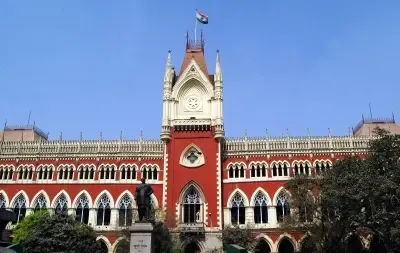
The Calcutta High Court 's Justice Krishna Rao on 24 September 2026 criticised the ECI for stripping AISF of its 'envelope' symbol.
The symbol was allotted to the Ritabrata Banerjee -led Democratic Trinamool Congress faction earlier this month.
Nawsad Siddique , AISF's sole West Bengal MLA, had won from Bhangar twice — in 2021 and 2026 — using the same symbol.
AISF will now contest the Nandigram bypoll (scheduled 6 October ) under the 'almirah' symbol.
The court noted 183 free symbols were available and questioned why the ECI specifically chose the one already in active use.
ECI's counsel argued that unrecognised parties have no permanent right to a specific symbol under electoral law.
A single-judge bench of the Calcutta High Court on Thursday, 24 September 2026, sharply criticised the Election Commission of India (ECI) for withdrawing the 'envelope' symbol from the All India Secular Front (AISF) and allotting it to the Ritabrata Banerjee-led faction of Trinamool Congress — just weeks before the upcoming bypolls for Nandigram and Rejinagar Assembly constituencies in West Bengal. The court's intervention comes as AISF's lone West Bengal Assembly representative, Nawsad Siddique, prepares to contest the Nandigram bypoll scheduled for 6 October.
Background: What the Symbol Dispute Is About
The AISF, led by Nawsad Siddique, has contested West Bengal elections under the 'envelope' symbol for years. Siddique was elected from the Bhangar Assembly constituency in South 24 Parganas district twice using this symbol — first in 2021 and again in 2026. Earlier this month, the ECI withdrew the symbol from AISF and allotted it to the Ritabrata Banerjee-led Trinamool Congress faction, which has also been given the new party name 'Democratic Trinamool Congress'. For the Nandigram bypoll, AISF will now be required to contest under the 'almirah' symbol.
What the Court Said
Justice Krishna Rao, presiding over the single-judge bench, questioned why the ECI had specifically chosen the 'envelope' symbol for the Ritabrata-led faction when 183 other free symbols were available. He criticised the Commission's decision as lacking fairness and said that mid-election symbol changes create unnecessary voter confusion and place an avoidable burden on the judiciary.
Justice Rao further observed that the ECI should have kept the 'envelope' symbol reserved rather than allotting it to another active political leader contesting in the same election cycle. His remarks signal judicial unease with the Commission's process, even if no final order has yet been passed.
ECI's Defence
The ECI's counsel countered that unrecognised political parties such as AISF do not hold a permanent or reserved right to any specific symbol. The argument draws on established electoral law — symbols for unrecognised parties are drawn from a common pool of free symbols and are not guaranteed between elections. The Commission's position is that it acted within its legal authority in reallocating the symbol.
Stakes for the Bypolls
The Nandigram bypoll is being watched closely given its political history — the constituency rose to national prominence during the 2021 West Bengal Assembly elections when Chief Minister Mamata Banerjee contested and lost to the Bharatiya Janata Party (BJP)'s Suvendu Adhikari. AISF's Siddique, who holds the party's only legislative seat in West Bengal, now faces the additional challenge of voter recognition under a new symbol with weeks to go before polling. A last-minute symbol change for a party with limited organisational bandwidth can materially affect electoral outcomes, critics argue. The Rejinagar bypoll in Murshidabad is also scheduled alongside Nandigram next month.
What Comes Next
The matter is expected to proceed further in the Calcutta High Court, with the ECI likely to file a detailed reply. Given the 6 October polling date, any judicial direction — or its absence — will need to come swiftly for it to have practical effect. The case raises broader questions about the ECI's symbol allocation process for unrecognised parties in multi-contest election windows, and whether procedural fairness norms need clearer codification.
Point of View
With 183 options available, did the ECI pick the one symbol already in active use by an incumbent legislator in the same election — is one the Commission has yet to answer satisfactorily. Electoral symbol continuity is not a trivial concern; for smaller parties with limited ground infrastructure, a symbol can be the difference between recognition and obscurity at the booth. The ECI's defence that unrecognised parties hold no permanent symbol rights is technically correct, but it sidesteps the fairness question the court raised. If the Commission's processes allow for this kind of disruptive last-minute reallocation without documented rationale, it is a procedural gap that invites abuse — and the judiciary is right to flag it, regardless of which parties are involved.
NationPress
24 Sept 2026
Frequently Asked Questions
Why did the Calcutta High Court criticise the Election Commission over AISF's symbol?
The court criticised the ECI for withdrawing the 'envelope' symbol from AISF — a symbol under which its leader Nawsad Siddique had won two elections — and allotting it to the Ritabrata Banerjee-led Democratic Trinamool Congress faction, with 183 other free symbols available. Justice Krishna Rao said the decision lacked fairness and created voter confusion ahead of the Nandigram bypoll.
What symbol will AISF use in the Nandigram bypoll now?
AISF will contest the Nandigram bypoll on 6 October 2026 under the 'almirah' symbol, after its long-used 'envelope' symbol was reallocated to the Ritabrata Banerjee-led Democratic Trinamool Congress faction by the ECI earlier this month.
What is the ECI's position on the symbol reallocation?
The ECI's counsel argued in court that unrecognised political parties like AISF do not hold a permanent or reserved right to any specific symbol under electoral law, and that the Commission acted within its legal authority in reallocating the 'envelope' symbol to the Ritabrata Banerjee-led faction.
Who is Nawsad Siddique and why does the symbol matter to AISF?
Nawsad Siddique is the president of the All India Secular Front (AISF) and the party's sole representative in the West Bengal Legislative Assembly. He was elected from Bhangar in South 24 Parganas twice — in 2021 and 2026 — under the 'envelope' symbol, making it a key identity marker for the party's voters.
When is the Nandigram bypoll scheduled, and what is at stake?
The Nandigram bypoll is scheduled for 6 October 2026. The constituency carries significant political weight in West Bengal — it was the site of the high-profile 2021 contest between Chief Minister Mamata Banerjee and BJP's Suvendu Adhikari. The symbol dispute has added a legal and electoral complication to the already closely watched contest.