Has the Calcutta HC Acknowledged the Pollution Crisis in Kolkata?
Click to start listening
Synopsis
The Calcutta High Court has intervened in the alarming rise of pollution levels in Kolkata, prompting a suo motu public interest litigation. With AQI levels exceeding those of Delhi, the court's action marks a critical response to a growing health crisis. Stakeholders are urged to attend the upcoming hearing to address this urgent issue.
Key Takeaways
- High Court Intervention: The Calcutta High Court has taken action on pollution issues.
- Public Interest Litigation: A suo motu public interest litigation has been initiated.
- Air Quality Concerns: Kolkata's AQI levels have been alarming, with some days worse than Delhi.
- Gaseous Pollutants: The air quality is significantly impacted by nitrogen dioxide and ozone.
- Upcoming Hearing: Important stakeholders are expected to attend the hearing on January 28.
Kolkata, Jan 19 (NationPress) A division bench led by Chief Justice Sujoy Paul of the Calcutta High Court has taken suo motu cognisance of the escalating pollution levels in West Bengal, particularly in its capital, Kolkata.
As a result, a suo motu public interest litigation has been filed with the Chief Justice’s division bench regarding this critical issue. Additionally, two other public interest litigations (PILs) concerning the matter have been consolidated with the suo motu case.
The court will hold a hearing on this issue on January 28, and all parties involved in the prior public interest litigations are required to attend.
It has been reported that notices have been dispatched to both the Central and West Bengal governments as part of the suo motu public interest litigation. The Union government has acknowledged receipt of this notice.
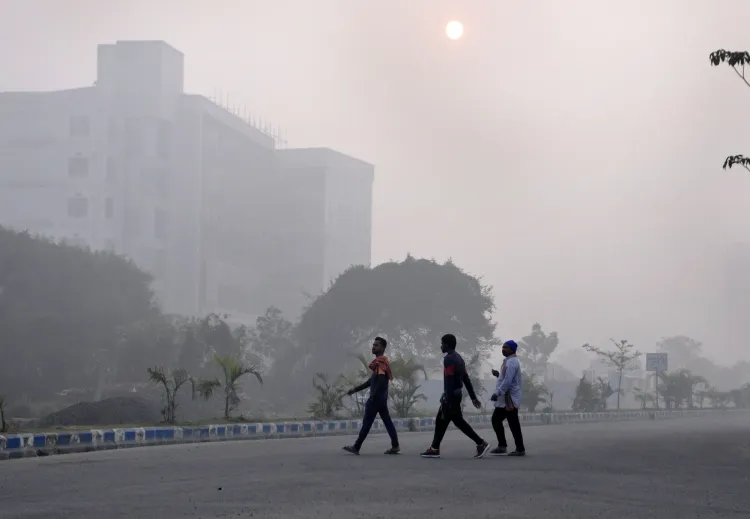
The Calcutta High Court’s decision to take suo motu cognisance is a response to the alarming levels of pollution and the deteriorating Air Quality Index (AQI) in Kolkata, especially during the winter season.
On several occasions this winter, the AQI in Kolkata has been found to be more severe than that of Delhi, a city often highlighted for its critical pollution issues.
A recent report indicated that, beyond particulate matter, the air quality in Kolkata in 2025 was adversely affected by hazardous gaseous pollutants like nitrogen dioxide (NO2) and ground-level ozone (O3).
According to recent analysis from the climate-tech organization Respirer Living Sciences, Kolkata's AQI was primarily influenced by these toxic gases on 82 days in 2025.
The report was created using the organization’s Atlas AQ Platform.
“While particulate matter remains a significant concern, this data reveals that air toxicity in Kolkata is increasingly multifaceted, with gaseous emissions significantly impacting daily health risks,” the analysis noted.
Point of View
The Calcutta High Court's proactive stance on pollution reflects a growing awareness and urgency surrounding environmental issues in India. As air quality continues to degrade, it is imperative that both state and central governments respond effectively to mitigate the crisis. Public interest litigation serves as a crucial tool for accountability, ensuring that the health of citizens remains a priority.
NationPress
19/01/2026
Frequently Asked Questions
What prompted the Calcutta HC to take suo motu cognisance?
The Calcutta HC took suo motu cognisance due to rising pollution levels in Kolkata, which have adversely affected the Air Quality Index (AQI), particularly during winter.
When will the hearing regarding this pollution issue take place?
The hearing is scheduled for January 28, where all parties involved in related public interest litigations are required to attend.