Jadavpur University violence: West Bengal's campus politics and the cycle of 'change'
Synopsis
The clashes at Jadavpur University are not an aberration — they are chapter four of a recurring West Bengal script. Every political transition since the 1960s has been enforced on campuses first, with student unions serving as the advance guard of whichever regime is rising. The violence this week signals that the cycle is turning again.
Key Takeaways
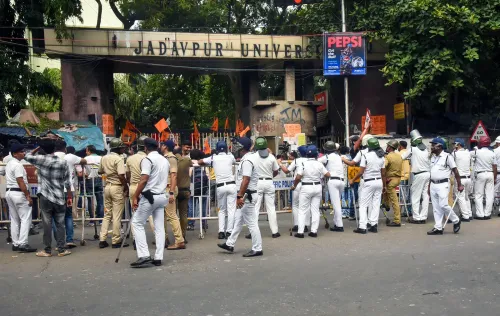
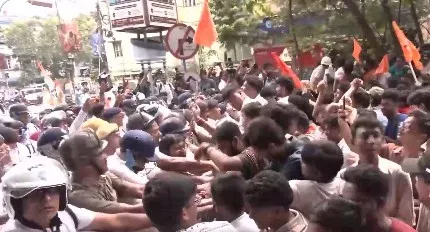
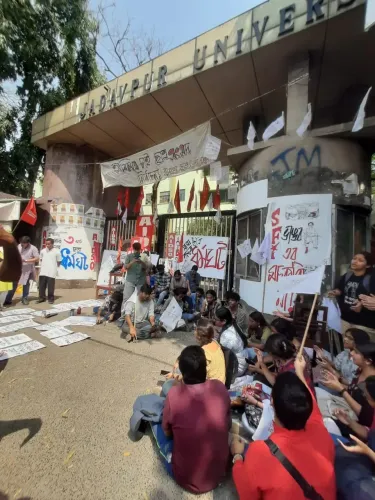
Rival student groups clashed at Jadavpur University , Kolkata , this week, with vandalism and pitched battles reported on 20 August .
West Bengal has seen four distinct cycles of campus violence tied to political transitions — from the Naxalite era (late 1960s) to the Left Front (1977) , TMC (2011) , and the current shift.
The Students' Federation of India (SFI) and Trinamool Congress Chhatra Parishad (TMCP) have historically been central to campus power struggles in the state.
Student unrest is driven not only by ideology but also by anxieties over employment , education reform , and funding .
Political parties across the spectrum reportedly treat state universities as organisational extensions, recruiting students as cadres and future leaders.
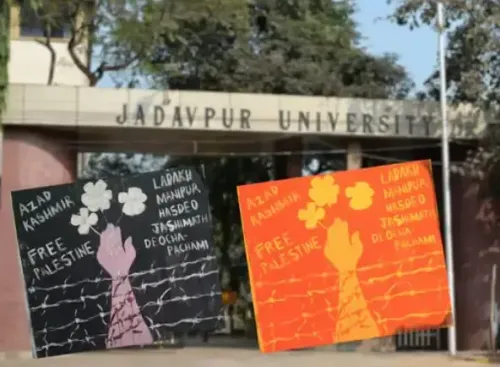
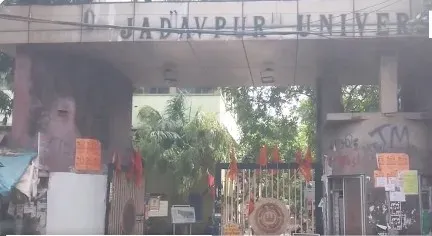
Rival student groups clashed this week at Jadavpur University in Kolkata, with pitched battles and vandalism reigniting debate over West Bengal's deeply entrenched pattern of campus violence during political transitions. The unrest, reported on 20 August, reflects a decades-old dynamic in which the state's universities have served as proxy battlegrounds whenever a new political order seeks to assert itself.
A Pattern Rooted in Decades of Turbulence
West Bengal's campuses have rarely been insulated from street-level politics. From the Naxalite militancy of the late 1960s and early 1970s — which drew students into militant activism and turned colleges into arenas of ideological warfare — to the Communist Party of India (Marxist)-led Left Front's consolidation of power in 1977, the template has remained consistent: a new regime seeks a new campus order, and the transition is rarely peaceful.
When the Left Front swept to power in 1977, its student wing, the Students' Federation of India (SFI), moved swiftly to entrench itself across campuses statewide. Resistance from Congress-backed unions persisted in some colleges well into the early 1980s, and the contests for campus supremacy were, according to widely reported accounts of the era, sometimes backed by party manpower and weapons.
The 2011 Shift and TMCP's Aggressive Expansion
The political transition of 2011 — when Mamata Banerjee's All India Trinamool Congress (TMC) ended 34 years of Left rule — replicated the same pattern on campuses. The Trinamool Congress Chhatra Parishad (TMCP) moved aggressively to displace Left-affiliated student unions, and violent clashes erupted across universities and colleges, echoing the upheavals of earlier decades. The implicit message, critics noted, was that a change in government meant a mandatory change in campus union control — enforced through physical confrontation if necessary.
What Is Driving the Current Unrest
Analysts argue the current wave of campus violence at Jadavpur University is not merely ideological. Student anxieties over employment prospects, education funding, and reform fatigue are fuelling a broader disillusionment that political actors are reportedly exploiting. Political parties, across the spectrum, have long treated universities as extensions of their organisational machinery — recruiting students as cadres and grooming some as future leaders.
Notably, several prominent political figures across West Bengal's political landscape trace their roots directly to student politics, underscoring why parties invest so heavily in controlling campus unions.
A New 'Change' and What It Could Mean
With another political shift reportedly under way in the state in 2025, student groups newly aligned with the emerging order are, according to reports, seeking to claim what observers describe as the 'intellectual heart' of West Bengal. Older student leaders and freshly mobilised members are framing their push not merely as a union takeover but as an ideological reclamation of the state's campuses.
This is, by any historical measure, the fourth such cycle since the late 1960s — and the violence at Jadavpur University suggests the pattern shows no sign of breaking. Whether the current generation of student leaders can forge a genuinely new campus culture, or whether they will replicate the coercive playbook of their predecessors, remains to be seen.
Point of View
And each new ruling dispensation has used them to signal dominance. The more troubling question is structural: why have successive governments — Left, Trinamool, and now whoever follows — found it expedient to weaponise campuses rather than insulate them? The violence is a symptom of a political culture that has never separated the university from the party. Until that changes, the cycle will repeat regardless of which flag flies over the student union office.
NationPress
20 Aug 2026
Frequently Asked Questions
What triggered the violence at Jadavpur University in August 2025?
Clashes broke out between rival student groups at Jadavpur University in Kolkata, with both sides alleging the other was responsible for vandalism and pitched battles on campus. The unrest is being linked to the broader political transition under way in West Bengal, mirroring patterns seen during previous regime changes in the state.
Is campus violence in West Bengal a new phenomenon?
No. West Bengal has experienced recurring cycles of campus violence tied to political transitions since the late 1960s. The Naxalite era, the Left Front's rise in 1977, and the Trinamool Congress's takeover in 2011 each produced similar clashes as new student wings sought to displace established ones.
Which student organisations have historically been involved in West Bengal campus politics?
The Students' Federation of India (SFI), affiliated with the CPI(M)-led Left Front, dominated campuses from 1977 onward. After 2011, the Trinamool Congress Chhatra Parishad (TMCP) moved aggressively to displace SFI. Congress-backed unions also held ground in select colleges through the early 1980s.
Why do political parties invest so heavily in student unions in West Bengal?
Political parties treat universities as organisational extensions, using student wings to recruit cadres and identify future leaders. Several prominent West Bengal politicians across party lines are reported to have entered public life through student politics, making campuses a strategic priority for every major party.
What factors beyond ideology drive campus unrest in West Bengal?
Student anxieties over employment prospects, education funding, and reform fatigue are significant drivers, according to analysts. These grievances make students receptive to political mobilisation, which parties then channel into campus union contests.