Rajasthan HC: Out-of-state ST candidates not entitled to reservation in govt jobs

Synopsis
The Rajasthan High Court has reinforced a critical but often-misunderstood principle: your reserved category status does not cross state borders. In dismissing a Gujarat-origin ST candidate's bid for reservation in a Rajasthan nursing job, the court reaffirmed Supreme Court precedent — a ruling that has direct consequences for the growing number of Indians who migrate across states for marriage or work.
Key Takeaways
The Rajasthan High Court ruled on 11 November 2026 that candidates with ST or reserved category status from another state cannot claim reservation in Rajasthan government jobs .
The case was filed by Baria Sharmishtha Ben , a Gujarat -origin ST candidate who relocated to Rajasthan after marriage and applied for a Nursing Officer post.
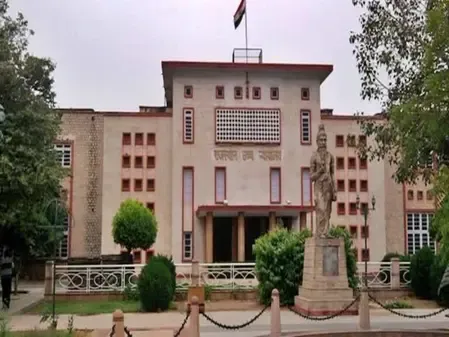
Both a single-judge bench and a division bench comprising Justice Vinit Kumar Mathur and Justice Chandra Shekhar Sharma dismissed her appeals.
The court relied on Supreme Court precedents including Ranjana Kumari v.
State of Uttarakhand , Marri Chandra Shekhar Rao , and Action Committee on the Issue of Caste Certificate .
Out-of-state reserved category candidates will be treated as General category applicants in Rajasthan recruitment processes.
The Rajasthan High Court has ruled that candidates recognised as Scheduled Tribe (ST) or any other reserved category in their home state cannot automatically claim reservation benefits in Rajasthan government jobs simply by relocating to the state. Such candidates will be treated as belonging to the General category for recruitment purposes.
The Case That Prompted the Ruling
A division bench comprising Justice Vinit Kumar Mathur and Justice Chandra Shekhar Sharma dismissed a special appeal filed by Baria Sharmishtha Ben, a native of Gujarat who holds ST status in that state. After her marriage, she relocated to Rajasthan and applied for the post of Nursing Officer, seeking reservation benefits under the ST category. The state government rejected her claim and placed her candidature under the General category, in line with conditions specified in the recruitment advertisement.
Baria Sharmishtha Ben initially challenged this decision before a single-judge bench of the Rajasthan High Court. That petition was dismissed in light of the Supreme Court's judgment in Ranjana Kumari v. State of Uttarakhand. She then filed a special appeal before the division bench, which also rejected her plea on 11 November 2026.
Court's Legal Reasoning
The High Court observed that conditions of social disadvantage and backwardness vary significantly from state to state. Therefore, recognition as a member of a reserved category in one state does not automatically confer the same status or entitlements in another. The bench reiterated a well-established constitutional position: reservation benefits are geographically tied to the state in which a community is notified as a reserved category.
During the hearing, the division bench referred to the Supreme Court's landmark rulings in Marri Chandra Shekhar Rao and Action Committee on the Issue of Caste Certificate, both of which have consistently held that Scheduled Caste or Scheduled Tribe status earned in one state does not travel with a person to another state upon migration.
Broader Legal Significance
This ruling reinforces a legal principle that has been affirmed multiple times by the apex court but continues to generate litigation — particularly in cases where individuals move across state lines due to marriage, employment, or education. The judgment serves as a clear signal to recruitment bodies in Rajasthan that cross-state reservation claims will not be entertained.
Notably, this is not an isolated case; courts across India have regularly been asked to adjudicate similar disputes, especially as inter-state migration increases. The Rajasthan High Court's affirmation of the Supreme Court's position adds to a growing body of consistent jurisprudence on the subject.
What This Means for Job Applicants
Candidates who hold reserved category status — whether SC, ST, or OBC — in their home state but have settled in Rajasthan must be aware that they will be classified as General category applicants in state government recruitment processes. This applies regardless of the reason for relocation, including marriage. Applicants are advised to verify their category eligibility as defined by Rajasthan's own state notifications before applying for reserved posts.
The ruling is likely to have implications for similarly placed candidates across other states and could prompt fresh scrutiny of pending or future inter-state reservation claims in public employment.
Point of View
But its social implications are worth examining. As inter-state migration — driven by marriage, education, and employment — accelerates across India, an increasing number of individuals find themselves in a legal grey zone where their constitutionally recognised disadvantaged status simply does not cross state lines. The court is not wrong on the law, but the absence of a legislative framework to address the genuine hardship of such migrants reflects a gap that neither Parliament nor the states have meaningfully addressed. The repeated litigation on this issue — from Ranjana Kumari to this case — suggests that a clearer statutory or constitutional clarification may eventually be unavoidable.
NationPress
11 Nov 2026
Frequently Asked Questions
What did the Rajasthan High Court rule about out-of-state reservation candidates?
The Rajasthan High Court ruled that candidates who hold Scheduled Tribe (ST) or other reserved category status in another state cannot claim reservation benefits in Rajasthan government jobs merely by settling in the state. They will be classified as General category applicants for all recruitment purposes.
Who filed the case and what was it about?
The case was filed by Baria Sharmishtha Ben, a Gujarat native recognised as ST in that state, who relocated to Rajasthan after marriage and applied for a Nursing Officer post seeking ST reservation benefits. The state government rejected her claim, placing her in the General category, and both a single judge and a division bench of the Rajasthan High Court upheld that decision.
Which Supreme Court judgments did the High Court rely on?
The division bench cited Supreme Court rulings in Ranjana Kumari v. State of Uttarakhand, Marri Chandra Shekhar Rao, and Action Committee on the Issue of Caste Certificate — all of which establish that SC or ST status recognised in one state does not automatically apply in another state after migration.
Why does reserved category status not transfer across states?
The court observed that the conditions of social disadvantage and backwardness differ from state to state, and reserved category lists are notified separately by each state based on its own social and historical context. Therefore, being listed as a reserved category member in one state does not create an entitlement to the same benefits in another.
Who is affected by this ruling?
Any candidate belonging to a Scheduled Caste, Scheduled Tribe, or other reserved category in their home state who has migrated to Rajasthan — whether due to marriage, work, or other reasons — will be treated as a General category applicant in Rajasthan state government recruitment. The ruling has broader relevance for similar situations across other Indian states.