Cabinet Clears NBS Subsidy Rates for Rabi 2026-27 DAP, NPKS
Synopsis
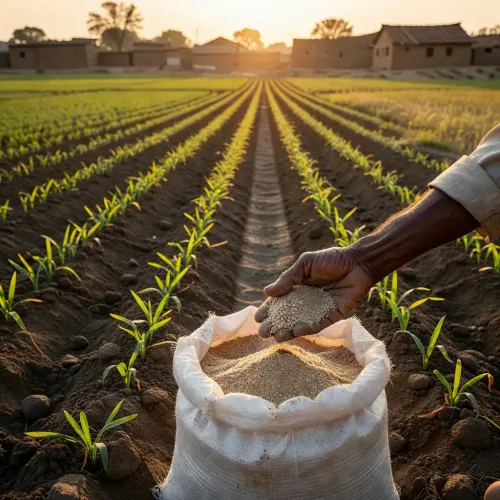
The Union Cabinet has approved Nutrient Based Subsidy rates on DAP and NPKS fertilizers for Rabi 2026-27, covering October 2026 to March 2027, ensuring affordable phosphatic and potassic fertilizers for Indian farmers during the critical winter crop season.
Key Takeaways
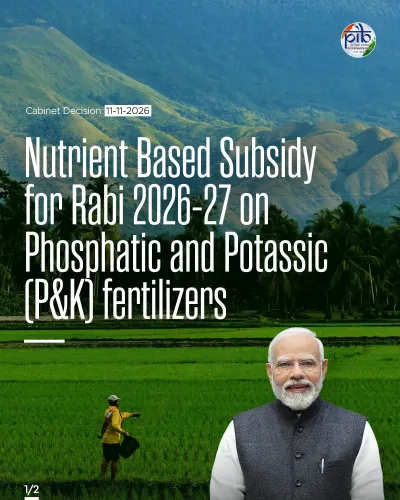
The Union Cabinet approved Nutrient Based Subsidy (NBS) rates on phosphatic and potassic fertilizers for Rabi 2026-27 .
The subsidy covers DAP and NPKS fertilizers and is valid from 1 October 2026 to 31 March 2027 .
The NBS scheme , launched in April 2010, fixes a subsidy per kilogram of nutrient rather than per product, covering N, P, K, and S nutrients in decontrolled fertilizers.
The Cabinet revises NBS rates separately for Kharif and Rabi seasons each year to reflect global price movements in rock phosphate, phosphoric acid, and potash.
The twin-track approach — NBS for P&K fertilizers, separate pricing for urea — is designed to promote balanced nutrient application and reduce excessive urea use.
Specific per-nutrient subsidy rates for Rabi 2026-27 are yet to be officially notified and disclosed publicly.
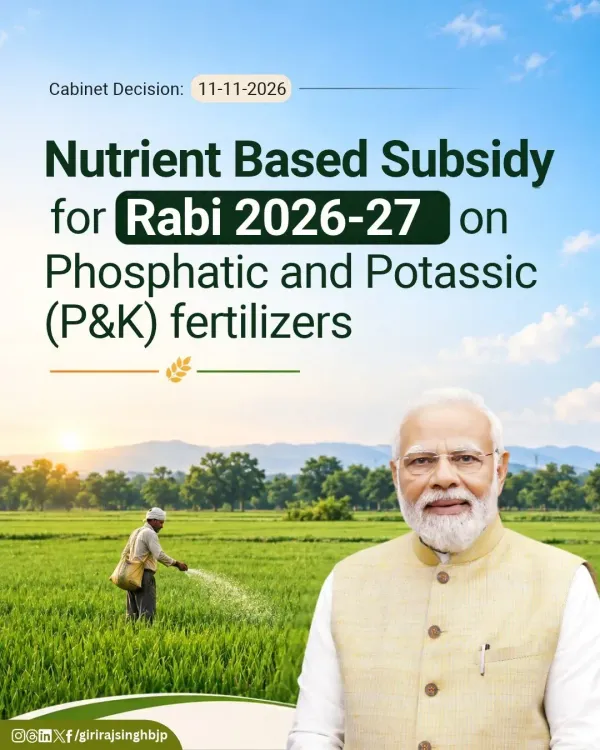
Every rabi season, millions of Indian farmers make a critical calculation: can they afford the fertilizers that will carry their wheat and mustard crops through winter? The Central Cabinet has just answered that question for Rabi 2026-27, approving Nutrient Based Subsidy (NBS) rates on phosphatic and potassic fertilizers — covering DAP and NPKS — valid from 1 October 2026 to 31 March 2027. Union Textiles Minister Giriraj Singh shared the Cabinet decision on X on Wednesday, 11 November 2026.
Posting in Hindi, Singh wrote: 'Kendreey Mantrimandal ne Rabi 2026-27 ke liye phosphatic aur potash urvarak on poshan tatva adharit subsidy ki daren manjur ki hain' — 'The Union Cabinet has approved Nutrient Based Subsidy rates on phosphatic and potash fertilizers for Rabi 2026-27.' The subsidy, he noted, will make DAP and NPKS available to farmers at reasonable prices during the six-month rabi window.
What NBS Is and Why It Was Built
The Nutrient Based Subsidy scheme was introduced in April 2010 to replace an older product-specific subsidy system on phosphatic and potassic (P&K) fertilizers. Instead of fixing the price of a particular bag, NBS attaches a fixed subsidy to every kilogram of nutrient — nitrogen (N), phosphorus (P), potassium (K), and sulphur (S) — in decontrolled fertilizers. That design lets manufacturers price competitively while the government underwrites the nutrient cost, keeping the retail price within reach for farmers.
Crucially, urea sits outside the NBS framework under a separate pricing regime. The twin-track approach is deliberate: by subsidising P&K nutrients through NBS while controlling urea independently, the government aims to nudge farmers toward balanced nutrient application and reduce the chronic over-reliance on urea that depletes soil health over time.
Seasonal Rate-Setting and the Global Price Link
Since 2010, the Cabinet has approved separate NBS rates for the Kharif and Rabi seasons every year — a rhythm that lets policy respond to the volatile international markets for rock phosphate, phosphoric acid, and potash. Global commodity swings directly affect what India pays for P&K inputs, since the country is a large importer of these raw materials. Each seasonal revision is essentially the government's bet on where those prices will settle and how much of the gap it will absorb.
The rabi season — running roughly October through March — covers India's winter crop cycle, when demand for DAP in particular surges ahead of wheat sowing. Locking in NBS rates at the season's start gives both farmers and fertilizer distributors pricing certainty before planting decisions are made.
Who Stands to Benefit
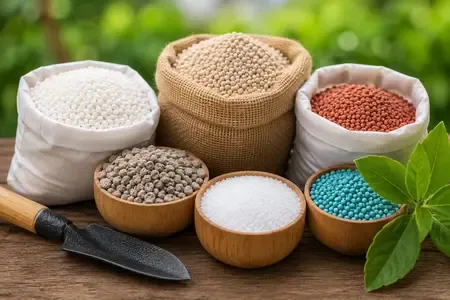
The immediate beneficiaries are the tens of millions of smallholder and marginal farmers across wheat-belt states — Punjab, Haryana, Uttar Pradesh, Madhya Pradesh, Rajasthan — who depend on DAP as the go-to starter fertilizer for rabi crops. NPKS blends, which deliver all four key nutrients in a single application, also see significant rabi uptake among farmers seeking simplified fertilizer management.
Fertilizer manufacturers, who operate in a decontrolled market for P&K products, also gain from the clarity: they can plan procurement and inventory without uncertainty over whether the government support will cover their costs at prevailing import prices.
The specific per-nutrient subsidy rates approved for this rabi cycle have not been disclosed in the minister's post. Those figures, once officially notified, will determine the actual farm-gate price reduction on DAP and NPKS bags — the number that matters most when a farmer walks into a co-operative store in Ludhiana or Harda next month.
Point of View
The rates locked in for Rabi 2026-27 carry extra weight for farm input costs. The NBS mechanism reflects a long-standing government preference for nutrient-level intervention over price controls, nudging crop nutrition away from urea dependency — a goal that remains partly unrealised despite over a decade of effort. The fact that specific rates were not shared in the ministerial post points to the politically sensitive nature of P&K subsidy quantum, often subject to revision mid-season if international prices move sharply. For the BJP government, timely Cabinet approval ahead of the wheat sowing window is as much a farmer-outreach signal as it is a policy act.
NationPress
11 Nov 2026
Frequently Asked Questions
What is the Nutrient Based Subsidy (NBS) scheme in India?
The Nutrient Based Subsidy (NBS) scheme, launched in April 2010, provides a fixed government subsidy per kilogram of nutrient — nitrogen, phosphorus, potassium, and sulphur — on decontrolled phosphatic and potassic fertilizers like DAP and NPKS, keeping farm-gate prices affordable while allowing manufacturers to price competitively.
What fertilizers are covered under the Rabi 2026-27 NBS approval?
The Union Cabinet's approval covers DAP (di-ammonium phosphate) and NPKS (nitrogen-phosphorus-potassium-sulphur) fertilizers under the NBS scheme for the Rabi 2026-27 season, running from 1 October 2026 to 31 March 2027.
Why does the Cabinet approve NBS rates separately for Kharif and Rabi seasons?
NBS rates are revised each season because international prices for raw materials like rock phosphate, phosphoric acid, and potash fluctuate significantly. Separate Kharif and Rabi approvals allow the government to adjust the subsidy quantum in response to current global commodity prices, reducing fiscal risk.
Is urea covered under the NBS scheme?
No. Urea is priced under a separate government mechanism and is not part of the NBS framework. The NBS scheme covers only decontrolled phosphatic and potassic fertilizers. This dual structure is designed to encourage balanced use of all nutrients and reduce over-dependence on urea.
Who benefits from the NBS subsidy on DAP and NPKS?
The primary beneficiaries are farmers — particularly smallholder and marginal cultivators in major rabi-growing states like Uttar Pradesh, Punjab, Haryana, Madhya Pradesh, and Rajasthan — who use DAP and NPKS blends for wheat, mustard, and other winter crops. Fertilizer manufacturers also benefit from pricing clarity during the season.