How Has Water Storage in TN's Cauvery Delta Tanks Increased as Rain Enhances Supply?

Synopsis
Heavy monsoon rains and inflows have dramatically increased water storage in Tamil Nadu's Cauvery delta, offering crucial relief to farmers just in time for the agricultural peak season. With many tanks reaching full capacity, the outlook for crops is promising. Discover how this surge in water availability impacts farming in the region.
Key Takeaways
386 tanks in the Cauvery delta are now at full capacity.
A total of 764 irrigation tanks are located in the region.
329 tanks have water levels exceeding 75% of their capacity.
Thanjavur district has the highest number of tanks at 561 .
Enhanced water storage supports paddy cultivation and livestock needs.
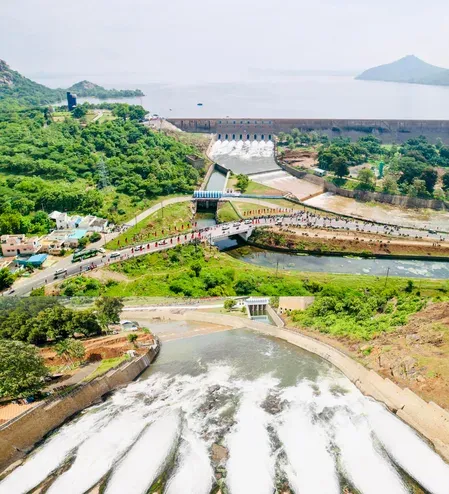
Chennai, Dec 14 (NationPress) The recent heavy rainfall during the northeast monsoon, combined with continuous inflows into the Cauvery river system, has led to a remarkable surge in water storage levels within irrigation tanks throughout the Cauvery delta. This development brings substantial relief to farmers as they prepare for the crucial agricultural season.
Out of the 764 irrigation tanks located in the delta region, an impressive 386 have achieved full capacity, a significant increase from the merely 42 tanks that were reported three months ago. Furthermore, 329 tanks are now filled to over 75 percent of their capacity, highlighting the extensive recovery of water availability in Tamil Nadu's agricultural heartland.
The delta districts, including Thanjavur, Tiruvarur, Mayiladuthurai, and Pudukkottai, collectively manage 737 system tanks, which are supplied by rivers and canals as well as rainwater, in addition to 27 non-system tanks that rely solely on rainfall.
Thanjavur district boasts the largest number of irrigation tanks, totaling 561, followed by Pudukkottai with 170. Tiruvarur has 28 tanks, while Nagapattinam and Mayiladuthurai have three and two tanks, respectively.
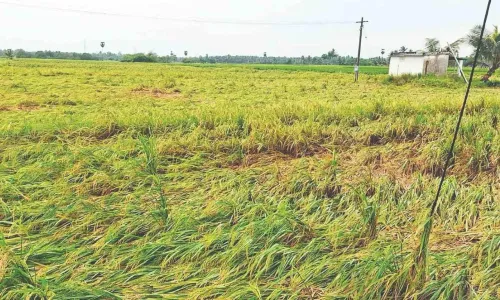
Most of these tanks are positioned in tail-end areas and are vital for supporting paddy cultivation, especially during the samba season.
Typically, these tanks experience substantial inflows during September and October. However, this year, there was an early increase in storage levels, with many tanks surpassing the 50 percent threshold by the end of August. This was largely attributed to the consistent flow of water in key channels, such as the Grand Anaicut and Vennaru, along with the timely release of water from the Cauvery River at Mettur dam on the customary date of June 12. Since then, the Mettur reservoir has reached full storage levels on seven separate occasions, aided by surplus contributions from Karnataka.
Adequate rainfall during the southwest monsoon in Thanjavur district, complemented by above-normal rainfall during the northeast monsoon from October 1 to December 11, has further bolstered water availability throughout the delta.
Currently, in addition to the 386 tanks at full capacity, another 337 tanks maintain water levels between 75 percent and 99 percent of their capacity. Thirty-one tanks have storage levels between 50 percent and 75 percent, while only five tanks fall within the 25 percent to 50 percent range. The enhanced storage is anticipated to support ongoing samba crops, ensure water availability for livestock during the hotter months, and contribute to rising groundwater levels across the region, thereby reinforcing overall water security in the Cauvery delta.
Point of View
The significant increase in water storage in the Cauvery delta tanks is a positive development for Tamil Nadu's agricultural sector. It showcases the importance of effective water management and rainfall patterns in supporting farmers' livelihoods. The situation reflects the resilience of the region's agricultural practices in adapting to climatic changes, thereby ensuring food security and economic stability.
NationPress
20 Sept 2026
Frequently Asked Questions
What caused the increase in water storage in the Cauvery delta?
The increase is primarily due to heavy rainfall during the northeast monsoon and sustained inflows from the Cauvery river system.
How many irrigation tanks are in the Cauvery delta?
There are a total of 764 irrigation tanks in the Cauvery delta region.
What percentage of tanks are at full capacity?
Currently, 386 out of the 764 tanks have reached full capacity, which is about 50.5%.
What is the significance of these tanks for farmers?
These tanks are crucial for supporting paddy cultivation and ensuring water availability for livestock, especially during the summer months.
How does this impact groundwater levels?
The improved storage in tanks is expected to contribute positively to groundwater levels throughout the region.