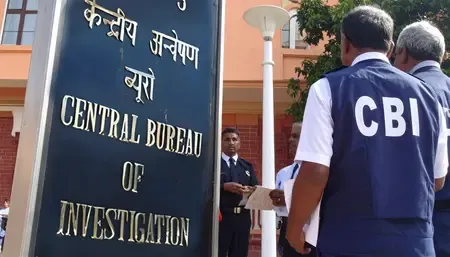
CBI court sentences bank fraud convict Sanjeev Dixit to 7 years in prison
Synopsis
A bank fraud accused who faked his identity and spent nearly nine years as a fugitive was finally caught at a Rajasthan temple and has now been sentenced to seven years' rigorous imprisonment by a Delhi CBI court for siphoning ₹4 crore from Punjab National Bank using forged property documents.
Key Takeaways
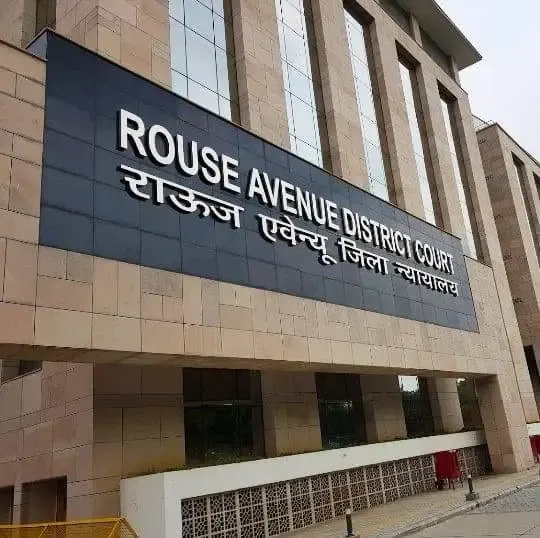
A special CBI court at Rouse Avenue , New Delhi, on 24 October 2026 sentenced Sanjeev Dixit to seven years' rigorous imprisonment and a fine of ₹1.6 lakh .
Dixit and co-accused allegedly defrauded Punjab National Bank's Jor Bagh branch of a ₹4 crore cash credit facility using forged property documents.
The case was first registered by the CBI on 11 July 2013 ; Dixit escaped judicial custody in 2016 and was declared a proclaimed offender on 23 November 2017 .
He was arrested on 30 January 2026 from Mata Tripura Sundari Mandir , Banswara, Rajasthan, after living under the fake identity of Pankaj Bhardwaj in Vadodara .
Dixit pleaded guilty to charges including criminal conspiracy, cheating by personation, and forgery of valuable security.
A special Central Bureau of Investigation (CBI) court at Rouse Avenue, New Delhi, on 24 October 2026 convicted and sentenced bank fraud accused Sanjeev Dixit, also known as Sanjay Sharma, to seven years' rigorous imprisonment and imposed a fine of ₹1.6 lakh. The conviction follows a years-long fugitive chase that ended with Dixit's arrest at a temple in Rajasthan earlier this year.
The Fraud: How ₹4 Crore Was Siphoned from Punjab National Bank
According to the CBI, the case was registered on 11 July 2013 against Dixit, who served as proprietor of M/s Shankar Metals, along with Sanjay Sharma, proprietor of M/s Super Machines, and Indra Rani, among other unidentified persons. The accused allegedly conspired to fraudulently obtain a cash credit facility of ₹4 crore from Punjab National Bank's Jor Bagh branch in New Delhi using forged property documents. The sanctioned loan amount was subsequently diverted for purposes other than those for which the credit facility had been approved, the CBI stated.
The Decade-Long Fugitive Run and Fake Identity
In 2016, Dixit escaped from judicial custody while being produced before a court in Sonipat in connection with a separate case. He went on the run and was declared a proclaimed offender by the trial court on 23 November 2017. For nearly a decade, he evaded authorities by living under a fabricated identity — posing as Pankaj Bhardwaj, son of Brij Mohan Bhardwaj — in Vadodara.
In January 2026, the CBI received a tip-off about his whereabouts. Investigators traced him to Mata Tripura Sundari Mandir in Banswara district, Rajasthan, and arrested him on 30 January 2026. This comes amid a broader CBI push to pursue long-pending proclaimed offenders in financial fraud cases, several of whom have been apprehended in the last two years.
Guilty Plea and the Court's Verdict
During the trial, Dixit pleaded guilty to multiple charges, including criminal conspiracy, cheating by personation, cheating, forgery of valuable security, forgery for the purpose of cheating, and using forged documents as genuine. Following the guilty plea, the Rouse Avenue special CBI court delivered its verdict on 24 October 2026, sentencing him to seven years' rigorous imprisonment along with a fine of ₹1.6 lakh.
Significance and What Comes Next
The case underscores vulnerabilities in bank credit disbursement processes that allowed forged property documents to pass scrutiny at one of India's largest public sector lenders. Notably, the accused managed to remain at large for nearly nine years after escaping custody — raising questions about coordination between agencies tracking proclaimed offenders. The fine imposed remains modest relative to the ₹4 crore alleged fraud amount, and it remains to be seen whether recovery proceedings against the implicated firms will follow the conviction.
Point of View
But it exposes a troubling institutional gap: a proclaimed offender in a high-value bank fraud case was able to remain at large for nearly nine years, living openly under a false identity. The ₹1.6 lakh fine against a ₹4 crore fraud is negligibly punitive, and the larger question — whether the diverted funds can be recovered — remains unanswered. Punjab National Bank, which has featured repeatedly in major fraud cases, will face fresh scrutiny over how forged property documents cleared its credit appraisal process in the first place. The case is a reminder that conviction timelines in financial fraud matters still run on a decade-plus clock.
NationPress
26 Oct 2026
Frequently Asked Questions
Who is Sanjeev Dixit and what was he convicted for?
Sanjeev Dixit, also known as Sanjay Sharma, is a businessman convicted by a special CBI court in New Delhi for fraudulently obtaining a ₹4 crore cash credit facility from Punjab National Bank using forged property documents and diverting the funds. He was sentenced to seven years' rigorous imprisonment and fined ₹1.6 lakh on 24 October 2026.
How did Sanjeev Dixit evade arrest for so many years?
After escaping from judicial custody in Sonipat in 2016, Dixit assumed a false identity as Pankaj Bhardwaj and lived in Vadodara for years. He was declared a proclaimed offender in November 2017 and was only traced and arrested by the CBI on 30 January 2026 from a temple in Banswara district, Rajasthan.
What charges did Sanjeev Dixit plead guilty to?
Dixit pleaded guilty to criminal conspiracy, cheating by personation, cheating, forgery of valuable security, forgery for the purpose of cheating, and using forged documents as genuine before the Rouse Avenue special CBI court.
Which bank was defrauded and how much money was involved?
Punjab National Bank's Jor Bagh branch in New Delhi was defrauded of a cash credit facility worth ₹4 crore. The accused allegedly used forged property documents to obtain the facility and then diverted the funds for unauthorised purposes.
When was the CBI case first registered in this bank fraud matter?
The CBI registered the case on 11 July 2013, against Dixit, proprietor of M/s Shankar Metals, along with Sanjay Sharma, proprietor of M/s Super Machines, Indra Rani, and other unknown persons. The trial concluded over a decade later with Dixit's conviction in October 2026.