CM Sai Bats for Mother-Tongue Ed With Modern Skills in CG
Synopsis
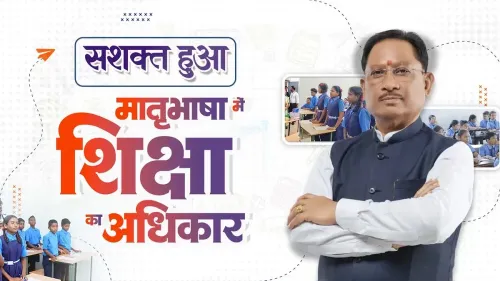
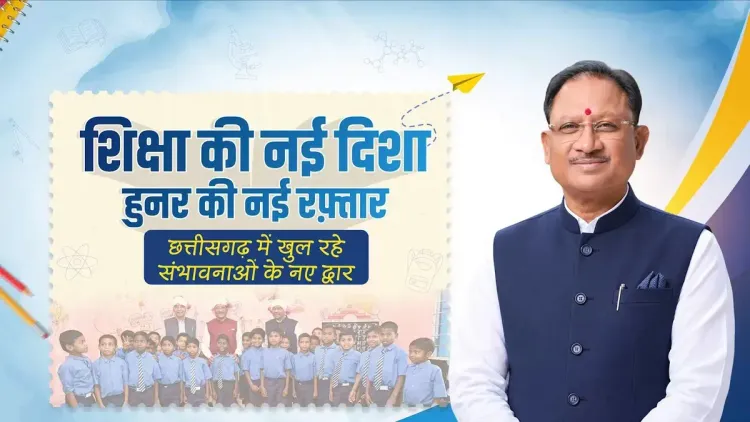
CM Vishnu Deo Sai reaffirmed on October 26, 2026 that his government will deliver mother-tongue education alongside technology and skill training to every child in Chhattisgarh, citing it as the cornerstone of an empowered state.
Key Takeaways
CM Vishnu Deo Sai posted on October 26, 2026 reaffirming his government's education priorities for Chhattisgarh.
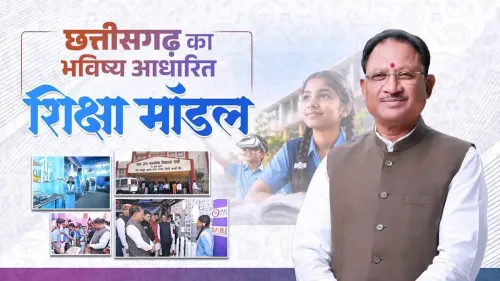
The vision combines mother-tongue instruction with modern technology, innovation, and skill development.
The approach aligns directly with the National Education Policy 2020 , which recommended first-language teaching from early grades alongside vocational integration.
Chhattisgarh has a large tribal population speaking diverse regional languages, making mother-tongue schooling especially consequential for early learning outcomes.
State budget allocations for school technology infrastructure and new curriculum notifications in upcoming assembly sessions will be the key metrics to watch.
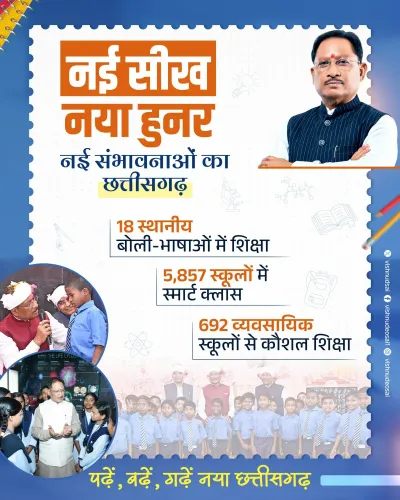
Quality education in a child's own language — paired with the tools of tomorrow — is how Chhattisgarh Chief Minister Vishnu Deo Sai says his government intends to build a stronger state. In a post on X on Monday, October 26, 2026, the BJP leader laid out an education vision that blends mother-tongue instruction with technology, innovation, and skill development.
Posting in Hindi, CM Sai wrote: 'हर बच्चे को गुणवत्तापूर्ण शिक्षा और आगे बढ़ने के समान अवसर देना सशक्त छत्तीसगढ़ के निर्माण का आधार है।' ('Giving every child quality education and equal opportunities to advance is the foundation of building an empowered Chhattisgarh.') He added that his government is connecting children to modern technology, innovation, and skills — alongside education in their mother tongue.
Where NEP 2020 Meets Chhattisgarh's Linguistic Reality
The statement is a clear echo of the National Education Policy 2020, which recommended mother-tongue-based instruction from the earliest grades while simultaneously integrating vocational skills and digital tools into school curricula. For Chhattisgarh — a central Indian state with a large tribal population spread across linguistically diverse districts — that policy alignment carries particular weight.
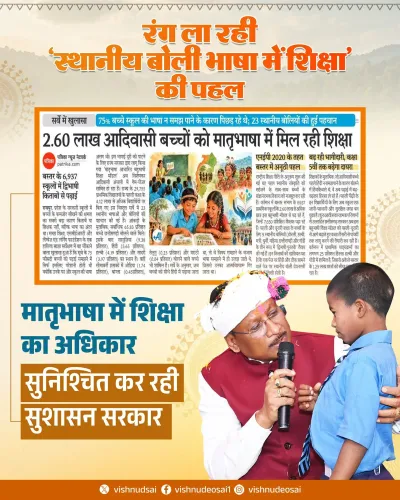
Children in tribal belts often arrive at school speaking Gondi, Halbi, Chhattisgarhi, or other regional languages, and learn in a tongue that is not their own. Research on foundational literacy consistently shows that first-language instruction dramatically improves early learning outcomes. The challenge, historically, has been marrying that principle with the skills children need to compete in a digital economy. That is precisely the gap CM Sai's framing claims to close.
The Stakes for Students and Tribal Communities
The two goals — cultural and linguistic rootedness on one side, technology and innovation on the other — are not instinctively obvious partners. Getting them to reinforce rather than crowd each other is the real policy test. Chhattisgarh's previous governments have also pursued education reforms targeting its linguistically diverse districts, meaning this is less a fresh break than a continuing effort under new political ownership.
What will matter now is the budget line. Expanding school technology infrastructure across remote districts, training teachers to deliver mother-tongue syllabi, and designing skill curricula that are locally relevant all demand specific allocations — ones that will come into sharper focus in the state's upcoming assembly sessions and budget cycles.
Every child, the Chief Minister insists, deserves the same starting line. Whether the classroom can deliver that promise is the question Chhattisgarh's next budget will have to answer.
Point of View
Given that mother-tongue education enjoys broad cross-party support. The harder test is implementation: Chhattisgarh's tribal-majority districts have historically struggled with teacher supply and infrastructure gaps that declarations alone cannot fix. By yoking cultural preservation to economic opportunity, Sai is also signalling to both tribal communities and aspirational middle-class voters — a dual audience the BJP has carefully cultivated in the state since winning the December 2023 assembly election. The real policy audit will come when budget figures land.
NationPress
26 Oct 2026
Frequently Asked Questions
What did Chhattisgarh CM Vishnu Deo Sai say about education?
CM Vishnu Deo Sai said that giving every child quality education and equal opportunities is the foundation of an empowered Chhattisgarh, and that his government is connecting children to modern technology, innovation, and skills alongside mother-tongue instruction.
What is mother-tongue education in Chhattisgarh?
Mother-tongue education means teaching children, especially from tribal communities, in their first language — such as Gondi, Halbi, or Chhattisgarhi — in early grades, which research shows improves foundational learning outcomes.
How does the National Education Policy 2020 relate to Chhattisgarh's education plan?
The NEP 2020 recommended mother-tongue-based instruction and vocational skill integration from early grades; CM Sai's stated policy directly mirrors this national framework at the state level.
Who are the main beneficiaries of Chhattisgarh's education push?
The primary beneficiaries are school-going children across Chhattisgarh, with particular focus on tribal communities in linguistically diverse districts where mother-tongue instruction matters most for early literacy.
When did Vishnu Deo Sai become Chief Minister of Chhattisgarh?
Vishnu Deo Sai assumed office as Chief Minister of Chhattisgarh in December 2023 after the BJP won the state assembly election.